

Pairing Streetwear Accessories: Step by Step
Table of contents
- Why accessories make or break your streetwear look
- How to combine streetwear accessories: an outfit-by-outfit guide
- Accessories with a hoodie: how to keep the look cohesive
- Styling a cap with streetwear: fit above all
- Jewelry with streetwear: subtle details that stand out
- Pairing streetwear colors with your accessories
- Bags, belts and sunglasses: balance your silhouette
- Common styling mistakes and how to fix them
- Frequently Asked Questions
Last updated: October 21, 2026
Why accessories make or break your streetwear look
Accessories make the difference between an outfit you wear and an outfit that says something.
A cap, a chain, a crossbody bag: small choices with a big impact. They give direction to your silhouette and make your personal style visible.
The key is balance. Below, we explain step by step how to combine streetwear accessories without overloading your outfit.
How to combine streetwear accessories: an outfit-by-outfit guide
Work from broad to fine: start with the base, then choose one focal point, then coordinate the colors and proportions. Following this order prevents most styling mistakes.
Step 1: choose your base and silhouette
Start with your clothes, not your accessories. An oversized T-shirt with relaxed-fit jeans is a different base from a hoodie with a leather skirt. Your base determines how much room your accessories get.
Rule of thumb: the looser the silhouette, the more an accessory can stand out. With a streamlined base, keep accessories subtle.
- Oversized base: room for a statement piece
- Streamlined base: opt for subtle details
- Layered look: limit accessories to two
Step 2: choose one focal point
Choose one eye-catching accessory: a standout cap, a silver chain, or a contrasting crossbody bag. Let the rest support that one focal point. The eye looks for a place to rest; two equally bold statement accessories compete for attention, and your outfit loses cohesion.
Step 3: coordinate color, proportion, and texture
Your focal point should work with the rest in color, size, and material. A heavy leather belt next to a lightweight cotton shirt can work, but only if it’s intentional.
Accessories with a hoodie: how to keep the look cohesive
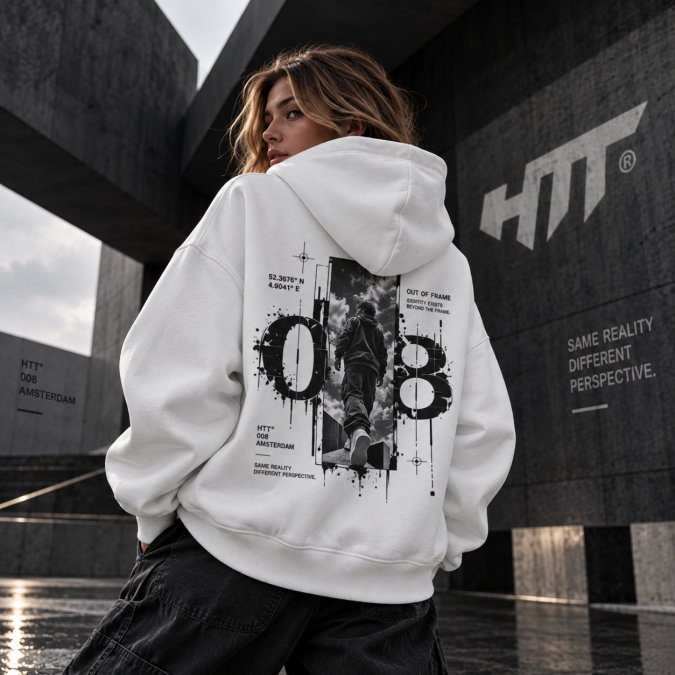
A hoodie is easy to style, but also easy to get wrong. The problem: a hoodie already adds volume around your neck and shoulders.
The solution is to give direction to the rest of your body. A cap draws the look upward, a crossbody bag toward the middle, and sneakers downward.
These combinations work reliably with a hoodie:
- Cap + low-top sneakers: clean and balanced
- Crossbody bag + bomber jacket: more texture, same clean look
- Subtle necklace + plain hoodie: detail without clutter
Avoid pairing a hoodie with a large print with a statement necklace. Two focal points in the same area rarely work.
Styling a cap with streetwear: fit above all
A cap is the quickest accessory for completing an outfit, but fit determines whether it works. A cap that's too tight not only looks uncomfortable, it also throws off your proportions. It’s not just about whether the cap fits, but how it relates to your face, your hairstyle, and the volume of your clothes.
HTT Good/Bad Structured Cap | Premium Streetwear Cap →
The three proportions you need to know
Understanding these three proportions helps you make the right choice the first time.
- Crown height vs. face length. A high crown (high-profile) visually elongates your head. This works well with a round or square face, but can overemphasize the vertical line on an oblong face. A low crown (low-profile) does the opposite: it makes your head look visually wider and more balanced.
- Brim width vs. shoulder width. A wide, flat brim draws attention to the sides of your face. With narrow shoulders, that can throw off the proportions; with broad shoulders, it creates balance. A curved brim follows the line of your face, making it the safest choice for a range of silhouettes.
- Cap volume vs. clothing volume. This is the most important and most overlooked rule. An oversized hoodie already adds volume at the neck and shoulders. Pair it with a high, structured cap and your upper body will look top-heavy. A lower crown or a cap that sits closer to your head restores balance.
Fit for different head types and hairstyles
The shape of your head and your hairstyle make the difference between “fits” and “looks good.”
- Round face: choose a cap with a slightly higher crown and a curved brim. This elongates the line and keeps your face from looking wider.
- Oblong face: a low-profile cap with a wider brim works better; it creates horizontal balance.
- Curly hair or volume on top: a cap with an adjustable or stretch band keeps your hair from compromising the fit. A snapback that's too tight pushes volume to the sides.
How to test a cap in the store or at home
These three checks tell you whether a cap works:
- The two-finger rule. You should be able to fit two fingers between your forehead and the edge of the cap. Less means it is too tight; more means it is too loose.
- The ear check. The bottom edge of the cap should end just above your ears. If it goes over them, the crown sits too low or the size is too large.
- The silhouette check. Slowly turn your head from left to right. The cap should not shift or hurt your hair. A cap that stays in place without squeezing is the right size.
Our HTT Good/Bad Structured Cap has a mid-profile fit with a stretch band, so there’s no adjustable strap at the back. This creates a clean line and makes it suitable for most head shapes.

Jewelry with streetwear: subtle details that stand out
Many people hesitate when it comes to jewelry: too much feels like trying too hard, while too little means missing a chance to show your personal style. The middle ground: make one chain or one ring a regular part of your look.
With a loose-fitting T-shirt with a crew neck, a chain that sits just above the neckline works well. With a hoodie, it’s better to keep jewelry inside the hood; otherwise, it gets hidden or looks messy.
- One chain: a safe choice that always works
- Two thin chains: layered, as long as they’re different lengths
- Statement ring or bracelet: choose one, not both
Pairing streetwear colors with your accessories
Color is where accessories can really upgrade your look. Our rule: your accessory should match your outfit’s color or deliberately contrast with it.
Working with black, white and gray? An accessory in a matching shade creates a sleek, monochrome look.
A few reliable combinations:
| Outfit color | Accessory | Effect |
|---|---|---|
| Black on black | Black structured cap | Monochrome, clean |
| Black with gray | White or cream cap | Subtle contrast |
| Navy with denim | Silver chain | Detail without color clash |
| All dark | Crossbody bag in a contrasting color | One clear focal point |
Too many colors at once is the second major mistake. Stick to two main colors and let your accessory either fit within that palette or deliberately stand out from it.
Bags, belts and sunglasses: balance your silhouette
Together, these three accessories determine the proportions of your outfit. They’re large enough to change your silhouette, so choose them carefully. You can repeat these steps with any outfit.
The step-by-step guide to balancing your silhouette
Always follow this order to avoid having to make adjustments later.
Step 1: Determine your vertical line. Look at your outfit without accessories.
Step 3: Place your accessories in three zones. Distribute your accessories across the top (cap, sunglasses), middle (chain, crossbody strap) and bottom (belt, sneakers).
HTT Good/Bad Structured Cap | Premium Streetwear Cap →
Step 4: Check the proportions between the bag and your body. A crossbody bag should end between your hip and waist.
Belts: when they work and when they don't
A belt is the most underrated accessory in streetwear. With your shirt tucked in, the belt is a visible detail that breaks up your silhouette; with your shirt untucked, it's hidden and not a focal point.
- Visible belt: Choose a simple leather belt with a modest buckle. A bold buckle can quickly become a second focal point alongside your cap or necklace.
- Hidden belt: Function comes before style. A simple belt that doesn't distract is the right choice here.
- Belt with oversized clothing: A belt over an oversized shirt or hoodie can work, but only if you use it intentionally as a styling tool. It's a risky choice that often takes more than it gives.
Sunglasses: the smallest accessory with the biggest impact
Sunglasses take up the least space and stand out the most: ideal as your only statement accessory, but risky alongside a bold cap or necklace.
- Slim frames: suit a minimalist look and a narrow face. They keep the focus on your outfit.
- Larger frames: work with a broader silhouette and a round face because they add horizontal lines.
- Avoid two eye-catching pieces up top. Bold sunglasses plus a bold cap are almost always too much. Choose one.
The 30-second balance check
Before you head out, do this check:
- Look in the mirror and half-squint. Do you see one clear focal point? Then you're good.
- Count your accessories in each zone. More than one per zone? Remove one.
- Check the bag height: does it end between your hip and waist? If not, adjust the strap.
- Check whether your belt is visible. If so, is it understated enough alongside your other accessories?
Following this order lets you build every outfit using the same logic, and that's exactly what creates a consistent, recognizable style.
Common styling mistakes and how to fix them
These are the mistakes we see most often, and they're easy to avoid. The solution is usually less, not more.
- Too many statement pieces. Three eye-catching accessories compete for attention. Choose one and keep the rest understated.
- Accessories that don't suit the fit. A cap that's too tight or a bag that's too large throws off your proportions. Fit comes before color.
- Color as an isolated element. An accessory in a color that appears nowhere else looks accidental. Repeat the color somewhere else or choose contrast deliberately.
- No focal point. When everything is equally understated, the look falls flat. One accessory can draw attention.
Combining accessories isn't about buying a lot, but about making good choices. Start with your basics, choose one focal point, and coordinate the colors and fit around it.
At HTT Streetwear, it's all about identity: Wear Your Identity. Browse our caps and accessories or go straight to our premium hoodies to choose your basics.
Add to your cart and find the combination that suits you.
Frequently Asked Questions
How do you combine streetwear accessories without making your outfit look too busy?
Choose one statement piece per outfit and keep the rest understated. If you're wearing a standout cap, keep your jewelry and bag subtle. Wear a maximum of three accessories at a time and coordinate them within one color family. A monochrome base of jeans and a hoodie gives your accessories room to speak without making the whole outfit look cluttered. Less really is more here: one deliberate choice stands out more than five separate items.
Which accessories go with a streetwear outfit?
Caps, crossbody bags, simple necklaces, sunglasses, and sneakers are the cornerstones of streetwear accessories. Pairing a cap with streetwear works best when the fit is right and the color is echoed in your outfit. When it comes to streetwear jewelry, it's better to choose one statement necklace than lots of thin layers. Keep your belt and bag in the same metal color too for a cohesive look.
How do you wear a cap with streetwear?
First, pay attention to your head circumference, then choose your style. A structured cap with an adjustable strap or stretch fit is most comfortable if you're between sizes. Pair a low-profile cap with a relaxed-fit hoodie for a laid-back look, or choose a high-profile snapback if your silhouette needs more contrast. Make sure the color of your cap matches your sneakers or bag.
How do you make a simple streetwear outfit more personal?
Add one accessory that says something about you: a cap with a meaningful print, a necklace with a story, or a pair of standout sunglasses. Keep the basics deliberately simple with jeans, an oversized T-shirt, or a hoodie, and let that one detail make the difference. Switch up your accessories by season: a crossbody bag in summer, a bomber jacket and beanie in winter.