

Recognizing fair-trade streetwear: a practical guide
Table of contents
- What is fair trade streetwear?
- Recognizing reliable clothing certifications
- Checking sustainable materials in streetwear
- Use an ethical clothing production checklist
- Checking supply chain transparency
- Visual inspection of streetwear garments
- Recognizing and avoiding greenwashing
- Second-hand and vintage as a fair-trade alternative
- Frequently Asked Questions
Last updated: September 1, 2026
What is fair trade streetwear?
Fair trade streetwear is clothing produced under ethical working conditions, where workers earn a living wage and their rights are respected. It covers the entire production chain, from growing raw materials to shipping.
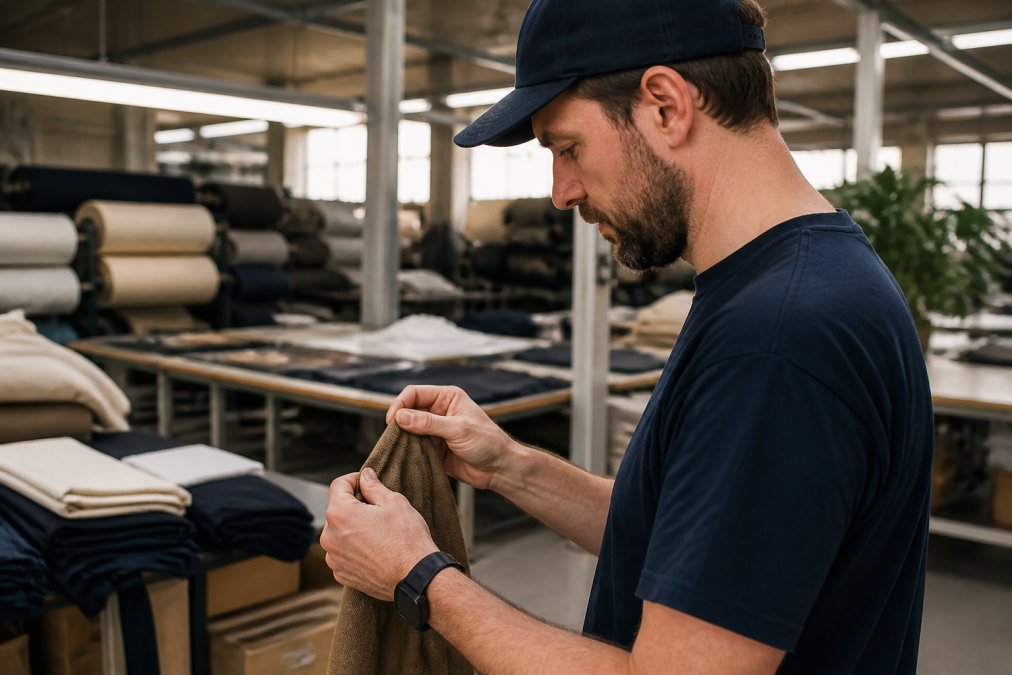
Streetwear combines urban design with cultural meaning, but it has traditionally been less transparent than other clothing categories. The difference from conventional streetwear lies in three key areas: working conditions, environmental impact, and traceability. A truly fair trade brand can tell you exactly where each hoodie was made and how workers are treated.
Recognizing reliable clothing certifications
Certifications are your first quick check. The strongest ones involve independent checks and regular audits with physical factory inspections.
Key certifications for fair clothing
GOTS (Global Organic Textile Standard) guarantees organic fibers and ethical production. Factories are inspected at least annually. You can recognize it by the green label with a circle.
Fair Trade Certified focuses on living wages and labor rights. This certification is stricter on wage levels than many alternatives. Inspectors visit factories without prior notice.
SA8000 (Social Accountability) is an international standard for working conditions. It checks for child labor, forced labor, workplace safety, and trade union rights.
Oeko-Tex Standard 100 focuses primarily on the chemical safety of textiles, not ethics. It guarantees that a garment is free from harmful substances, but says nothing about how workers are treated.
A red flag: if a brand claims several different certifications but none of them is prominently displayed on the label, it is probably greenwashing.
Checking sustainable materials in streetwear
Streetwear materials place unique demands on the production chain. Hoodies, oversized shirts and trousers often use cotton-polyester blends, prints require chemical processes, and comfort must be balanced with durability.
Cotton-polyester blends in hoodies and sweatshirts
Most streetwear hoodies consist of 80% cotton and 20% polyester. This blend offers benefits: cotton is breathable, while polyester provides stretch and durability. However, this makes it more difficult to make the garment fully sustainable.
What you should check:
- Is the cotton content organically grown?
- Is the polyester recycled or virgin? Virgin polyester is cheaper but much more harmful to the environment.
- Many brands only state "cotton" without specifying whether it is organic. This is a red flag.
Organic cotton feels softer and less synthetic than blends containing a lot of virgin polyester.
Prints and embroidery: chemical impact
Screenprints and embroidery are essential to streetwear design, but both processes use chemicals that can cause environmental damage.
Screenprinting uses ink that may contain heavy metals. Good brands use water-based ink instead of solvent-based ink. Water-based ink is more sustainable and less toxic for workers.
Embroidery is actually more durable than printing because it requires no chemicals, but it is labor-intensive.
How to tell the difference:
- Water-based ink feels softer and more flexible. Solvent-based ink feels stiff and can crack when washed.
- Smell the garment: chemical odors indicate solvent-based ink or other harmful substances.
- Check the label for mentions of "water-based inks" or "eco-friendly printing".
- Embroidery feels raised and looks three-dimensional.
Combed ring-spun cotton in streetwear
Combed ring-spun cotton is a step up in quality. This process removes short fibers and twists the fiber in a specific way, resulting in stronger, softer cotton. Hoodies made from ring-spun cotton last longer and feel more luxurious.
Brands that explicitly mention this demonstrate attention to quality and sustainability. This is not standard in streetwear.
Recycled polyester and ocean plastic: caution is advised
Recycled polyester reuses plastic, which is better than virgin polyester, but the process requires a lot of energy and chemicals. Many "ocean plastic" claims are misleading. Only a small percentage of polyester actually comes from the oceans.
Check the label for:
- "Recycled polyester" without further specification = probably post-consumer plastic, not ocean plastic
- "Ocean plastic" must be verified by an independent certification body
- The percentage of recycled material should be clearly stated
Turn the garment inside out. Good brands state the percentage of each material. Vague language such as "sustainable blend" without percentages is probably marketing.
Linen and hemp in streetwear (rare but growing)
Linen and hemp are more sustainable alternatives to cotton. They require less water and pesticides. They are still rare in streetwear because they are more difficult to process.
If you come across a streetwear brand that uses linen or hemp, this is a strong sign of a commitment to sustainability.
Use an ethical clothing production checklist
Use these points to assess every brand you are considering:
- Production location(s) are explicitly named (country and city, not just "Asia")
- The brand publishes an annual report on working conditions
- Worker wages are disclosed or linked to local minimum wage standards
- The brand has an independent certification (GOTS, Fair Trade, SA8000)
- Factories are inspected regularly (at least annually)
- The brand has a clear policy against child labor and forced labor
- The material composition is specified (not just "cotton," but "organic cotton" or "recycled polyester")
- The brand offers contact and complaint channels for workers
- Prices are reasonable for the quality (suspiciously cheap = probably ethically problematic)
Many brands fail on the first two points. They do not name their factory or provide only a vague region.
Checking supply chain transparency
True transparency means being able to trace where your hoodie comes from, from raw material to shipping.
Many brands claim transparency but actually provide very little. They name their manufacturer, but not their fabric supplier.
Check whether a brand:
- Publishes a factory list with names, locations, and number of employees
- Shares photos and videos of the production facilities
- Publishes worker stories or testimonials
- Makes an audit or verification report from independent inspectors available
- Regular updates on improvements in working conditions
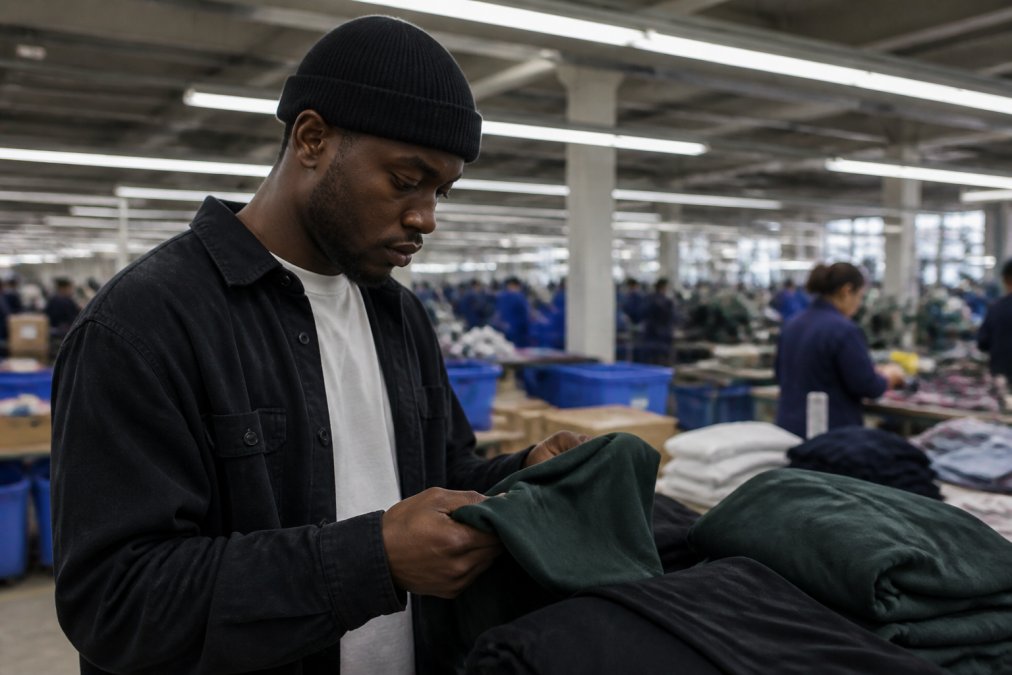
A strong indicator: can you Google the factory's name and find independent reviews?
Visual inspection of streetwear garments
Even without certification, you can learn a lot from how a streetwear garment is finished. Quality is in the details.
Seams: the core test for working conditions
Seams are the first indicator of craftsmanship. Poor seams indicate rushed work, a sign that workers are under pressure.
For hoodies and sweats, check:
- Side seam: Follow it from the armpit to the hem. Is it straight, or does it run diagonally? Crooked seams indicate sloppy work.
- Shoulder seam: This should sit exactly on the shoulder.
- Stitch length: Dense stitching (4–5 per centimeter) is stronger. Loose stitching (2–3 per centimeter) breaks more easily. Inconsistent stitch length indicates maker fatigue.
- Double seams: Good hoodies have double seams at stress points. This makes them stronger.
Gently pull on the seam. Does it feel sturdy or flimsy?
Loose threads and finishing
Loose threads are a classic indicator of sloppy work. Well-finished clothing has all threads trimmed or singed off.
Check:
- Inside: Turn the hoodie inside out. Are all the threads neatly finished?
- Hem and cuffs: Loose threads here indicate rushed work.
- Print edges: Are they cleanly finished, or are threads sticking out?
More than 2–3 loose threads per garment indicates poor quality control.
Prints and embroidery: sharpness and consistency
Screen prints:
- Sharpness: Are the edges sharp and clear?
- Consistency: Does the print have the same color intensity throughout?
- Registration: Do the colors align precisely?
- Texture: Water-based ink feels softer. Solvent-based ink feels stiff.
Embroidery:
- Stiffness: Good embroidery does not feel stiff.
- Stitch length consistency: All stitches should be the same length.
- Backing: Is it neatly finished?
Zippers, buttons, and hardware
Zippers and buttons are often the first things to break. Cheap hardware is a sign that the brand is cutting costs.
Check:
- Zippers: Do they open and close smoothly?
- Zipper tracks: Are they smooth or rough?
- Buttons: Do they feel sturdy?
- Attachment: Are the buttons and zippers securely fastened?
Many cheap hoodies use plastic zippers. Better brands use metal zippers.
Fabric quality: weave, weight, and texture
Feel the inside of the hoodie:
- Weave: Good hoodies have a dense, even weave. You cannot see through the fabric.
- Weight: Does it feel sturdy?
- Texture: Good cotton feels soft and smooth. Cheap cotton feels rough.
- Pilling: Check whether there are already small pills on the fabric. This indicates low quality.
Rub your thumb and index finger over the inside. Does it feel soft?
Labels and branding
Check:
- Attachment: Are the labels securely fastened?
- Print: Is the text sharp and clear?
- Material: Does the label feel soft?
- Information: Does it list a size, material composition, and care instructions?
Oversized fit and construction
Streetwear hoodies are often oversized. This requires precise patterns and cutting.
Check:
- Symmetry: Are both sides equal?
- Sleeves: Do they hang straight down?
- Length: Is the hoodie equally long on both sides?
Recognizing and avoiding greenwashing
Greenwashing is when brands present themselves as ethical or sustainable without actually living up to it. Many streetwear brands use buzzwords like "eco-friendly", "sustainable", and "ethical" without substantiating them.
Red flags for greenwashing:
- The brand claims to be "sustainable" but has no certification
- Photos of employees are always smiling and posed
- The brand talks about "future plans" but shows no current results
- Prices are noticeably low for the claimed quality and ethics
- The brand does not publish a factory list or production locations
- Marketing language is vague: "we are working on it", "we strive to"
- Certifications are images without verification
If you cannot find a brand's production location on its website, it is probably greenwashing.
Second-hand and vintage as a fair-trade alternative
The most sustainable garment is the one that has already been made. Second-hand and vintage streetwear are underrated options.
When you buy a vintage hoodie or cap, you prevent a new garment from having to be produced. This saves water, energy, and chemicals. A vintage hoodie from twenty years ago was probably made better than many new fast-fashion alternatives.
Where to look:
- Local vintage stores
- Online marketplaces such as Vinted, Depop, and Grailed
- Secondhand platforms focused on sneakers and streetwear
- Local thrift stores
You can check the quality directly. If a vintage piece is still sturdy, you know it was well made.
HTT Streetwear recognizes that not everyone needs a new piece of clothing. Sometimes it is better to choose what already exists. But if you do choose something new, where you buy it makes a difference.
Frequently Asked Questions
Which certifications truly guarantee fair trade streetwear?
The most reliable certifications are GOTS (Global Organic Textile Standard) for organic materials, Fair Trade Certified for fair working conditions, and SA8000 for social standards. Always check whether the brand displays these certifications on its packaging or website. Brands without clear certifications are often not transparent about their production process.
How can you recognize greenwashing in fair trade streetwear?
Greenwashing occurs when brands use vague terms without certification: “eco-friendly,” “sustainable,” or “responsible” without evidence. Always check for concrete certifications, supply chain information, and specific material details. A genuine fair trade brand shares where its clothing is made, who makes it, and which materials it uses.
Are sustainable materials in streetwear always more expensive?
Yes, fair trade streetwear usually costs more because working conditions are better and the materials are higher quality. Organic cotton and fair wages increase production costs. However, this results in clothing that lasts longer, offering better long-term value than cheap fast fashion.
What is the difference between fair trade and sustainable fashion?
Fair trade focuses on fair wages and working conditions, while sustainable fashion concentrates on environmental impact. Ideally, a brand does both: fair working conditions along with organic materials and minimal environmental harm. Check both aspects when choosing streetwear.
Recognizing fair trade streetwear requires caution and attention. Start by checking certifications, verify transparency, inspect the quality, and be skeptical of vague claims. The strongest brands are open about their production process and can justify every detail. With this guide, you can make conscious choices that align with your values.
This article was written using GrandRanker