

The future of streetwear: trends and innovations for 2026
Table of contents
- The future of streetwear: from hype to essential
- Sustainable streetwear brands set the agenda
- Techwear Trends: Functionality Meets Style
- The End of Logo-Centric Design
- Circular fashion and resale as the standard
- Subtle aesthetics and minimalist design
- What Makes Streetwear Endure
Last updated on: August 15, 2026
The future of streetwear: from hype to essential
The streetwear industry is at a turning point. What began ten years ago as a niche subculture—a blend of skate culture, hip-hop, and gaming—has now become mainstream. But that does not mean the future of streetwear will remain the same as its past.
The future of streetwear is shaped by three forces: sustainability, functionality, and authenticity. Brands that rely solely on hype are losing ground. Brands that invest in quality, material innovation, and truly innovative designs are growing.
This is the moment when streetwear comes of age. It is no longer about wearing the most exclusive item or following every trend. It is about style that truly works, clothing that lasts, and a personal look that feels authentic. Henk The Tank understands this shift; we are building our collection around these principles: high-quality materials, a universal fit, and designs that genuinely say something.

What you will see below is how the future of streetwear is unfolding. We cover the trends that truly matter, the innovations that make a difference, and why subtlety has become the new status symbol.
Sustainable streetwear brands set the agenda
Sustainable streetwear brands are no longer a niche; they now shape how the rest of the industry thinks. This is a fundamental shift. Five years ago, sustainable options were expensive and limited. Now they are standard.

The reason is simple: consumers want to know where their clothes come from. They want brands that are transparent about their supply chains. They want materials that last longer, not ones that are worn out after just ten washes. We see this behavior across all age groups, not just among young environmental activists.
Brands that invest in sustainable materials—combed ring-spun cotton, recycled polyester, organic cotton—are seeing more loyal customers. Customers are willing to pay a little more for quality that truly lasts. Henk The Tank works with high-quality materials. Our trucker caps and T-shirts are made to last for years, not months.
The circular economy is also changing how we think about streetwear. Resale platforms are growing explosively. Vintage streetwear items from twenty years ago sell for more than their original price. This tells you something important: well-made clothing retains its value. Poorly made clothing disappears into a closet.
This is where sustainable streetwear brands win. They do not just make for today; they make for tomorrow. They think about a garment’s end of life. They use dyes that do not harm the water. They choose biodegradable packaging. These are details consumers notice and appreciate.
:::Key takeaway Sustainability is no longer a selling point for sustainable streetwear brands; it is a requirement. Brands that do not invest in it are falling behind. :::
Techwear Trends: Functionality Meets Style
Techwear trends go far beyond simply looking good. This is clothing designed with a purpose. Waterproof seams. Ventilation panels. Pockets that are actually useful. Moisture-wicking, quick-drying materials.
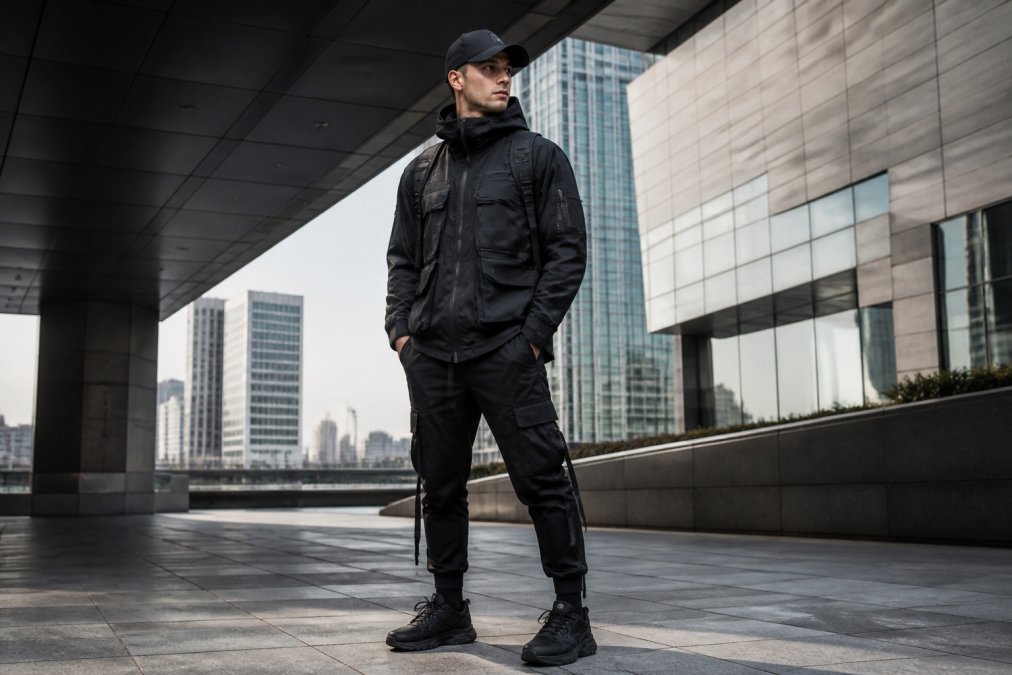
Techwear trends emerged from practical necessity. Skateboarders and parkour athletes needed clothing that moved with their bodies. Gamers wanted clothing that was comfortable during long sessions. Urban explorers wanted clothing that protected them from weather and wear. Techwear meets all these needs.
But here is what is interesting: techwear trends have now gone mainstream without losing their DNA. You no longer see only extreme functional designs. You see subtle techwear—a minimalist jacket with hidden ventilation, a T-shirt with ergonomic seams, trousers with well-designed pockets that do not fall apart.
This is where Henk The Tank comes in. We understand that streetwear fans do not just want their clothes to look good; they want them to function. Our HTT Urban Chaos Hoodie combines premium materials with practical design. It feels good, looks good, and does what it is supposed to do.

The future of techwear trends is personalization. Brands are experimenting with smart fabrics—materials that adapt to temperature, block UV radiation, and have antibacterial properties. This is not science fiction. It is happening now.
The End of Logo-Centric Design
Logo-centric design is dying. This may well be the most striking trend in streetwear. Brands that put their logo on every square inch of their clothing are seeing sales decline. Brands that are subtle are growing.
This is happening because streetwear has grown up. It’s no longer about showing that you’re wearing something expensive. It’s about your own style. Logos now feel... cheap. Overdone. Like a gaming shirt with a huge logo—it doesn’t look like style; it looks like merchandise.
The best streetwear brands understand this. They use subtle branding. A small logo on the sleeve. A hidden label. Maybe no visible logo at all. The design speaks for itself. Henk The Tank works the same way; our HTT Anonymous Streetwear T-Shirt is an example. The design is strong enough that it doesn’t need a large logo.
This is a fundamental shift in how brands think. Logos are no longer the selling point. Quality is. Design is. The way it feels. This creates room for more creativity. Brands can experiment with texture, color, cut—things that truly matter.
The gaming community understands this better than anyone. Gamers want to express their identity, but subtly. They want their friends to know what they play without looking like a ten-year-old at a theme park. This is why gaming-related streetwear is becoming so popular: it can be subtle and still meaningful.
Circular fashion and resale as the standard
Circular fashion is no longer an ideal; it’s a necessity. And making resale the standard means brands need to think differently about their clothing from the moment it’s designed.
The resale market for streetwear is growing faster than traditional retail. This isn’t a trend; it’s a fundamental shift in how consumers perceive value. Platforms such as Vinted, Depop, and Grailed have transformed the secondary streetwear market from niche to mainstream. Vintage streetwear items from twenty years ago sell for more than their original price, not because they’re rare, but because they’re well made.
This changes everything for brands. If you know your T-shirt can be resold in two years, you make it differently. You use better materials. You make sure the seams don’t come loose after ten washes. You choose colors that don’t fade in sunlight. You think about what the garment will look like in five years, not just what it looks like now.
The circular economy works the other way around too. Consumers are now buying more consciously because they know they can resell their purchases. An €80 hoodie feels less like a risk when you know you can sell it for €40 in two years. This means consumers are willing to spend more on quality because they know that quality retains its value.
Brands that understand this win. They don't see resale as competition; they see it as proof that their clothing is well made. They invest in designs that are timeless, not trendy. A classic hoodie in one clean color sells better on resale platforms than a limited-edition design with lots of prints. That's because the former remains wearable, while the latter quickly feels dated.
The impact on design is concrete. Brands are now more likely to choose neutral colors and classic silhouettes. They experiment less with extreme designs because they know these can be harder to resell. This leads to more subtle aesthetics in streetwear, aligning with the broader trend toward minimalist design.
There's also a practical side. Resale platforms have quality standards. If your clothing wears out quickly, it won't be accepted by platforms or will sell for much less. This creates direct feedback for brands: make it better, or your customers won't be able to resell it.
The circular economy is also changing how we think about ownership. Maybe you don't permanently own your favorite hoodie; perhaps you rent it through platforms that offer clothing as a service. Maybe you buy it, wear it for two years, and resell it. This isn't just better for the environment; it's also better for your wallet. And for brands, it means they need to think in terms of lifespan and durability, not seasonal trends.
:::Key takeaway Resale is no longer a secondary market; it is a primary market that influences design choices. Brands that design for resale automatically design for durability and quality. :::
Subtle aesthetics and minimalist design
Subtlety is the new status symbol. This is a radical shift from where streetwear came from.
Minimalist design doesn't mean empty. It means intentional. Every element serves a purpose. A T-shirt with one small graphic element has more impact than a shirt completely covered in prints. A hoodie in one clean color with well-designed seams feels more premium than something with many colors and lots of logos.
This reflects how gaming identity is evolving. Gamers want to express their passion, but they don't want it to be their entire identity. They want subtle hints. A small reference that other gamers notice, but that doesn't stand out to everyone. This is much cooler than a shirt with a huge logo.
Henk The Tank's HTT Streetlive T-Shirt is a good example of this. The design is strong, but it isn't loud. It feels like streetwear, but it also feels wearable. You can wear it to the office. You can wear it to a gaming event. It works in both contexts.

The future of streetwear is clothing you actually wear, not just clothing you buy and leave hanging in your closet. Subtle aesthetics and minimalist design make that possible. It feels less like merchandise and more like genuine style.
What Makes Streetwear Endure
At the end of the day, what makes streetwear endure? It is not the hype. It is not the logo. It is authenticity, but authenticity means something different as streetwear spreads around the world.
Streetwear began as a form of self-expression in specific urban contexts. Skateboarders in Los Angeles wore what was comfortable and what expressed their identity. Hip-hop artists in New York wore what represented their subculture. Gamers wear what showcases their passion. This DNA must be preserved, but it is evolving.
What is interesting is that streetwear is no longer monolithic. While much of the content about streetwear is still Western-centric, strong regional variations are emerging that influence one another less than you might expect. Tokyo streetwear is evolving differently from Berlin streetwear, which is evolving differently from Seoul streetwear. This divergence is a sign of maturity.
In Tokyo, there is a strong focus on precision, minimalism, and subtle technical details. Brands experiment with unconventional materials and cuts, but always with an eye for craftsmanship. The aesthetic is clean, geometric, and often monochromatic. This stems from Japanese design tradition and the urban context of dense, efficient cities.
In Seoul, streetwear is much more expressive and experimental. Color, pattern, and oversized silhouettes are commonplace. Gaming culture and K-pop have a strong influence. The trend is toward more playfulness, not less. This reflects a different cultural context in which self-expression and trend awareness are central.
In Berlin, streetwear is political and artistic. There is a strong focus on sustainability, DIY culture, and anti-commercialism. Brands that feel too commercial are ignored. Authenticity here means that you have to truly mean it, not just say it.
This regional divergence matters because it means that the future of streetwear is not one future. It is multiple futures at once. A brand can be successful in Tokyo with minimalist designs, but in Seoul it needs to be more expressive. This creates room for many more brands, many more styles, and many more authentic voices.
The brands that survive are the ones that understand this. They make clothing that truly works in their context. They invest in quality. They are transparent about where their materials come from. They listen to their community. They innovate without losing their identity. And they understand that their identity is local, not global.
This is also why regional brands are now growing faster than global brands. A small Berlin brand that truly understands what Berlin streetwear fans want can grow faster than a large global brand trying to be everything to everyone. The same logic applies to Tokyo and Seoul.
The future of streetwear is not mysterious. It is clothing that is authentic in its local context, sustainable, and genuinely well made. It is subtle rather than loud. It is for people who take style seriously, not for people who just want to show off. And it is different in Tokyo than in Berlin, which makes it much more interesting.
Frequently Asked Questions
Is streetwear still relevant in 2026?
Yes, streetwear is not out of fashion. However, it is evolving from a purely hype-driven trend into an essential part of everyday fashion. The focus is shifting from logomania to quality, sustainability, and subtle designs. Brands that adapt to these changes, such as by using combed ring-spun cotton and functional design, will continue to grow. Streetwear remains relevant because it enables young adults and fans to express their identity, whether that is gaming-related or simply style-conscious.
What role does sustainability play in the future of streetwear?
Sustainability is no longer optional; it is an expectation. Consumer behavior is changing rapidly, with young people increasingly choosing brands with transparent supply chains and environmentally conscious practices. Sustainable streetwear brands use recycled materials, biodegradable packaging, and ethical production processes. This extends beyond the product itself; circular models such as resale and rental platforms are also growing. Brands that ignore this risk losing relevance.
What is the difference between techwear and traditional streetwear?
Techwear combines functional design with urban aesthetics. While traditional streetwear focuses on style and subcultural expression, techwear integrates practical elements such as water-repellent fabrics, multiple pockets, and ergonomic fits. It is streetwear that actually works. Techwear trends are growing because they bring both worlds together: you can be stylish while also being ready for the day.
How long does quality clothing really last?
Clothing made from combed ring-spun cotton and durable materials can last for years with proper care. Henk The Tank offers a 2-year EU warranty on products, indicating that we are confident in their durability. It is not just about the material, but also the construction: double stitching, strong threads, and good finishing determine longevity. A well-made streetwear item can last 5–10 years, while cheap fast fashion is often worn out after just a few washes.
This article was written using GrandRanker