

How to prevent cracking clothing prints: complete guide
Table of contents
- Why do clothing prints crack, and how can you recognize it?
- Washing printed clothing: the basic routine that protects prints
- Washing printed clothing inside out: why it works
- Limiting friction and wear during washing
- How to dry printed clothing without damaging the print
- Ironing a print on clothing: how to do it safely
- What to do when a print is already cracking or peeling
- Conclusion: prints that last for generations
- Frequently Asked Questions
Last updated: October 12, 2026
Why do clothing prints crack, and how can you recognize it?
Cracking clothing prints occur when the ink layer on the fabric dries out, expands, and contracts again until small cracks appear in the design. Most complaints about damaged prints can be traced back to washing habits, not a flaw in the design itself. This is exactly what the question "how do you prevent clothing prints from cracking" comes down to in practice: it is rarely about one incorrect wash, but about a pattern of heat, friction, and harsh products that builds up over time.
The fabric moves with every wash. The print moves along with it, but not infinitely. That is why recognizing early signs is more important than reacting after a print has already torn.
The four causes of cracking
Cracking prints almost always have one or more of these four causes:
- Heat, the dryer, a hot iron, or water that is too warm makes the ink layer expand and contract. Each cycle weakens the adhesion.
- Friction, zippers, hook-and-loop fasteners, other prints, and an overfilled drum mechanically wear away the ink layer.
- Chemicals, bleach, fabric softener, and harsh detergents damage the binding layer between the ink and the fibers.
- Material and curing, a print on fabric that stretches too much, or a print that was not properly cured after production, will crack sooner than a properly applied print on a stable fabric.
These four factors work together. A print that has already been weakened by heat will give way more quickly under friction.
The role of printing technique in cracking prints
Not every print reacts the same way to washing and wear. The printing technique determines how flexible the print is and how sensitive it is to heat and friction.
- Screen printing applies a thicker layer of ink to the fabric. This layer is durable and colorfast, but can crack when stretched frequently because the ink moves less with the fibers. Screen printing tolerates washing at 30 °C well, but is more sensitive to mechanical friction.
- Sublimation infuses the ink into the fibers instead of placing it on top. These prints fade sooner than they crack because there is no separate ink layer that can tear. Sublimation works mainly on polyester.
- DTG prints, such as those on our graphic T-shirts, sit as a thin layer on the cotton. They are soft and breathable, but require a gentle wash cycle because the ink layer is thinner and more vulnerable.
- Heat-transfer vinyl and transfer prints consist of a layer of film pressed onto the fabric. These prints are most sensitive to heat: an iron that is too hot or a dryer can make the film shrink and crack.
So the difference lies not only in quality, but also in how you handle them. A sublimation print and a heat-transfer vinyl print require different care, even if they hang next to each other in the closet.
Recognizing the early signs of wear
Small cracks along the edges of a graphic are the first sign. Next come white lines in the middle of the design and a dull, milky haze over the color. With flex film, the edges start curling first; with DTG, a grainy texture first appears on the print.
That is why you should always check your prints when your clothes come out of the wash. It takes ten seconds and can save a shirt.
Washing printed clothing: the basic routine that protects prints
The safest routine for printed clothing is to wash it inside out, at a low spin speed, with a mild detergent and the lowest possible temperature. Anyone who consistently follows these four points can keep prints sharp for years.
Here is what that routine looks like step by step:
- Turn the garment inside out.
- Close zippers and hooks so they do not rub against the print.
- Wash with similar colors in a full but not tightly packed drum.
- Choose a short, gentle program.
- Use liquid detergent instead of powder.
- Do not run the machine longer than necessary.
These six steps cost you nothing extra. They only require a different habit.
HTT 005 After The Noise – Oversized Box Fit T-Shirt →
Washing printed clothing inside out: why it works
Washing clothing inside out protects the print because the fabric itself acts as a buffer. The outside of the garment rubs against other clothes, while the print remains safely on the inside.
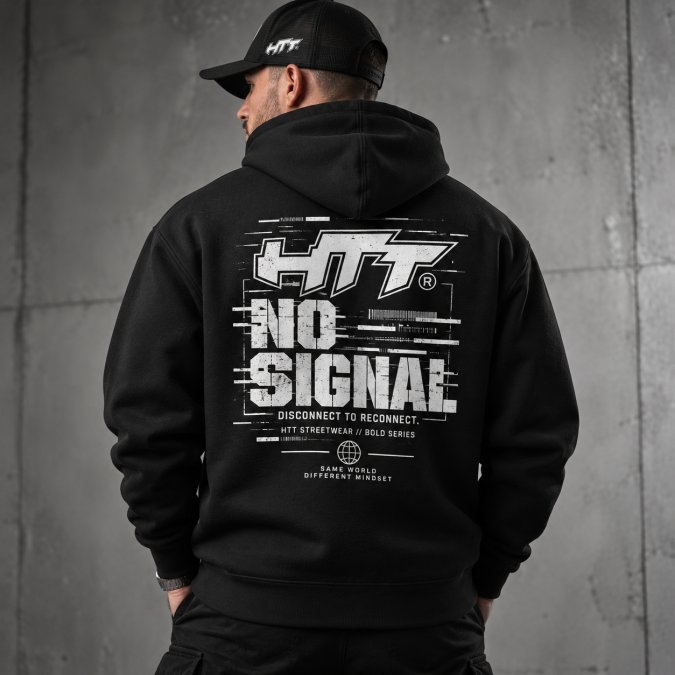
The effect is greater than most people think. Friction is the main cause of wear on a print, much more so than water or soap. Turning the print inward prevents it from rubbing against other fabrics.
Limiting friction and wear during washing
Less friction means a longer lifespan for your print. You can achieve that with a few simple choices in the machine.
- Never wash printed clothing together with items that have zippers, buckles, or Velcro.
- Do not overfill the drum, but do not leave it too empty either.
- Choose a program with a low spin speed.
- Avoid using an extra spin cycle.
An overfilled drum does not let clothes move properly, causing dirt to remain. An underfilled drum makes garments hit the drum wall hard. The middle ground works best.
How to dry printed clothing without damaging the print
The dryer is the biggest enemy of a print. Heat causes the ink layer to expand and contract, which is exactly what causes cracking.
That is why you should air-dry printed clothing. Hang the garment inside out, away from direct sunlight, and give it plenty of space. This helps the fabric retain its shape and keeps the print intact.
A drying rack in a well-ventilated room works fine. Direct heat from a radiator or strong sunlight will cause the color to fade, so keep it away from them.
Ironing a print on clothing: how to do it safely
You can iron it, as long as you never touch the print directly. An iron on a high setting melts the ink layer and makes it stick to the soleplate.
The safe approach:
- Iron the garment inside out.
- Use the lowest heat setting.
- Place a cotton cloth between the iron and the fabric if you are working on the outside.
- Never steam-iron directly on the print.
When in doubt, it is better to leave a printed shirt hanging. Creases often disappear on their own.
What to do when a print is already cracking or peeling
A print that is already cracking usually cannot be fully restored, but there is more you can do than most people think. The approach depends on how far the cracking has progressed and which printing technique is used on the garment. This is exactly the part most washing guides overlook: they tell you what you should have done, not what you can do now.
HTT 005 After The Noise – Oversized Box Fit T-Shirt →
Step 1: assess the severity
- Hairline cracks at the edges, the print is still largely intact. Here, you can slow down the cracking.
- White lines in the middle of the design, the ink layer has broken in several places. Restoration is limited.
- Loose sections or curling edges, the adhesive has failed. Repairing it is not realistic.
Step 2: try heat restoration (only for minor damage)
With heat-transfer vinyl and transfer printing, careful heat restoration can temporarily flatten the print again. The vinyl softens at moderate heat and re-adheres to the fabric.
Here is how to do it:
- Lay the garment flat on a hard, heat-resistant surface.
- Cover the print with a thin cotton cloth or parchment paper; never iron it directly.
- Iron on the lowest setting, without steam, using short movements of a few seconds.
- Let the item cool completely before wearing or washing it again.
Step 3: limit further damage
If restoration does not work, you can still slow down the cracking:
- From now on, wash the item only by hand or on a very short cycle at a maximum of 30 °C.
- Do not use fabric softener; it makes the ink layer softer and more vulnerable.
- Wear it more often as a layer under an open shirt or jacket.
- Use it as a work or chore shirt instead of as a statement piece.
When repairing is no longer worthwhile
Once entire sections start peeling away or the print is more crack than design, repairing it takes more effort than it is worth. A cracked print on an otherwise good shirt is better worn as a layered garment or saved for chores. For a statement piece, replacement is the realistic choice.
Conclusion: prints that last for generations
Printed clothing lasts a long time when you master the basics: wash it inside out, use a low spin speed, mild detergent, no bleach, no dryer, and iron carefully. These are not complicated rules, but habits that quickly pay off.
At HTT Streetwear, we make oversized T-shirts and hoodies with prints that can withstand a lot, provided you treat them properly. Consider the HTT Identity Sculpt with its heavyweight cotton and statement back print, or the HTT 005 After The Noise with its editorial back print. Both require the same simple routine as any other printed garment.

Want a print that deserves to be properly cared for? Check out our oversized T-shirts and choose the design that matches your identity.
Frequently Asked Questions
Why does a print on clothing crack?
A print cracks due to a combination of factors: friction in the washing machine, excessively high temperatures during washing or ironing, harsh detergents, and using the dryer. Screen prints and DTG prints in particular can develop cracks over time if they are not treated with the proper care. Washing your clothes inside out at a maximum of 30 °C and air-drying them will significantly extend the life of the print.
At what temperature should you wash printed clothing?
Always wash printed clothing at a low temperature, up to 30 °C maximum. Use a mild detergent without bleach and choose a short, gentle wash cycle. A wash cycle that is too hot will make the print softer and cause it to crack more quickly. Always check the care label in your garment for the manufacturer's exact instructions.
Can you put printed clothing in the dryer?
It is strongly recommended not to put printed clothing in the dryer. The dryer's heat can cause the print to crack, peel, or come off. After washing, hang your clothes to air-dry, preferably out of direct sunlight. This keeps the print flexible and helps it adhere properly to the fabric.
How do you iron printed clothing without damaging it?
Always iron printed clothing inside out or place a cotton cloth over the print before ironing. Use a low ironing temperature and avoid direct contact between the iron and the print. This prevents the print from melting, cracking, or sticking to the iron. Steaming at a low temperature is a safe alternative.