

How do you choose the right hoodie fit
Table of contents
- Why the right hoodie fit is crucial to your look
- Difference between hoodie fits: oversized, regular, and everything in between
- Hoodie size chart: how to measure your body
- Shoulder seams and hem: the details that determine the fit
- Fabric weight and shrinkage: why GSM influences your size choice
- How to style an oversized hoodie: from casual outfit to layered look
- Fit advice by body type and occasion
- Conclusion: your ideal hoodie in three steps
- Frequently Asked Questions
Last updated: September 14, 2026
Why the right hoodie fit is crucial to your look
The search for the right hoodie fit does not start with the size on the label, but with your own body measurements. A hoodie that is two centimeters too loose immediately looks sloppy rather than relaxed.
That difference comes down to three things: shoulder width, chest circumference, and the proportion between your upper body and the length of the sweater. Get those three right, and you will make the right choice the first time.
Below, we explain how to determine your size, the difference between an oversized and regular fit hoodie, and why fabric weight and shrinkage influence your choice. First, the part most people skip: measuring yourself.
Under general clothing product safety rules, clothing sold in the EU must include clear size and material information. That is useful, because you need this information for comparison.
Difference between hoodie fits: oversized, regular, and everything in between
The difference between an oversized and regular fit hoodie lies in the space between the fabric and the body. A regular fit follows your silhouette with a few centimeters of ease. An oversized fit deliberately adds extra room, especially around the shoulders and lower body.
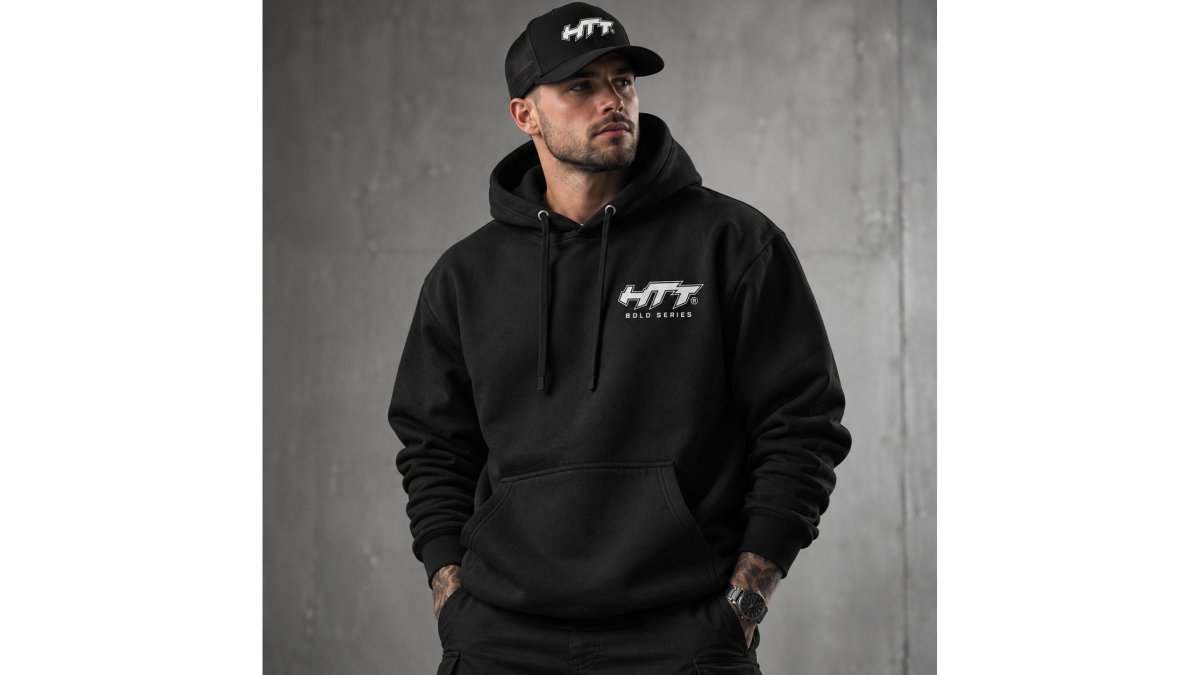
The cut determines how the sweater falls. A straight cut runs straight down, while a tapered cut narrows slightly at the waist. For most people, a regular fit with a slightly tapered cut works best as an everyday base layer.

Oversized fit: room, silhouette, and attitude
An oversized hoodie is designed with extra room in the shoulders and body. With this style, the shoulder seams often fall just beyond the edge of your own shoulders, creating a broad, straight silhouette.
This style works well as a statement piece, but pay attention to the hem. An oversized sweater that falls over your hips makes you look shorter. If you choose an oversized fit, keep the hem around your hip bone.
Regular fit: timeless and versatile
The regular fit is the safest choice if you want one hoodie that works everywhere. The shoulder seams align exactly with your natural shoulder line, and the sleeves end at the wrist.
For layering over a T-shirt, a regular fit is more practical than oversized: there is enough room without the fabric bunching up.
Hoodie size chart: how to measure your body
A hoodie size chart only works if you compare it with your own measurements. Measure with a flexible tape measure over your clothes, or in your underwear for the most accurate result.
- Chest circumference: measure at the fullest point of your chest, just below your armpits.
- Shoulder width: measure from one shoulder tip to the other, across your back.
- Sleeve length: measure from the tip of your shoulder to just past your wrist joint.
- Length: measure from the neck seam to where you want the hem to end.
Compare these measurements with the model's size chart, not with your usual clothing size. Sizes vary by brand and cut.
How to measure chest circumference, shoulder width, and sleeve length correctly
Chest circumference determines whether a sweater fits snugly or loosely. Shoulder width determines whether the seams sit in the right place. Sleeve length determines whether your hands stay free or disappear halfway into the sleeves.
Choosing between two sizes? With a regular fit, choose the smaller size if your chest measurement falls exactly between two sizes. With an oversized fit, you can keep your usual size.
Shoulder seams and hem: the details that determine the fit
The shoulder seam is the most important indicator of a good fit. If the seam sits at the end of your shoulder, the sweater fits well. If it drops onto your upper arm, the sweater is too large.
The hem determines how the sweater falls in relation to your hips. A hem with a firm ribbed band stays in place; a loose hem rides up when you move. When trying it on, check whether the ribbed bands at the sleeves and hem are firm enough to hold their shape.
Fabric weight and shrinkage: why GSM influences your size choice
GSM stands for grams per square meter and indicates how much fabric the sweater contains. A higher fabric weight means heavier, sturdier fabric that is less likely to lose its shape. But GSM tells you nothing about shrinkage; that is a separate property you only discover when the sweater comes out of the wash.
Why cotton shrinks and polyester does not
Cotton fibers consist of cellulose chains that are held under tension during spinning. As soon as the fabric is exposed to warm water or placed in the dryer, those chains relax and the fibers contract. This is irreversible: you cannot restore the original size by washing the sweater again.
Polyester is a synthetic fiber formed through a melting process. These fibers have no residual tension and barely shrink at normal washing temperatures. That is why a blend retains its size better than pure cotton.
How the fabric composition determines your size choice
The ratio on the care label is your best predictor:
- 100% cotton without pre-treatment: expect 3 to 5% shrinkage in length and 2 to 3% in width after the first warm wash.
- Pre-shrunk cotton treatment: most of the shrinkage has already been removed, usually leaving less than 1% residual shrinkage.
- 50/50 cotton-polyester blend: the polyester stabilizes the fabric, so shrinkage generally remains below 2%.
- Heavyweight cotton above 350 GSM: shrinks less proportionally because there is more fiber mass per square meter, but the absolute shrinkage in millimeters can actually be greater.
Washing instructions that protect the fit
Wash a new hoodie at 30 degrees the first time, inside out, on a low spin cycle. Let it air-dry on a flat surface instead of on a hanger; a wet, heavy sweater hanging from the shoulders will stretch out instead.
GSM as an indicator of quality, not size
Use GSM to assess durability and drape, not to choose your size. A sweater weighing 280 to 320 GSM feels like a lightweight everyday hoodie with a fluid drape. Above 400 GSM, you get a sturdy, structured sweater that holds its silhouette for years, but initially feels stiffer and takes longer to mold to your body.
For an oversized fit, a higher GSM often works better because heavier fabric holds its shape around your body instead of clinging to it. For a regular fit that follows your body, a medium weight is more comfortable.
How to style an oversized hoodie: from casual outfit to layered look
Styling an oversized hoodie is all about balance: roomier on top, more fitted on the bottom. Pair a loose sweater with slim trousers or a straight-cut style that does not add extra volume.
For a layered look, wear a T-shirt under the hoodie and let the bottom extend just below the hem. Keep the colors understated: one statement piece per outfit is enough.
The HTT Bold Series No Signal Oversized Hoodie has a clean front with a graphic on the back, making it suitable for this approach. If you prefer a completely black silhouette, the HTT Bold Hoodie with its minimal chest logo is a good fit.
Fit advice by body type and occasion
There is no fit recommendation that works for everyone, because body types differ in proportions, not just size. Two people with the same chest circumference may need completely different fits. Use the table below as a starting point and adjust it to your own proportions.
| Body type | Best fit | What to look for |
|---|---|---|
| Narrow and long | Regular fit | Sleeve length and hem height |
| Broad shoulders | Oversized fit | Don't let the shoulder seam drop too far |
| Shorter upper body | Regular or slightly oversized | Hem not below the hip |
| Muscular upper body | Regular fit with stretch | Room at the chest and armpits |
Narrow and long: avoid the tent effect
With a long, narrow upper body, a regular fit quickly looks like a straight block because there is little volume to fill out the fabric. The problem is usually not the width but the length: the hem sits too high and the sleeves end above the wrist.
When trying it on, check that the hem reaches at least the middle of your hip bone and that the sleeve just touches your wrist joint when your arm hangs by your side. A slightly tapered cut works better than a straight cut because it adds some volume without making the sweatshirt hang.
Broad shoulders: don't let the seam drop
With broad shoulders, the temptation is to choose oversized, but pay attention to where the shoulder seam lands. If it falls more than two centimeters past the edge of your own shoulder, the sweatshirt looks too large instead of intentionally roomy. The seam should fall right at or just past the end of your shoulder.
An oversized fit with a firm, structured fabric works better here than a lightweight fabric, because heavy fabric follows the broad shoulder line instead of slipping away from it.
Shorter upper body: keep an eye on the hem
A hoodie that falls over the hips makes a short upper body look even shorter. Choose a regular fit or a slightly oversized style where the hem stays around the hip bone. A hem with a firm ribbed band helps: it stays in place instead of riding up when you move.
Muscular upper body: room at the chest and armpits
With a muscular upper body, a regular fit quickly feels tight around the chest and armpits, especially when you raise your arms. Check the armpit-to-armpit width in the size chart: it should be at least equal to your own chest circumference divided by two, plus a few centimeters of ease.
A regular fit with a little stretch in the fabric, or a slightly oversized style, allows freedom of movement without the sweatshirt hanging like a sack.
The occasion determines the fit, not your size
For a casual occasion, an oversized fit with a graphic on the back is suitable. For work or a more polished setting, choose a regular fit in a subdued color, such as the HTT Work Hard Heavy Blend Hoodie in Black or Heather Sport Dark Navy.
Conclusion: your ideal hoodie in three steps
Choosing the right hoodie fit comes down to three steps:
- Measure your chest circumference, shoulder width and sleeve length.
- Compare those measurements with the size chart for the model you want.
- Choose your cut based on the silhouette you want, not your usual size.
Expect slight shrinkage after the first wash and pay attention to the fabric's GSM. A heavier sweatshirt retains its shape longer.
At HTT Streetwear, you will find hoodies in both regular and oversized fits, with fabric weights and compositions listed on each product page. Add your size to your cart and experience for yourself how a well-fitting hoodie can transform your look.
Frequently Asked Questions
How should a hoodie fit?
A well-fitting hoodie has shoulder seams that rest exactly at the end of your shoulders. The hem reaches just below your hips, so you do not have to keep pulling it into place. With an oversized model, the shoulder seams intentionally sit a few centimeters lower and the fabric remains loose around your body without looking baggy. Unsure between two sizes? Choose the larger size for a relaxed look or the smaller one for a slimmer fit.
What hoodie size do I need?
Measure your chest circumference at the widest point, your shoulder width from edge to edge and your sleeve length from the shoulder point. Compare those measurements with the brand's size chart. Note that brands differ, so always use the specific chart for the hoodie you have in mind rather than a general guideline.
What is the difference between a regular and oversized fit?
A regular-fit hoodie follows your body shape more closely: the shoulder seams sit in the right place and the fabric falls snugly along your torso. An oversized hoodie intentionally has extra room in the chest, sleeves and hem, with dropped shoulder seams for a relaxed look. The difference is therefore not only in the size, but mainly in the cut and where the seams are positioned. Choose regular for a versatile basic look and oversized for a more distinctive silhouette.
Does a hoodie shrink after washing?
That depends on the fabric. Hoodies made from 100 percent cotton can shrink by a few percent after the first wash, especially in length. If you choose a cotton-polyester blend, the fit will remain more stable. Always wash at 30 degrees, inside out and without using a dryer to keep shrinkage to a minimum. If the label says 'pre-shrunk', the fabric has already been preshrunk, so the size will barely change after washing.