

The influence of urban culture on modern fashion (2026)
Table of contents
- From subculture to mainstream: the rise of urban fashion
- Hip-hop’s influence on fashion: more than just clothing
- Urban clothing style characteristics: how to recognize it
- How do you style urban clothing? Practical style tips for every wardrobe
- The psychological impact: why urban clothing is more than a trend
- The local scene and sustainability: the future of streetwear
- Conclusion: urban culture as a lasting force in the fashion industry
- Frequently Asked Questions
Last updated: September 9, 2026
From subculture to mainstream: the rise of urban fashion
The influence of urban culture on modern fashion is no longer a trend but a lasting force that has reshaped the fashion industry. What once began as a rebellious expression of youth culture has grown into a multibillion-dollar industry that shapes the global fashion landscape. But anyone who looks only to New York or Los Angeles misses an essential part of the story. The Dutch urban scene has made its own distinctive contribution to this global movement, a contribution that often remains underrepresented in international overviews.
The Dutch street as a breeding ground
In the 1980s and 1990s, hip-hop made its way to the Netherlands through American military bases and pirate radio stations. Cities such as Amsterdam, Rotterdam, and The Hague quickly developed their own interpretation of the culture. While the American scene struggled with racial and social tensions, the Dutch variant took on its own character: a greater emphasis on underground hip-hop, strong ties to gabber and house culture, and a notable fusion with the Surinamese and Antillean communities.
These local roots can still be seen in fashion today. Dutch streetwear brands such as Patta (founded in Amsterdam in 2004) and Daily Paper (also from Amsterdam, founded in 2008) built on this legacy. Patta began as a sneaker store that arranged imports for Dutch hip-hop fans who otherwise had no access to exclusive releases. Daily Paper grew from a student initiative into a brand that combines African prints with urban silhouettes, a direct reflection of the multicultural makeup of Dutch streets.
From underground to the Dutch catwalk
The transition from subculture to mainstream followed a different path in the Netherlands than in the United States. Whereas American brands such as Supreme and Off-White conquered high fashion through collaborations with luxury houses, in the Netherlands this happened through Amsterdam Fashion Week and the rise of Dutch designers who embraced urban influences. Designers such as Bas Kosters and the brand Filling Pieces (founded by Guillaume Philibert in Amsterdam) showed that streetwear and high fashion do not have to be opposites.
A major turning point was the collaboration between Patta and Nike, which began in 2009. This collaboration gave the Dutch brand international recognition and proved that a local scene with an authentic story could compete with major international players. Patta has since grown into a brand with stores in London and a global online community, but its roots are still in the streets of Amsterdam.
What this local history means for you
The Dutch urban scene shows that authenticity cannot be copied. It is not about imitating an American aesthetic, but about translating local experiences into clothing. That authenticity is exactly what consumers are increasingly looking for. In a world where globalization is making everything more alike, local streetwear offers an alternative: clothing with a story rooted in a specific place and time.
This development also affects how you wear urban clothing. Anyone who chooses a Dutch brand with a local story is wearing more than a hoodie—they are wearing a piece of cultural history. This explains why brands such as HTT Streetwear, with their Amsterdam-inspired designs, respond to this need for local identity within a global movement. The future of urban fashion does not lie in copying what works elsewhere, but in strengthening what is authentically local.
Hip-hop’s influence on fashion: more than just clothing
Hip-hop’s influence on fashion goes far beyond wearing baggy trousers or gold chains. Since its emergence, hip-hop has served as a vehicle for self-expression and social commentary, with clothing functioning as a visual language. Artists used their outfits to communicate status, identity, and creativity long before the fashion industry took notice of these signals. This cultural movement created a complete ecosystem in which music, dance, graffiti, and fashion are inextricably linked.
Rap and breakdancing gave urban clothing a platform, while street art and graffiti shaped the visual identity we recognize today in graphic prints and striking logos. Research into hip-hop’s cultural impact on fashion confirms that this influence is now deeply rooted in contemporary design philosophy.
Urban clothing style characteristics: how to recognize it
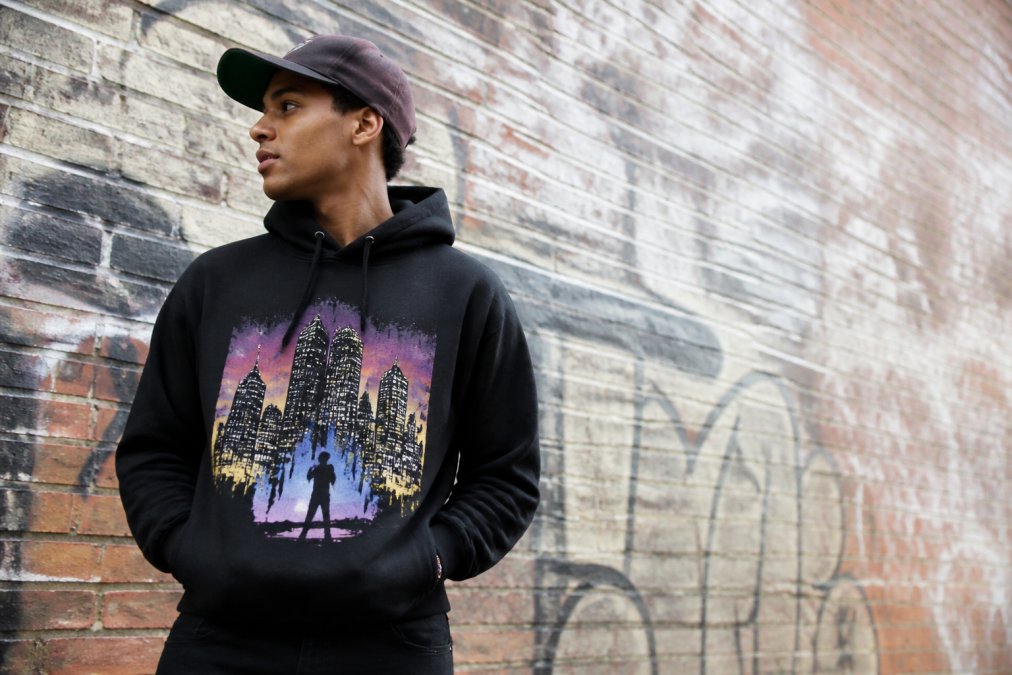
Urban clothing style characteristics have become so widespread that they can sometimes be difficult to distinguish from mainstream fashion. Nevertheless, there are a number of defining elements that shape the style. Think oversized silhouettes, bold graphic prints, hoodies, and sneakers that serve as statement pieces. The clothing is designed for movement and everyday life in an urban environment, not for the catwalk.
What sets urban clothing apart from other trends is its emphasis on authenticity. It’s not about perfection, but about telling a story. A garment should look as though it has lived a life, as though it has seen the streets. Below is an overview of the key features:
| Feature | What it means | Example |
|---|---|---|
| Oversized fit | Loose and comfortable, not tight | Oversized hoodies and T-shirts |
| Graphic prints | Striking artwork and logos | Back prints with street art |
| Functional details | Pockets, drawstrings, adjustable elements | Cargo trousers, technical jackets |
| Durable materials | Sturdy fabrics that last | Heavyweight cotton, ring-spun yarn |
Functional and comfortable: the foundation of urban design
The foundation of urban design lies in functionality and comfort. Clothing must withstand the demands of everyday life: cycling through the city, walking for long periods, and changing weather. That’s why technical fabrics, reinforced seams, and functional pockets are used so often. This practical approach also explains why garments such as the HTT Original Rude Boys Heavy Hoodie, made from sturdy 271 g/m² fabric, are so popular: they combine comfort with durability.
Graphic prints and street art as identity formation
Graphic prints and street art are the visual identity of urban fashion. They transform a simple garment into a canvas for creative expression. These prints are never random; they carry meanings, references, and attitudes. Wearing a striking graphic communicates part of your identity without words. Take the HTT Urban Chaos Hoodie, for example, whose layered collage of underground typography and grunge elements creates a complete aesthetic statement.
How do you style urban clothing? Practical style tips for every wardrobe
How do you style urban clothing without looking like you’re wearing a costume? The answer is simpler than you think: start with the basics and build from there. Urban fashion isn’t about wearing as many eye-catching items as possible at once, but about creating a cohesive look that feels effortless.
- Start with one statement piece. A striking hoodie or T-shirt with a back print forms the anchor of your outfit.
- Combine with neutral basics. Dark jeans or simple cargo trousers let the graphic breathe.
- Play with layers. A hoodie under an oversized jacket or a T-shirt over a long shirt creates depth.
- Choose your accessories carefully. A cap or hat completes the look without overpowering it.
- Pay attention to the fit. Oversized does not mean sloppy; the proportions need to be right.
An item that perfectly illustrates how to wear urban clothing in a subtle yet distinctive way is the HTT Amsterdam Street T-Shirt. It combines a clean logo on the front with a bold back print, allowing you to wear it both to the office and on the street. For those who really want to make a statement, the HTT Open Your Eyes Oversized T-Shirt, with its snow-wash finish, offers a rawer, more distinctive look.
The psychological impact: why urban clothing is more than a trend
The psychological impact of urban clothing is rarely discussed, but it explains why this style has such lasting appeal. Urban clothing functions as a form of identity formation and self-expression. It enables wearers to show which group they belong to, which values matter to them, and how they want to be perceived. In a world where we increasingly exist online, clothing offers a tangible way to present yourself.
This need for authenticity and a sense of community is deeply human. Urban clothing gives young people a feeling of belonging to a community that shares the same codes and aesthetic. It also explains why the style is not disappearing: it fulfills a fundamental need that goes beyond seasonal trends. Freerunning, breakdancing, and the broader street culture continue to fuel this clothing style with new energy and meaning.
The local scene and sustainability: the future of streetwear
The future of streetwear is shaped by two developments that reinforce each other: the rise of local scenes and growing attention to sustainability. More and more consumers are looking for brands with an authentic story—brands rooted in their own surroundings rather than anonymous global players. At the same time, the climate crisis is forcing the fashion industry to take a more critical look at production processes and material choices. Those who understand these two developments can see how the Dutch streetwear scene is positioning itself for the future.
Local production as an answer to globalization
The Dutch streetwear scene features a notable countertrend: brands that consciously choose local production. This offers several advantages: shorter transport routes, better control over working conditions, and the ability to respond quickly to customer demand.
A concrete example is the brand G-Star RAW, which demonstrated through its “Raw for the Oceans” initiative, in collaboration with Parley for the Oceans, that a major Dutch brand can take sustainability seriously. Smaller players are also taking steps, however. This choice comes at a cost: local production can quickly cost 20 to 30 percent more, but more and more consumers are willing to pay that price for transparency and quality.
The circular economy in urban fashion
Sustainability in urban fashion goes beyond simply choosing organic cotton. The circular economy—the reuse and recycling of materials—is becoming increasingly important. Dutch initiatives such as the Amsterdam-based label Byborre are experimenting with fully recycling garments without compromising quality.
In the streetwear world, circularity is taking on a distinct meaning. The DIY culture that has always been part of urban fashion—for example, customizing jackets or dyeing sneakers—aligns seamlessly with circular thinking. Repairing and personalizing clothing not only extends its lifespan, but also gives each piece a unique character. This is no longer a niche: more and more consumers are looking for ways to give their favorite garments a second life.
The role of quality in sustainable streetwear
One of the most effective ways to consume more sustainably is simple: buy less, but buy better. This principle is gaining ground in the streetwear world. Whereas fast fashion revolves around disposable items, more and more consumers are choosing garments that last for years. This explains the popularity of heavyweight cotton fabrics and high-quality finishes. A 271 g/m² hoodie has a substantial premium feel, and that quality is immediately noticeable.
This shift toward quality also has consequences for brands. Anyone who wants to create sustainable streetwear must invest in better materials, fairer production, and timeless designs that do not go out of fashion after one season. This requires a different way of thinking: not chasing every trend, but building a wardrobe that lasts longer. Brands that find this balance between local authenticity, quality, and sustainability will shape the development of streetwear in the years ahead.
The future is local and sustainable
The future of streetwear is not a return to the past, but a new synthesis. Local scenes offer the authenticity that global brands cannot match, while sustainability is the moral and practical prerequisite for tomorrow’s fashion. Dutch brands that manage to combine these two developments hold a unique position: they can respond both to the need for authenticity and to the urgency of the climate crisis. Street culture, which once began with rebellion, is thus also becoming a movement for change.
Conclusion: urban culture as a lasting force in the fashion industry
The influence of urban culture on modern fashion is not a passing fad, but a fundamental shift in how we perceive and wear clothing. What began as a subculture has grown into the dominant force in contemporary clothing styles. Urban clothing offers what mainstream fashion often lacks: authentic self-expression, functional comfort, and a rebellious character that resonates with a generation searching for authenticity.
The challenge for the fashion industry lies in preserving this authenticity as the style continues to spread. Brands that remain true to the core values of street culture, such as HTT Streetwear with its striking graphics and high-quality materials, will shape how this movement develops in the coming years. Ready to take your wardrobe to the next level? Explore the latest collection and add a statement piece to your cart today.
Frequently Asked Questions
What is an urban clothing style?
An urban clothing style emerged from the street culture of the 1980s and 1990s, particularly hip-hop and skateboarding. It revolves around comfortable, functional clothing with a distinct identity. Think hoodies, oversized T-shirts, sneakers, and striking graphic prints. Urban fashion has now become a lasting influence on the modern fashion industry and is worn everywhere from the runway to the street.
How has hip-hop influenced modern fashion?
Hip-hop has transformed fashion from the inside out. Artists used clothing as a form of self-expression and status, from eye-catching jewelry to branded clothing. This influence can be seen in today’s streetwear: hoodies, baseball caps, and sneakers are now collection pieces from luxury brands. The emphasis on individuality and expressing your identity through clothing is a direct legacy of hip-hop culture.
Is streetwear merely a temporary trend or a lasting change?
Streetwear is not a temporary trend, but a fundamental shift in how we approach fashion. It has shifted the focus from formal dress codes to comfort and personal expression. The influence of urban culture is so deeply rooted that even luxury fashion houses are embracing it. This development is here to stay because it responds to a new generation’s need for authenticity and self-expression.