

Choose an oversized graphic T-shirt with a bold print
Table of Contents
- Choosing an oversized graphic T-shirt with a durable print
- Understanding the fit of an oversized T-shirt
- Recognizing quality T-shirt fabric
- Assessing T-shirt print quality
- How to style a graphic T-shirt
- Washing a printed T-shirt
- Conclusion: Your next oversized graphic T-shirt
- Frequently Asked Questions
Last updated: October 19, 2026
Choosing an oversized graphic T-shirt with a durable print
Choosing an oversized graphic T-shirt with a durable print comes down to three things: the fit is right, the fabric feels substantial, and the print stays looking good after many washes. Many people focus mainly on the artwork and forget everything else. That's exactly the wrong order.
Below, we'll explain how to assess an oversized graphic t-shirt before you order. We'll cover size charts, fabric weight, printing techniques, and care. That way, you can be sure your shirts won't disappoint after just a couple of washes.
Understanding the fit of an oversized T-shirt
An oversized fit is an intentionally roomy silhouette with dropped shoulders, not simply a shirt that's too big. The difference is in the proportions: the shoulder seam sits lower, the body is wider, but the length stays regular.
A relaxed fit is slightly tighter than a boxy fit. In a boxy style, the chest and waist are about the same width. This creates the straight, square silhouette often seen in urban style.
Check these points when trying it on:
- Shoulder seam sits just past the edge of your shoulder
- There's room in the chest, but the fabric doesn't hang loose
- Sleeves end around the middle of your upper arm
- T-shirt length reaches just below the hips
Size chart and measuring instructions for oversized fits
Measure a shirt you already like the fit of and compare it with the webshop's size chart. That way, you'll know exactly which size you need. But note: size charts for oversized fits differ from those for regular fits. That's why we've provided clear measuring instructions and a sample chart below that you can use as a guide.
How to measure at home:
- Lay your favorite shirt flat on a table
- Measure from armpit to armpit for the chest width
- Measure from the neck seam to the hem for the length
- Measure from shoulder seam to shoulder seam for the shoulder width
- Compare your measurements with the chart in centimeters
An example of what an oversized shirt size chart might look like (in centimeters):
| Size | Chest width (armpit to armpit) | Length (neck to hem) | Shoulder width |
|---|---|---|---|
| S | 56 | 70 | 52 |
| M | 59 | 72 | 54 |
| L | 62 | 74 | 56 |
| XL | 65 | 76 | 58 |
| XXL | 68 | 78 | 60 |
This table is a guideline; always check the specific size chart for the model you're considering. For an oversized fit, we recommend choosing your usual size for the intended roomy fit. If you want to wear the shirt more fitted, go one size down. Between two sizes? Choose the smaller one.
A common mistake is ordering an oversized shirt in your usual size for regular fits, which can make it too large. So always measure a shirt you already own first and compare the measurements. This helps prevent an oversized shirt from being unintentionally too big.
Recognizing quality T-shirt fabric
Recognizing quality T-shirt fabric starts with the weight and fiber. Heavyweight fabric feels sturdier, holds its shape better, and makes prints look better. Thin fabric stretches out more quickly and seams are more likely to ripple.
Cotton is the foundation of most graphic tees. Combed cotton is softer than standard cotton because the short fibers have been filtered out. You can especially feel the difference against your skin.
HTT Street Attitude Oversized T-Shirt →
What to look for when feeling the fabric:
- The fabric feels sturdy but not stiff
- You can barely see through the fabric when held up to the light
- The seams are straight and neatly finished
- The neckline holds its shape when you gently pull on it
Fabric weight in GSM and what it means
GSM stands for grams per square meter and indicates how heavy the fabric is. A 200 GSM shirt feels light and breathable. At around 240 GSM and above, it's considered heavyweight, with a fuller drape and a more structured silhouette.
We use 260 GSM and 305 GSM. This is a deliberate choice: heavyweight fabric holds a boxy silhouette better and gives a print more body. A thin 150 to 180 GSM shirt is fine for summer, but it flattens out over your shoulders more quickly.
| Fabric weight | Feel | Best for |
|---|---|---|
| 150-180 GSM | Light and flexible | Summer, layering |
| 200-240 GSM | Durable and breathable | Everyday wear |
| 260 GSM | Full drape, premium feel | Oversized silhouettes |
| 305 GSM | Heavyweight and structured | Statement pieces |
Assessing T-shirt print quality
You can assess T-shirt print quality by looking at how the ink sits on the fabric, how sharp the edges are, and how the design responds to stretching. A good print moves with the fabric without cracking. But to really recognize a high-quality print, you need to look beyond your first impression. Below you'll find a practical checklist and a deeper explanation of the techniques that make all the difference.
A practical checklist you can go through when your item arrives:
- The print edges are sharp, without jagged transitions
- The ink doesn’t feel like a thick layer of plastic on the fabric
- Gently stretch the fabric at the print: the design does not crack
- Colors look even, without spots or stripes
- The print placement is symmetrical and straight
- With a back print, the front stays understated and clean
A graphic print on the back gives the design room to breathe. An artistic print with lots of areas of color demands more from the technique than a simple logo. If in doubt, consider how the artwork is put together: the more color layers, the more important the printing method.
Print techniques and durability
The two most commonly used techniques are screen printing and transfer printing. Screen printing applies the ink directly to the fibers, resulting in a supple print that lasts a long time. Transfer printing uses a film that is pressed onto the fabric and is suitable for fine details. But there’s more: DTG (direct-to-garment) is a third option, especially suitable for small runs and photorealistic prints.
For a strong print on heavyweight cotton, screen printing is usually the better choice. The ink bonds more deeply and remains flexible. With transfer printing, pay extra attention to the edges, as they can peel over time. DTG prints are breathable and feel soft, but may lose some color intensity after many washes.
Embroidery is a fourth option. An embroidered logo feels premium and hardly wears out, but is less suitable for large, colorful artwork.
To assess print quality, look out for the following factors:
- Contrast and legibility: a strong print has clear contrast and remains legible from a distance.
- Size and placement: a print that is too small gets lost; one that is too large can look messy. The placement should fit the design.
- Resolution and detail: fine lines and small letters should not run together or look grainy.
- Color use: solid areas of color without stripes or spots indicate good print quality.
A common mistake is focusing only on the artwork and not on how the print is applied. If in doubt, ask about the printing technique and washing instructions. We deliberately choose techniques that keep the print flexible and colorfast, so your shirt stays looking great even after multiple washes.
How to style a graphic T-shirt
A graphic T-shirt works best when you let one statement piece do the talking. If your shirt has a large back print, keep the rest of your outfit simple. That way, the design remains the focal point.
HTT Street Attitude Oversized T-Shirt →
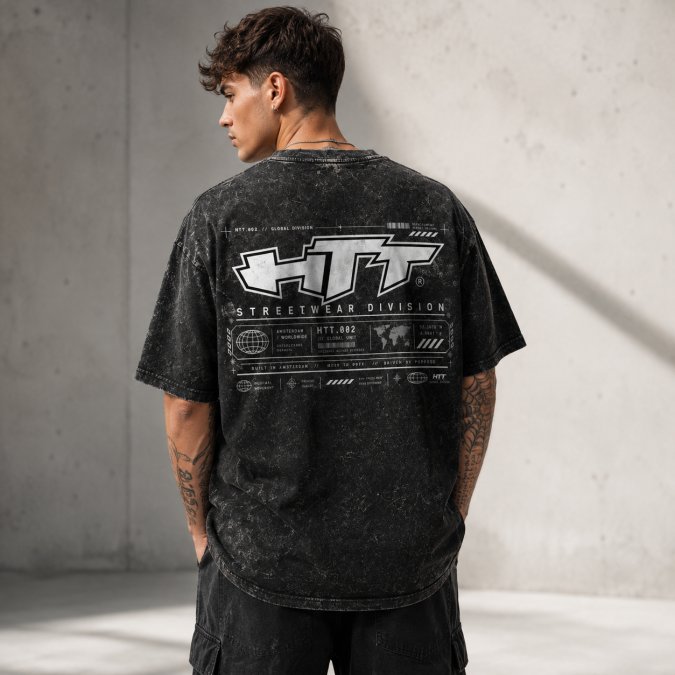
This works well:
- Loose jeans and sneakers for a relaxed streetwear look
- Cargos and a bomber for a tougher urban style
- Smart trousers and leather shoes if you want to wear the shirt to the office
- Layer with an open shirt to tone down the print
Color and contrast make all the difference. A black shirt with a bright print demands less attention than a light-colored shirt with a busy design. If you’re using casual clothing as your base, let the shirt bring the color.
Washing a printed T-shirt
Wash a printed T-shirt inside out, on a cold or low-temperature cycle, with a mild detergent. This will keep the print looking its best for as long as possible. Heat is the biggest enemy of any print.
Our washing advice:
- Wash inside out at a maximum of 30°C
- Use a delicate cycle and mild detergent
- Do not bleach or soak
- Hang to dry, out of direct sunlight
- Iron at a low temperature, never directly on the print
A wash-resistant print you can test yourself: wash the shirt a few times and see if the colors are still even. A good print will barely change. With a weak print, you’ll see cracks or fading around the edges.
Conclusion: Your next oversized graphic T-shirt
Choosing an oversized graphic T-shirt isn’t a matter of luck. Check your fit, pay attention to the fabric weight, and assess the print using a consistent checklist. That way, you know what you’re getting in advance.
We build our shirts around exactly those three points. Take a look at our oversized T-shirt collection and compare the size charts for each style. The HTT Street Attitude Oversized T-Shirt with 260 GSM cotton and a back print is a great place to start, as is the HTT Identity Sculpt with 305 GSM fabric.


Wear Your Identity.
Frequently Asked Questions
How should an oversized T-shirt fit?
An oversized T-shirt should fit loosely without looking sloppy. Look for dropped shoulders that fall just past the shoulder seam, a boxy silhouette, and a hem that falls around the hips. Compare the chest width and T-shirt length with a shirt you already find comfortable, and allow for a variation of about 2.5 cm. This helps you choose a relaxed fit that suits your body.
What should you look for in the quality of a T-shirt print?
Assess a print by its sharpness, coverage, and feel. A high-quality print has sharp edges, even areas of color, and does not feel excessively thick or sticky. Gently stretch the fabric around the print: cracks or crazing are a bad sign. Also check the print placement, as a graphic on the chest or back should be centered and straight. This is how to recognize T-shirt print quality before you order.
How do you keep a T-shirt print from fading or cracking quickly?
Wash the shirt inside out at a maximum of 30°C with a mild detergent and similar colors. Do not bleach, soak, or wring it out. Hang it to dry and avoid direct sunlight. Iron at a low temperature and never directly over the print. This helps keep the image looking good for longer, even when washing a printed T-shirt on a delicate cycle.
How do you style an oversized graphic T-shirt?
Let the print be the focal point and keep everything else understated. A graphic T-shirt pairs well with wide-leg jeans, cargos, or a relaxed sweat set. Choose shoes that complete the look, such as sneakers, and keep accessories to a minimum. For a more minimalist outfit, choose a shirt with a clean front and a statement back print, keeping the front understated and letting the design speak for itself on the back.