

Start a Streetwear Brand: Step-by-Step Guide
Table of contents
- What makes a successful streetwear brand
- Defining your brand identity and niche
- Steps for starting a streetwear brand: From idea to design
- How to find a clothing manufacturer and supplier
- Starting a clothing brand costs: Budget and financing
- Legal requirements and compliance
- Launch and build your brand community
- Beyond the Launch: Inventory and Scaling
Last updated: August 26, 2026
What makes a successful streetwear brand
A successful streetwear brand is built not only on style, but also on authenticity, a clear vision, and an understanding of your target audience. The difference between a brand that fades away and one that endures lies in how well you understand your niche and how consistently you leverage it.
Streetwear is more than clothing. It is a statement, a culture, and a way to express your identity. Streetwear fans do not just want to wear something; they want to wear something that says something about who they are. That means that as a brand owner, you need to understand what your target audience values, what inspires them, and what they are looking for.
The best streetwear brands have a clear point of view. They know exactly who their customers are, what those customers want, and why they are better than the alternatives. They are not everything to everyone. They are something specific for someone specific.
Defining your brand identity and niche
Your brand identity is at the heart of everything you do. It is not just your logo or color palette; it is the reason your brand exists, what you stand for, and how you differentiate yourself in a crowded marketplace full of streetwear options.
Start by asking yourself a question: why are you starting this brand? What are you saying with your designs that no one else is saying? Is it your obsession with quality? Your love of gaming culture? Your vision of what streetwear should look like?
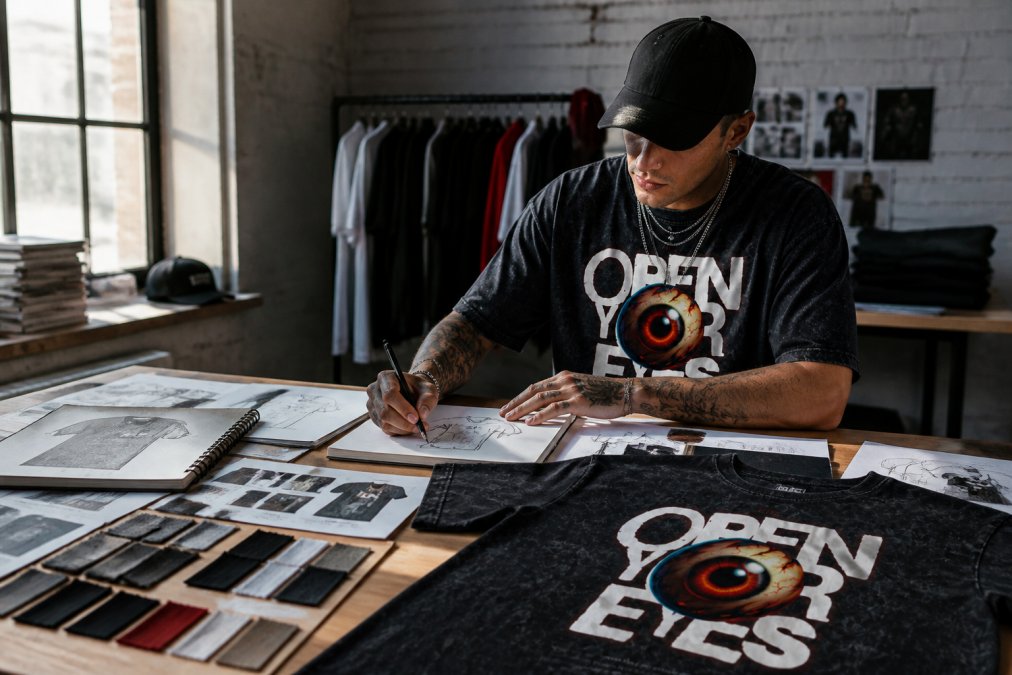
Your niche is where your power lies. A broad brand that tries to be everything to everyone gets lost in the competition. A brand that does something specific for a specific group builds loyalty. Maybe you target gaming fans who want subtle, wearable designs rather than childish merchandise. Maybe you target streetwear fans who value premium materials and ethical production. Maybe you target young adults who want to integrate their subculture into their everyday wardrobe.
Henk The Tank understands this well. The brand does not position itself as "clothing for everyone"; it targets fans of streetwear and gaming culture who value quality and authenticity. This focus makes it possible to truly connect with that audience.
Define your niche by clarifying three things:
- Who is your ideal customer? (Age, interests, values, income level)
- What problem are you solving for them? (What are they missing in the current market?)
- How do you differentiate yourself from existing brands? (Why you and not them?)
Once this is clear, everything that follows—your designs, marketing, and sourcing—becomes much easier. You know what you’re doing and why.
Steps for starting a streetwear brand: From idea to design
The process of starting a streetwear brand runs from conceptualization to the first production run. This is where theory becomes practice. It’s also where many brands stumble—not because their idea is bad, but because they don’t execute the steps properly.
Market research and defining your target audience
Before you create even a single design, you need to understand your market. This isn’t optional. It’s the foundation everything else rests on.
Market research isn’t just about looking at what others are doing. It means understanding why. Which brands are performing well? What are they doing differently? What do their customers say about them? Where are the gaps in the market—things fans want but can’t find?
Research your target audience directly. Spend time on Reddit, Discord, Instagram, and TikTok, where your ideal customers are. Read what they say. What do they complain about? What do they celebrate? What are they missing? This information is incredibly valuable.
Define your target audience as specifically as possible. “Young adults who like streetwear” is too broad. “Men and women aged 18–28 who want to combine gaming culture and streetwear, appreciate subtle designs, and are willing to pay more for quality” is much better. That specific description guides everything that follows.
Tech pack and product specifications
A tech pack is your blueprint for production. It’s a detailed document that specifies everything: fabric type, color, size, seams, prints, embroidery—everything a manufacturer needs to make exactly what you want.
This is crucial. A poor tech pack leads to products that aren’t what you wanted. You get fabrics that don’t feel the way you expected, colors that don’t match, and sizes that are incorrect. This costs you time, money, and reputation.
A good tech pack contains:
- Fabric specifications (material, weight, finish)
- Color samples and color codes
- Size chart (lengths, widths, sleeves)
- Print or embroidery specifications (location, size, techniques)
- Sewing instructions (stitch length, strength)
- Packaging instructions
- Reference samples (the physical sample you approve)
This is where many brands cut costs, and it is a mistake. A poor tech pack will cost you much more later than what you save now.
How to find a clothing manufacturer and supplier
This is where many new brands get stuck. How do you find a manufacturer that will accept your small order, deliver your required quality, and not run off with your money?
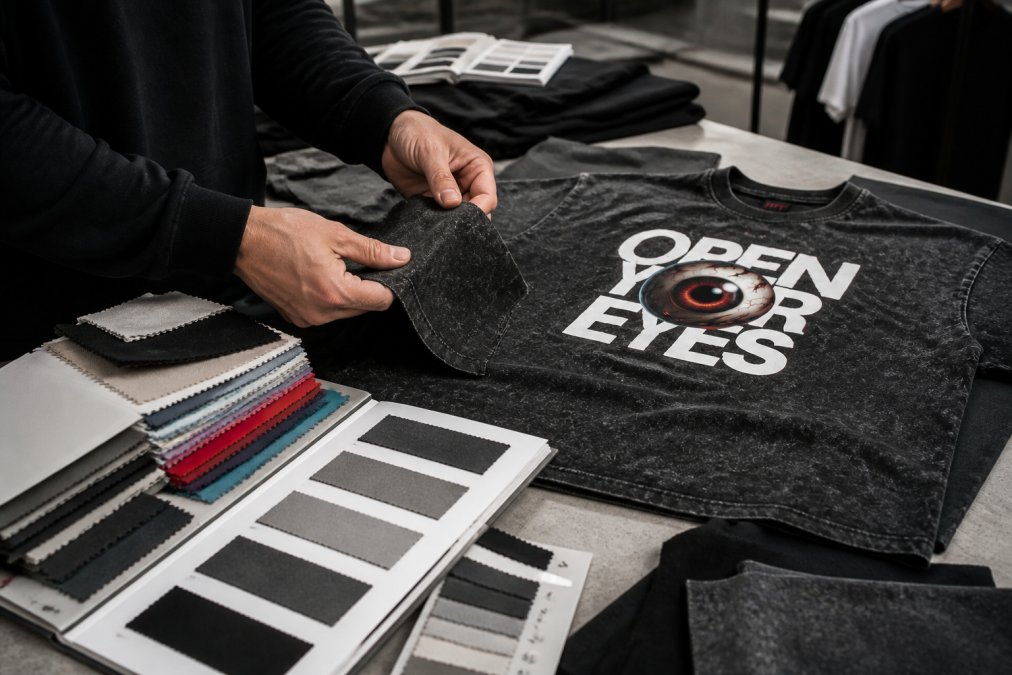
Start with supplier networks and platforms. Sites like Alibaba, Global Sources, and TradeKey have thousands of manufacturers. But be careful—not all of them are reliable. Always check:
- How long they have been in business
- How many orders they have processed
- What customers say about them
- Whether they can provide references
Ask about their minimum order quantities (MOQs). This is the smallest quantity they accept. Many manufacturers require MOQs of 500–1,000 units. For a startup, this is often too much. Look for manufacturers that accept a lower MOQ; 50–200 units is more realistic to start with.
Contact at least five manufacturers. Ask for samples. Assess the quality. How does the fabric feel? What are the seams like? How does the print or embroidery look? Quality is non-negotiable.
Agree on prices, but do not sacrifice quality for price. A manufacturer that can supply you 20% cheaper but delivers half the quality will cost you customers. Customers pay for quality; if you do not deliver it, they will not come back.
Also assess their communication. Are they responsive? Do they understand what you want? Can they solve problems when they arise? A good manufacturer relationship is based on clear communication and mutual understanding.
Starting a clothing brand costs: Budget and financing
Let’s be honest: starting a streetwear brand costs money. Not all the money goes toward production; much of it goes toward design, marketing, setup, and unexpected costs.
The major expenses are:
- Design and tech pack: €500–2,000. You can do this yourself if you’re a designer, or hire someone.
- First production run: This depends on your MOQ and fabric choice. For 100–200 high-quality T-shirts, budget €2,000–5,000 (peer-reviewed research).
- Branding and setup: Logo, website, packaging. €1,000–3,000.
- Marketing: Social media, influencers, ads. Start with €500–1,000.
- Inventory and buffer: Set money aside for unexpected costs.
Total: realistically, you’ll spend €5,000–12,000 for a serious start. That’s not much for a business, but it’s enough to take things seriously.
How do you finance this? Many brands start with their own savings. Others seek investment from friends and family. Some use crowdfunding. Whatever you do, start cautiously. Don’t lose your initial money to expensive mistakes.
Legal requirements and compliance
This is the part many brands overlook, and it’s a mistake. Legal compliance isn’t sexy, but it protects your business.
If you operate in the Netherlands, you must comply with the General Product Safety Regulation (GPSR) and other EU regulations (europa.eu). This means your products must be safe, your labels must be correct, and you must honor your warranties.
Henk The Tank complies with these standards and offers a 2-year EU warranty (europa.eu). This is not only legally required; it’s also good for your reputation. Customers feel better knowing they are protected.
Register your business correctly. Ask an accountant to help you with taxes, VAT, and bookkeeping. This costs money now, but saves you a lot of money and headaches later.
Understand your liability. If someone is injured by your product, you are liable. Make sure you have good product liability insurance.
Launch and build your brand community
The launch is not the end; it’s the beginning. This is where the real work starts.
Build anticipation before you launch. Share behind-the-scenes content. Show your process. Build an email list of people who want to know when you launch. This gives you your first customers on day one.
Launch with a small number of products, not your entire collection. This lets you iterate and adapt quickly based on feedback. It’s also less financially risky.
Build your community. This doesn’t just mean followers; it means people who value your brand and talk about it. Respond to comments. Answer questions. Be present. This is how you build loyalty.
Users as ambassadors. Ask customers to share their photos wearing your products. Feature those photos. It’s free marketing, and it feels authentic.
Beyond the Launch: Inventory and Scaling
After the launch, reality begins: inventory management and scaling.
This is where many brands get stuck. They sell their first batch and don’t know how to scale. Or they keep too much inventory and run into financial problems.
Inventory management is a balancing act. You need enough to meet demand, but not so much that your money gets tied up in unsold stock. This becomes more difficult as you grow.
Start small and keep an eye on your numbers. Which products sell well? Which ones don’t? Which sizes? Which colors? This data guides your next orders.
Scaling doesn’t mean making everything bigger. It means working smarter. Maybe you collaborate with influencers. Maybe you launch new designs based on what you’ve learned. Maybe you expand your niche into related products.
For example, Henk The Tank started with t-shirts and hoodies and added trucker caps. This wasn’t a random choice; it fit their brand identity and appealed to their target audience. That’s smart scaling.

Keep an eye on your competition, but focus on yourself. It’s easy to get distracted by what others are doing. But your strength lies in what you do well. Do that well, and everything else will follow.
Starting a streetwear brand is a journey, not a sprint. It requires planning, patience, and a willingness to learn from mistakes. But if you follow the steps, define your niche, understand your market, choose your manufacturers carefully, and manage your budget wisely, you have a real chance of succeeding.
Start with quality. Build a community. Listen to your customers. These are the foundations on which real brands grow. Henk The Tank understands this, which is why they have built a brand that fans truly value. You can do the same. Start today.
| Step | Duration | Priority |
|---|---|---|
| Conduct market research and define a niche | 2–4 weeks | Critical |
| Develop brand identity | 2–3 weeks | Critical |
| Create a tech pack | 1–2 weeks | Critical |
| Research manufacturers and request samples | 3–4 weeks | High |
| Place first production order | 2–3 months | High |
| Website and branding setup | 2–3 weeks | High |
| Marketing and community building | In progress | High |
| Launch | 1 week | Critical |
| Inventory management and iteration | In progress | High |
Starting a streetwear brand is achievable. It requires work, planning, and money, but it is certainly not impossible. Many successful brands started exactly where you are now, with an idea and the determination to make it happen. The question is not whether it can be done; the question is whether you are willing to do it.
Frequently Asked Questions
How much does it cost to start a streetwear brand?
The costs of starting a clothing brand vary widely. A basic startup costs €500–€2,000 for design and a tech pack. Your first production run will depend on the MOQ and fabric choice. An online store, branding, and marketing require another €1,000–€3,000. Many new brands start with a total budget and scale up through sales.
What is low MOQ, and why is it important for new brands?
Low MOQ (Minimum Order Quantity) means you can order small quantities. This is crucial for streetwear brands because you can test the market, gather feedback, and adjust your collection without holding large inventories. Many manufacturers offer low MOQs at slightly higher per-unit prices.
How long does it take for a streetwear brand to become profitable?
Most streetwear brands reach break-even after 6–12 months if they market consistently and deliver quality. Profit depends on your profit margins (typically 50–70% for streetwear), how quickly you turn over inventory, and how effective your customer acquisition is.
Which EU regulations do I need to know about if I sell clothing?
If you sell clothing, you must comply with the General Product Safety Regulation (GPSR) and the Textile Regulation (EU 1007/2011). This includes safety, accurate labeling, and composition. E-commerce businesses must also comply with GDPR rules concerning customer data. Make sure your manufacturer provides certificates, and consult a legal advisor about specific requirements in your market.
This article was written using GrandRanker