

Streetwear Fashion in Europe: A Style Guide
Table of contents
- What Makes European Streetwear Different
- Essential garments for a European streetwear look
- Best streetwear brands to follow
- Streetwear trends in Europe for 2026
- Sustainable streetwear brands and circular fashion
- How to Build Your Own Streetwear Style
- Conclusion
Last updated: August 13, 2026
What Makes European Streetwear Different
European streetwear fundamentally differs from its American counterparts through a minimalist aesthetic, more subtle graphic designs, and a strong focus on premium-quality materials. While American streetwear often emphasizes prominent logo use and oversized silhouettes, the European approach opts for pared-back details, refined construction, and an emphasis on durability.
The core of this difference lies in philosophy. American streetwear grew out of hip-hop and skate culture, where boldness and visibility were central. European streetwear, by contrast, is rooted in underground scenes and avant-garde fashion, where subtlety and quality of execution matter more than brand recognition. This results in garments that work just as well at the office as they do at a festival.
Henk The Tank has embraced this European approach with a collection that places premium quality at its core. The HTT Urban Chaos Hoodie (€32.00) and HTT Streetwear Open Your Eyes T-Shirt (€25.00) exemplify this: combed ring-spun cotton, refined construction, and designs that make a statement without shouting.

The regional differences are significant. Cities such as Amsterdam, Berlin, and Paris have each developed their own streetwear identity. Amsterdam focuses on minimalism and functional design, Berlin embraces experimental silhouettes, and Paris blends streetwear with haute couture elements. These nuances make European streetwear not one movement, but a collection of local interpretations that nevertheless share a common thread: quality over hype.
Essential garments for a European streetwear look
A strong European streetwear wardrobe begins with basics that last for years. These are not trendy items that disappear next season, but foundational pieces that serve as the basis for endless combinations.
T-shirts and hoodies with graphic designs
The T-shirt is the cornerstone of every streetwear outfit. In Europe, this means a premium cotton construction weighing at least 150 grams per square meter, with subtle graphic prints that do not dominate. The HTT Urban Legend Unisex T-Shirt (€19.00) and HTT Anonymous Streetwear T-Shirt (€19.50) illustrate this perfectly: 100% combed ring-spun cotton with designs that make a statement without being loud.

Hoodies are just as essential. The European preference is for heavier fabrics (8.0 oz or higher) with refined details. Double stitching, well-finished sleeves, and a waistband with spandex help a hoodie retain its shape for years. The HTT Work Hard Heavy Blend Hoodie (€32.00) offers exactly this: 50% cotton, 50% polyester, air-jet-spun yarn, and a quarter-turned body with no annoying center crease.
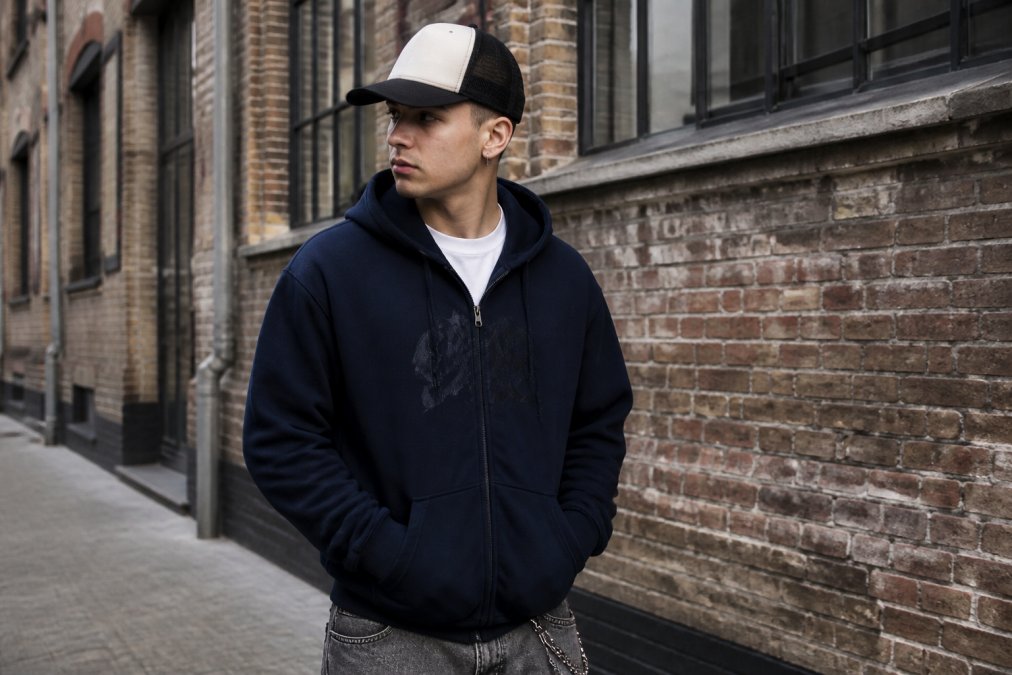
Graphic designs in European streetwear follow specific rules. Prints are usually small to medium-sized, placed on the chest or back. Large all-over prints feel American. The HTT Streetlive T-Shirt (€19.00), with its large back print and subtle chest logo, shows how to balance this: the large back print stands out, while the small logo on the front remains elegant by comparison.
Color is approached cautiously. European streetwear favors black, navy blue, dark gray, and neutral tones. Bright colors do appear, but usually in limited amounts and combined with neutral pieces. This makes outfits versatile and extends the lifespan of your wardrobe.
Caps and accessories that complete the look
A trucker cap or structured cap isn’t optional in European streetwear; it’s a statement piece. The difference between a good and a bad cap lies in its construction, fit, and finishing.
The Closed-Back Trucker Cap (€20.00) is a classic choice: 55% polyester, 43% cotton, 2% spandex, with an elastic band for a universal fit. This type of cap works with almost any outfit. The mesh back provides ventilation, which is essential in warmer months. For those seeking a more athletic look, the HTT Respect Structured Cap (€27.00) offers a structured 6-panel design with a stretch band, ideal for those with a larger head or anyone wanting a closer fit.
The Esports Pro Structured Cap (€25.00) combines gaming-related identity with streetwear functionality. This is where European streetwear stands out: gaming merchandise doesn’t have to feel childish. With the right details, minimal branding, premium materials, and a well-cut silhouette, it becomes a legitimate fashion piece you can wear to the office.
Accessories beyond caps are subtle in European streetwear. A simple belt, minimalist jewelry, and functional bags in black or gray. Nothing flashy, no prominent logos. It’s about texture, material, and understatement.
:::Key lesson A good trucker cap with an elastic band fits almost everyone. This solves the “it’s always too tight” problem that many people experience. :::
Best streetwear brands to follow
The best European streetwear brands share common characteristics: transparency about materials, limited drops instead of mass production, and a direct connection with their community.
Henk The Tank stands out by consistently applying these principles. Their collection focuses on quality over quantity, premium-quality cotton, refined construction, and designs that remain relevant for years. The 2-year EU warranty provides confidence that these clothes are made to last.
Other brands that share this DNA work with limited editions and drop culture, the model in which items are available in limited quantities and at specific times. This creates appreciation, prevents overproduction, and keeps the community engaged. This model is not new, but in Europe it is more deeply rooted in the culture than anywhere else.
Collaborations are crucial in modern European streetwear. Brands work with artists, designers, and subcultures to create limited-edition pieces. This brings fresh perspectives and ensures that the scene does not become stagnant.
One important distinction: many European streetwear brands are small, independent operations with direct ownership. This means faster decision-making, more authentic community engagement, and a less corporate feel. This is what many young people are looking for: the feeling that you are supporting a movement, not a multinational.
| Aspect | European approach | American approach |
|---|---|---|
| Graphic designs | Subtle, understated | Bold, prominent |
| Materials | Premium, durable | Fast and cheap |
| Production | Limited drops | Mass production |
| Branding | Minimal, refined | Striking, logo-driven |
| Community | Direct, grassroots | Commercial, media-driven |
:::Warning Many “streetwear” brands sold online are actually fast fashion. They use the label but lack the quality and authenticity. Always check the fabric composition and construction details before buying. :::
Streetwear trends in Europe for 2026
The streetwear trends in Europe for 2026 revolve around three core themes: the circular economy, hyperlocal identity, and technological integration.
Circular fashion is no longer niche. Resale platforms have gone mainstream, and brands are starting to take this seriously. Vintage and secondhand streetwear is no longer the cheaper alternative; it is aspirational. An original piece from twenty years ago may be worth more than a new one. This is changing how we think about ownership. List your hoodie on a resale marketplace and contribute to the circular economy.
Hyperlocal identity means that cities are defining their own streetwear scenes more strongly. Amsterdam has its minimalist preference, Berlin embraces experimental forms, and Copenhagen focuses on Scandinavian minimalism. These regional differences among fashion hubs are growing stronger, not weaker. This creates opportunities for brands with strong local roots.
Technological integration is happening subtly. QR codes on labels, blockchain verification for authenticity, and AR try-on features are appearing. But the real difference lies in how this technology enhances the customer experience without dominating the physical product.
Oversized silhouettes are here to stay, but they are becoming more refined. The trend is evolving from “everything oversized” to “strategically oversized”—an oversized hoodie with fitted pants, or vice versa. This requires greater style awareness from the wearer.
Sustainable materials are gaining ground. Organic cotton, recycled polyester, and innovative fabrics such as lyocell are appearing more often. This is not marketing; it feels authentic because consumers genuinely want it.
Sustainable streetwear brands and circular fashion
Sustainable streetwear is no longer a compromise between style and responsibility. It has become the preference.
Circular fashion works as follows: a garment is made with sustainable materials, worn, and then returned to a platform for resale or upcycling. This extends the lifespan of each piece exponentially. A €32,00 hoodie can be worn for five years and then continue circulating in the secondhand market for another three years. This is far more sustainable than cheap fast fashion that gets thrown away after one season.
Henk The Tank implicitly supports this model by prioritizing quality. Garments that last for years are inherently more sustainable than items that wear out after three months. The combed ring-spun cotton in their HTT Streetwear Open Your Eyes T-Shirt (€25,00) and hoodies was specifically chosen for durability.

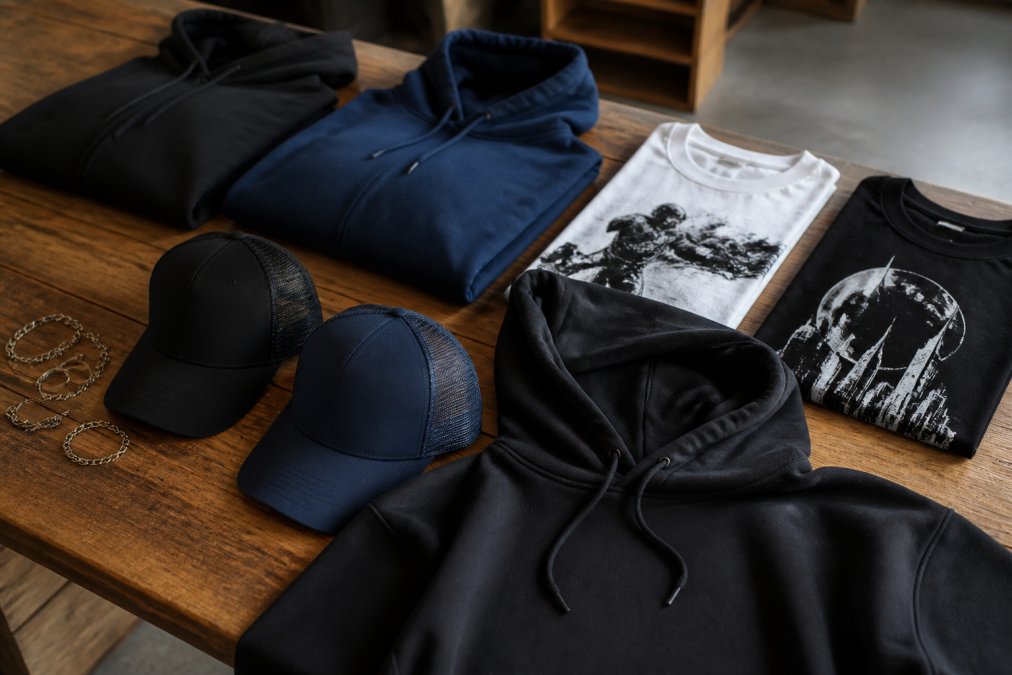
Resale platforms are growing exponentially. Depop, Vinted, and local secondhand stores have brought streetwear into the mainstream. This has an interesting effect: original pieces become valuable, encouraging people to take better care of their clothes.
Upcycling—transforming existing garments into something new—has become a creative response. An old hoodie can be turned into a tote bag, or vintage T-shirts can be sewn together into a unique jacket. It’s not only sustainable; it’s also authentic, exactly what European streetwear values.
Many brands now offer repair services. A broken zipper, torn seam, or worn hem doesn’t have to mean the end of a garment. This shifts the mental model from “throw it away and buy a new one” to “repair and preserve.”
The price of sustainable streetwear is higher than fast fashion, but that’s a feature, not a bug. It gives you permission to buy less and take better care of what you have.
How to Build Your Own Streetwear Style
Building a personal streetwear style starts with understanding what attracts you and why. This isn’t the same as following trends.
Step 1: Define your palette. Choose three to four base colors that you’ll always wear. For European streetwear, black, navy blue, and gray work excellently. Add one accent color if you like: dark red, deep green, or purple. This palette makes it easy to combine pieces without thinking.
Step 2: Invest in high-quality basics. These are your foundation pieces. A well-fitting black hoodie (€32,00 at Henk The Tank), a neutral T-shirt (€19,00-25,00), and a trucker cap (€20,00-27,00). You’ll wear these items a hundred times. They need to fit perfectly and be durable.
Step 3: Add one statement piece. This could be a graphic T-shirt with a design that really speaks to you, or a hoodie in an unexpected color. This piece personalizes your look. It doesn’t have to be expensive; it has to feel authentic.
Step 4: Experiment with proportion. An oversized hoodie with fitted pants. An oversized T-shirt with well-fitting trousers. This balance is where style emerges. It’s not the same as wearing everything oversized.
Step 5: Add texture. A rough cotton T-shirt, a silky hoodie, a sturdy trucker cap. Differences in texture make outfits interesting. It’s subtle but tangible.
Step 6: Take care of your clothes. Wash them inside out at 30 degrees, hang them to dry, and iron them at a low temperature. This extends their lifespan exponentially. The HTT collection comes with clear care instructions—follow them.
A personal streetwear style also means daring to stray from trends. If everyone is going oversized, you can choose a fitted look. If everyone is wearing black, you can try navy blue. European streetwear values individuality, as long as it is intentional.
European streetwear is not about following rules; it is about understanding principles. Quality over quantity. Subtlety over loudness. Intention over trend. Once you understand these fundamentals, building an authentic, personal style becomes much clearer.
The best way to put this into practice is to start with high-quality basics. Henk The Tank offers exactly what you need: premium-quality hoodies and T-shirts that last for years, trucker caps with a universal fit, and designs that are subtle yet effective. Add these pieces to your wardrobe and you will have a solid foundation for everything that follows.
Frequently Asked Questions
What is the difference between European and American streetwear?
European streetwear emphasizes minimalism, material quality, and subtle graphic designs. American streetwear is often louder and more logo-focused. In Europe, there is more emphasis on premium cotton, distressed details, and oversized silhouettes aimed at refinement. It is about craftsmanship, not standing out.
Which are the best streetwear brands right now?
European brands dominate, with a focus on premium materials and limited editions. Look for labels that use combed ring-spun cotton, such as Henk The Tank with their oversized tees and hoodies. The best brands combine underground scene heritage with contemporary fashion, drop culture, and collaborations that genuinely mean something.
What about sustainable streetwear and circular fashion?
Sustainable streetwear brands focus on premium materials that last longer, on-demand production to prevent waste, and resale-friendly designs. Look for brands that are transparent about their supply chain and offer polyester-free options. Circularity means your pieces can be resold without losing their value.
Can I wear streetwear to the office?
Yes, as long as you choose subtle designs and premium materials. An oversized hoodie in black or navy, paired with plain trousers, feels casual yet professional. Avoid loud graphic prints and choose minimalist logos or distressed details instead. The quality of the cotton and the outfit determine whether streetwear feels “office-appropriate.”
This article was written using GrandRanker