

Streetwear is fashion: the complete guide
Table of contents
- What is streetwear, really?
- The history of streetwear and how it began
- The influence of hip-hop and urban culture on streetwear
- Essential Clothing: Streetwear Essentials for Men
- How to Style Streetwear for Every Occasion
- Streetwear versus high fashion: what’s the difference?
- Sustainability and resale: the future of streetwear
- Why streetwear has become mainstream
- Frequently Asked Questions
Last updated: August 31, 2026
What is streetwear, really?
Streetwear is fashion that emerges from urban culture and challenges traditional fashion conventions. It is about self-expression, authenticity, and making a statement through what you wear. Streetwear emerged in the 1980s and 1990s, born from skate and hip-hop culture, and revolves around oversized silhouettes, graphic prints, sneakers, and hoodies.
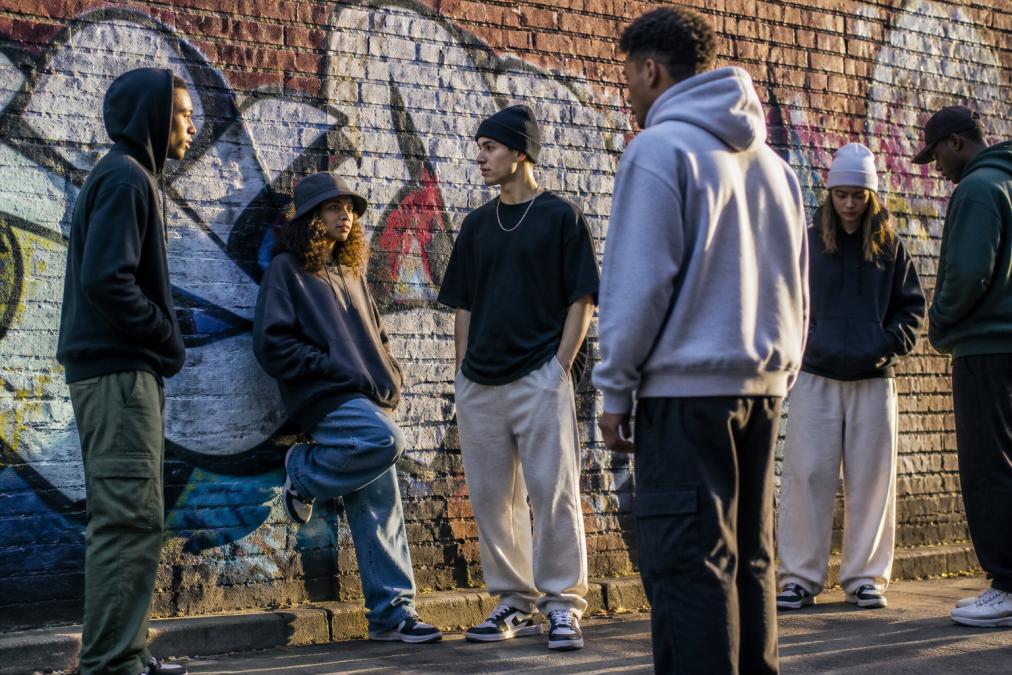
What distinguishes streetwear from casual clothing is that it is intentional, conscious, and often provocative. The essence is that it is accessible; you don’t have to spend thousands of euros to be part of this culture. At HTT Streetwear, we understand that this democratic character is crucial, which is why we offer modern, statement-making garments intended not only for insiders.
Streetwear combines function with style. A hoodie isn’t just warm; it’s also a statement. A graphic T-shirt tells a story. This dual meaning—practical and symbolic at the same time—sets streetwear apart from other fashion movements.
The history of streetwear and how it began
The history of streetwear did not begin on the catwalk, but on the street. In the 1980s, skateboarders in California created their own culture and needed clothing that reflected their lifestyle: strong, durable pieces that you could wear while expressing yourself.
Around the same time, hip-hop culture was growing on the East Coast and brought its own aesthetic: baggy jeans, oversized hoodies, and baseball caps—not because they were considered chic by the fashion world, but because they reflected the energy and freedom of the culture. These were organic movements, emerging from communities that expressed their identity through clothing.
In the 1990s, fashion houses began to notice what was happening on the streets. Designers saw the authenticity, energy, and creativity and began incorporating streetwear elements into their collections. This moment marked the transition of streetwear from a subculture into something broader. Today, streetwear is everywhere, but its core—authenticity, self-expression, and the rejection of conventional rules—remains the same.
The influence of hip-hop and urban culture on streetwear
Hip-hop culture has fundamentally shaped streetwear. This isn’t just influence; it’s the DNA of the entire movement.
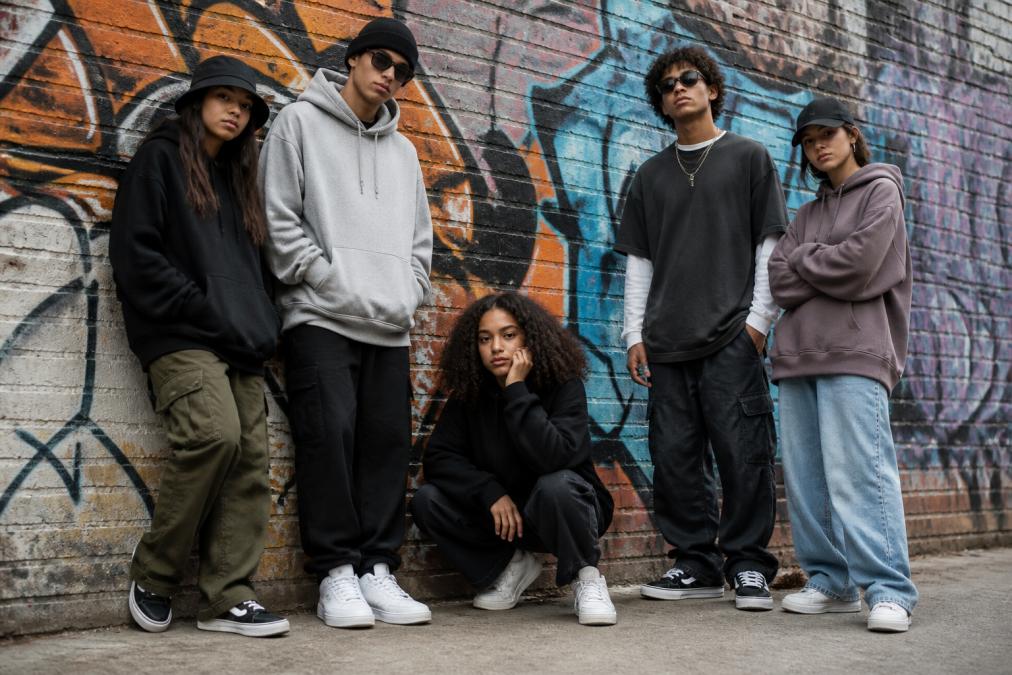
In the eighties and nineties, hip-hop artists were not just musicians; they were trendsetters. What Run-DMC, Tupac, and Jay-Z wore shaped what millions of young people wanted to wear. Hip-hop brought an entire aesthetic with it: baggy silhouettes as a statement against restrictive clothing, brands as symbols of status and community, sneakers as art, and oversized hoodies as identity.
Urban culture expanded on this. Young people didn't see streetwear as "fashion" in the traditional sense, but as communication. A graphic T-shirt could tell your story. A hoodie could signal your group. This is still what streetwear is all about: it's not about what designers say you should wear, but what you feel you want to express. HTT Streetwear follows this philosophy; we design garments that help you tell your story.
Essential Clothing: Streetwear Essentials for Men
Every streetwear essentials for men collection starts with the same foundation: pieces that combine function, comfort, and style.
Oversized T-Shirts and Graphic Tees
The oversized T-shirt is the heart of streetwear. This isn't just about comfort; it's a statement against the idea that clothing should fit tightly. Graphic tees add the visual component—a bold print, eye-catching design, or message sets them apart from a blank shirt.
The HTT Open Your Eyes Oversized T-Shirt in Snow Wash is a perfect example. This shirt combines a heavyweight 100% cotton construction with a raw, gritty aesthetic. The striking eye graphic on the front is designed to stand out, while the snow-wash finish gives it a vintage, worn-in look. This is streetwear in its purest form: a shirt that combines function and statement.
Hoodies, Trucker Caps, and Sneakers
The hoodie may be the most iconic streetwear garment, warm, comfortable, and offering a kind of anonymity that appeals to many people. Trucker caps add a classic element and work with almost any outfit. Sneakers aren't just footwear in streetwear; they define the entire vibe of your look and form the foundation of every outfit.
How to Style Streetwear for Every Occasion
Streetwear styling goes beyond following a single rule. True styling requires an understanding of how different silhouettes, proportions, and contexts work together.
Styling for Different Body Types
Oversized clothing is at the heart of streetwear, but “oversized” does not mean the same thing for everyone. For taller people (over 190 cm), a standard oversized T-shirt may feel too short. Choose oversized shirts with extra length or layer them over a longer hoodie. For more compact body types (under 175 cm), combine oversized pieces with slimmer-cut trousers or joggers that define your silhouette. For broader shoulders, choose prints with vertical rather than wide, horizontal designs. For slimmer builds, layer oversized pieces carefully: make one statement piece oversized and keep the rest neutral and slimmer cut.
Styling for different contexts
Casual/leisure: Oversized graphic tee, hoodie, joggers or baggy jeans, sneakers. Add a trucker cap or beanie. Make sure the colors harmonize.
School/university: Wear an oversized T-shirt under a lightweight overshirt (denim or canvas), with slim trousers and sneakers. This feels casual but intentional.
Work (creative environment): Wear a minimalist oversized T-shirt in black or white under a blazer, with chinos and clean sneakers. The contrast between the streetwear silhouette and formal structure works.
Social occasions: Choose a statement graphic tee in an interesting color, layer it with an oversized overshirt in a complementary color, add slim, clean-cut trousers and minimalist footwear.
The art of layering
Layering is where streetwear styling really happens. Use a maximum of three layers, and make sure each layer is visible. For colors, choose two neutrals (black, white, gray, beige) and one accent. This feels coordinated, not random.
Proportions and silhouette
The most common mistake is making everything oversized. Streetwear is about contrast. If you go oversized on top, go slimmer on the bottom. Oversized hoodie with tapered joggers. This balances your silhouette and looks intentional. Clean, minimalist sneakers work with almost everything.
Common mistakes
- Everything oversized: Looks sloppy, not cool.
- All statement prints: Looks busy and uncoordinated.
- No color harmony: Random colors feel unintentional.
- Poor sneaker choice: A dirty or unsuitable sneaker can ruin an entire outfit.
- Too many accessories: Overkill.
- No silhouette awareness: Not considering how your body looks.
The HTT Open Your Eyes Oversized T-Shirt in Snow Wash strikes the right balance: oversized enough for comfort and impact, but not shapeless. Pair it with tapered joggers and clean white sneakers for an outfit with streetwear DNA that feels balanced and intentional.
Streetwear versus high fashion: what’s the difference?
Streetwear versus high fashion may look similar at first glance, but they are fundamentally different. High fashion is determined from above: designers and fashion houses decide what is beautiful and what the trends are. It is about exclusivity and following rules. Streetwear is determined from below, emerging from communities and what people actually want to wear. It is about inclusivity and breaking rules.
High fashion says: "This is what you should wear." Streetwear says: "This is what I want to wear."
Another crucial difference is authenticity. High fashion can feel artificial; streetwear feels real because it comes from genuine needs and cultures. This is why brands like HTT Streetwear are important. We do not design because we follow trends; we design because we believe in what we make.
| Aspect | Streetwear | High Fashion |
|---|---|---|
| Determined by | Communities from below | Designers from above |
| Accessibility | Democratic, affordable | Exclusive, expensive |
| Authenticity | Comes from real culture | Can feel artificial |
| Rule-following | Breaks rules | Follows/sets rules |
| Purpose | Self-expression and identity | Status and prestige |
Sustainability and resale: the future of streetwear
Sustainability and resale are no longer buzzwords in streetwear; they are economic realities reshaping the industry.
Why resale culture defines streetwear
Resale in streetwear works differently from other fashion categories. A vintage Supreme hoodie from 15 years ago may cost more today than it did when it was purchased. This happens because of three factors: limited supply (brands intentionally produce scarce quantities), cultural value (a Supreme shirt is a statement of belonging), and quality (well-made clothing lasts for years).
Resale platforms such as Depop, Vinted, and Grailed have become mainstream. This is a billion-euro market where young people buy and sell streetwear.
How limited drops create value
The 'drop' is the core mechanism of the modern streetwear economy. A brand announces that a particular collection will be available on a specific date, at a specific time, usually for only a few hours. This creates urgency, value creation (items increase in price after the drop), and community. Most major streetwear brands now use this model.
Sustainability: not just environmental, but economic too
Sustainability in streetwear has two meanings: environmental sustainability (how is clothing made?) and economic sustainability (how long does it remain relevant?). Heavyweight cotton (300+ gsm) is crucial: it feels better, looks better, and lasts longer. A heavyweight cotton shirt can withstand 50+ washes without significant stretching or fading.
Quality and durability go hand in hand. Quality means you want to keep something longer. Keeping things longer means less waste. Less waste means less environmental impact.
The circular economy in streetwear
The future of streetwear is circular: buy → wear → resell → reuse → repeat. This model only works if garments are well made. A shirt that falls apart after two years cannot be resold. A shirt that is still wearable after ten years can be resold several times. This is why vintage streetwear is so valuable.
Practical tips for resale value
Brand name: Supreme, Off-White, Stüssy, Carhartt WIP, and Thrasher retain their value.
Condition: Perfect condition is worth more, but even worn items can be valuable if they are clean and well maintained.
Rarity: Limited-edition items and older collections are worth more.
Timing: Vintage items become more valuable as they get older.
Documentation: Original tags, packaging, and photos help with resale.
The future: sustainability as a feature, not a gimmick
The next generation of streetwear buyers expects what they buy to last. They expect transparency about production and the ability to resell their purchases. Brands that understand this will grow. HTT Streetwear is designed with this future in mind: heavyweight materials, well-made, and built to last for years. This is good for the planet, your wallet, and resale value.
Why streetwear has become mainstream
Twenty years ago, streetwear was a subculture. Today, it is mainstream. This happened because streetwear is authentic, powerful, and democratic. Mainstream adoption began when major fashion houses started using streetwear elements, but accelerated when brands like Supreme and Off-White themselves became mainstream.
Streetwear is evolutionary. What began with skateboarding and hip-hop expanded into gaming culture, anime culture, and every subculture that interests young people. Streetwear has become the language of self-expression. Today, you see it everywhere—in boardrooms, at universities, and on the streets. This is because streetwear is not about a particular look; it is about a mindset: refusing to let yourself be put in a box. This mindset is universal. That is why streetwear has become mainstream. It does not feel like fashion; it feels like truth.
Frequently Asked Questions
What is the difference between streetwear and regular casual clothing?
Streetwear is more than casual clothing—it is an expression of identity and culture. While casual clothing is functional and neutral, streetwear features deliberate graphic elements, statement prints, and a specific aesthetic. Streetwear combines street style with fashion, with each garment forming part of a larger look. Think oversized fits, limited-edition drops, and collaborations that casual clothing does not have.
How can I wear streetwear subtly at work?
Choose more minimalist designs without flashy graphics. A plain oversized T-shirt in a neutral color or with a small logo looks professional. Pair it with smart trousers or blazers. Products such as the HTT Urban Legend Unisex T-Shirt (€24.95) have enough character for streetwear fans while remaining suitable for the office. Layering with neutral pieces also helps—a hoodie under a blazer can look very stylish.
Is streetwear still a trend in 2026?
Yes, streetwear has now become mainstream and is no longer a passing trend. It has evolved from subcultural movements into a fully established fashion segment worn by everyone. Luxury brands collaborate with streetwear labels, and it is now a permanent part of the fashion world. The focus has shifted to authenticity, quality, and sustainability rather than hype alone.
What makes streetwear more expensive than regular T-shirts?
Streetwear quality varies in terms of material, craftsmanship, and design. For example, HTT uses 100% cotton in different weights (170–260 GSM), with special washes and prints. The higher price comes from better fabrics, craftsmanship, limited editions, and original design. This ensures that garments last longer and retain their shape—a HTT Street Attitude Oversized T-Shirt (€32.50) is an investment in durability and style.
Streetwear is more than clothing. It is a way of thinking. It is authenticity, self-expression, and a refusal to conform to conventions. At HTT Streetwear, we understand this deeply. Our collections, from the HTT Open Your Eyes Oversized T-Shirt to the HTT Urban Legend Unisex T-Shirt, are designed for people who want to tell their story. Discover how you can build your streetwear identity. Add items to your cart and get started today.
This article was written using GrandRanker