

Sustainable clothing choices for a conscious wardrobe
Table of contents
- Why a conscious wardrobe is worthwhile
- Quality over quantity: what to look for when buying
- Putting together a capsule wardrobe that really works
- Certification labels and certifications: how to recognize greenwashing
- Caring for clothes to extend their lifespan
- Repairing and upcycling clothing in practice
- Secondhand, vintage, and circular options
- How to start building a mindful wardrobe tomorrow
- Frequently Asked Questions
Last updated: 17 September 2026
Why a conscious wardrobe is worthwhile
A conscious wardrobe is a clothing collection in which every piece is deliberately chosen based on quality, frequency of wear and origin, rather than impulse or trends. It is about buying less, choosing better and wearing items for longer.
Quality over quantity: what to look for when buying
Quality over quantity means preferring to buy one well-made garment that lasts for years rather than three cheap pieces that are worn out after one season. The cost per wear is often lower, even if the purchase price seems higher.
- Fabric weight and density: a heavier fabric is less likely to lose its shape and retains it for longer.
- Seams and finishing: look for sturdy, double-stitched seams and a taped neckline.
- Fit and construction: a well-cut piece stays looking good, even after frequent wear.
- Care instructions: simple, low-temperature washing extends the lifespan.
Materials that last longer
The lifespan of clothing starts with the fibre. Natural and recycled materials often retain their shape and colour longer than cheap synthetic blends.
- Organic cotton: grown without the most harmful pesticides, sturdy and breathable.
- Linen and hemp: naturally strong, long-lasting and becoming more beautiful over time.
- Recycled polyester: gives old bottles a second life and reduces demand for new plastic.
- Cotton denim: a sturdy twill weave that can withstand intensive use.
Putting together a capsule wardrobe that really works
A capsule wardrobe is a limited set of timeless basics that can be combined with one another, usually between thirty and forty pieces. The idea: every combination works, so you need less and wear more.
Here's how to put one together:
- Choose a base palette. Two to three neutral colours that go with everything.
- Start with the base layer. T-shirts, long-sleeved tops and tops in solid shades.
- Add two to three pairs of trousers. Loose-fit jeans and a workwear style cover most looks.
- Rely on layers. A hoodie or knitwear you can wear all year round.
- Test every combination. If a piece doesn't work with at least three others, take it out.
Certification labels and certifications: how to recognize greenwashing
Greenwashing is presenting clothing as sustainable without independent verification to support the claim. You can recognize it by vague terms such as "green" or "eco" without a certification label, and by brands that turn one small detail into an exaggerated sustainability claim.
Reliable sustainability certifications to look out for:
| Certification label | What it indicates |
|---|---|
| GOTS | Organic fibers and strict production requirements |
| OEKO-TEX Standard 100 | No harmful substances in the finished product |
| EU Ecolabel | Environmental impact throughout the entire life cycle |
| Fairtrade | Fair wages and better working conditions |
| Cradle to Cradle | Circular design and safe materials |
Caring for clothes to extend their lifespan
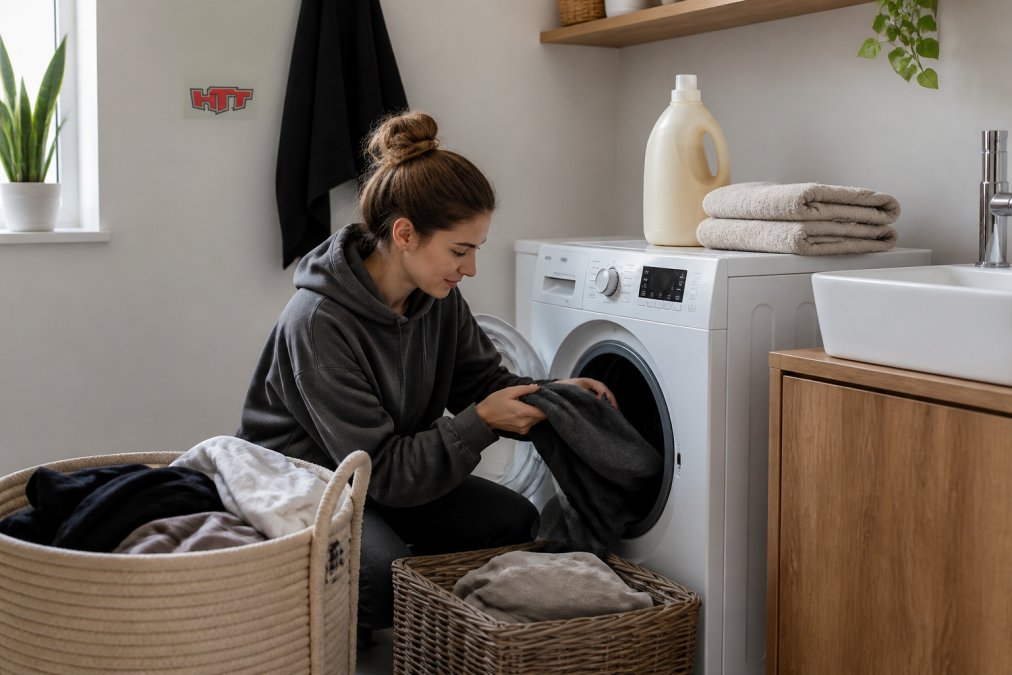
Caring for clothes to extend their lifespan revolves around one principle: wash as little as possible, at the lowest possible temperature, and never use the dryer unnecessarily. Most wear and tear occurs not while clothes are being worn, but during washing. At the same time, washing is also one of the most underestimated environmental problems in the entire clothing chain, and this aspect remains overlooked in almost every wardrobe guide.
Why washing matters more than you think
Every wash cycle uses energy, water, and detergent, but with synthetic fabrics there is something else: microplastics. During washing, polyester, nylon, and acrylic release microscopic fibers that enter the sewer system through wastewater and eventually reach surface waters. The more often you wash, the higher the temperature, and the more aggressive the cycle, the more fibers are released. An average wash with synthetic clothing can release an estimated hundreds of thousands to millions of microfibers, an order of magnitude that has prompted the European Union to consider filter requirements for new washing machines.
Detergent: choices that make a difference
Not all detergents are the same. Pay attention to these points:
- Dosage: using too much detergent leaves residue in the fibers, attracts dirt, and means you have to wash more often. The dosage on the packaging is usually a maximum, not a minimum.
- Composition: detergents without phosphates, parabens, and optical brighteners place less strain on water systems. Optical brighteners make fabric appear whiter but do not dissolve and accumulate in the fibers.
- Form: liquid detergent rinses out better than powder at low temperatures, preventing residue buildup and therefore premature washing.
- Perfume: heavily scented products mask odors instead of removing them, making you more likely to wash again sooner.
Washing, drying, and storing without wear
Wash clothes inside out, with similar colors and a neutral detergent. Choose a low temperature and a short cycle. This keeps the fabric intact for longer and releases fewer fibers.
- Drying: air-dry clothing instead of using the dryer. Avoid direct sunlight, as it fades colors.
- Storage: fold knitted items instead of hanging them on a hanger so they do not stretch.
- Stains: treat a stain immediately so you do not have to wash the entire item as often.
- Airing: hang a worn item outside or by an open window for a few hours instead of putting it straight in the laundry basket.
- Laundry bag: use a delicates bag for synthetic items to reduce fiber shedding and wear.
Repairing and upcycling clothing in practice
Repairing and upcycling clothing means restoring or transforming a damaged or outdated item instead of throwing it away. Sewing on a button takes five minutes; buying a new pair of trousers costs money and raw materials.
HTT BLANKS Heavyweight Turtleneck →
Practical repairs you can do yourself:
- Repairing seams: you can easily stitch a loose seam back together by hand or with a machine.
- Mending holes: use a darning needle or a small piece of similar fabric on the inside.
- Upcycling: turn worn-out jeans into shorts, or an old T-shirt into a bag.
- Clothing swap: organize a swap with friends for pieces you no longer wear but someone else will.
Secondhand, vintage, and circular options
Secondhand and vintage clothing are the fastest route to a conscious wardrobe without new raw materials. Every secondhand item you buy prevents the production of a new one.
What to look for when shopping secondhand:
- Check the fabric for thin spots, especially around the knees, elbows, and armpits.
- Look at the seams for signs of previous repairs.
- Ask for the measurements in centimeters, not just the size on the label.
- Always wash secondhand items before wearing them.
How to start building a mindful wardrobe tomorrow
You do not have to overhaul your wardrobe in one day. Start with one action and build from there. But the biggest challenge is not knowing what is sustainable; it is persevering when a trend, a sale, or a bad day pushes you toward an impulse purchase. That is why a mindful wardrobe begins not with your closet, but with your shopping behavior.
Why impulse purchases are so hard to resist
Impulse purchases are not a weakness, but a predictable pattern. They usually arise from three mechanisms:
- Emotional reward: shopping provides a brief dopamine spike. When stressed, bored, or sad, your brain seeks that spike, regardless of what your wardrobe needs.
- Social comparison: seeing what others wear or buy creates a feeling of "I need to as well." This effect is stronger during sales and with limited editions.
- Availability: the easier something is to buy - one click, delivered the next day - the less room there is for doubt.
A concrete starting plan
- Take everything out of your wardrobe and set aside anything you have not worn in a year.
- Wash and sort what you keep; mend loose seams and replace missing buttons.
- Take useful items to a clothing swap or secondhand platform.
- Choose two or three neutral basics that you are genuinely missing.
- From now on, only buy something that completes at least three outfits.
The 30-day rule and other safeguards
A few simple habits can break the impulse cycle:
- The 30-day rule: do you want to buy something that is not in your capsule plan? Write it down and wait thirty days. What you still want after that period is usually a genuine need; what you forget was an impulse.
- The three-outfit test: does the item work with at least three existing outfits? If not, it is not an addition but an island in your wardrobe.
- Avoid late-night shopping: shopping online late at night, when fatigue and emotion are strongest, leads to the most regretful purchases.
- Keeping a wish list: write down what you want instead of buying it right away. A wish list makes your needs visible and impulses temporary.
- Unsubscribing from sale emails: a discount is not a saving if you did not need the item. A sale on something you were not looking for is still an expense.
This is the essence of sustainable clothing choices for a mindful wardrobe: less impulse, more quality, and care that helps your pieces last for years. Brands that make their production transparent and use durable materials make that choice much easier.
Frequently Asked Questions
What is the 3-3-3 rule for clothing?
The 3-3-3 rule is a rule of thumb for a more minimalist wardrobe: buy nothing new for three weeks, throw nothing away for three months, and only then replace three items. The idea is to first see what you actually wear before buying something new. It works well for a mindful wardrobe because it postpones impulse purchases and means you only buy what your wardrobe is truly missing.
How can you extend the lifespan of your garments?
Wash less often and at a low temperature, use a neutral detergent, and line-dry instead of using a dryer. Turn dark items inside out and sort by color. Store clothes folded instead of on thin hangers that stretch the shoulders. Is there a hole or a loose seam? Repair it immediately to prevent it from getting worse. This way, a sturdy cotton garment will stay in good condition for years.
How can you recognize fair and responsible clothing brands?
Look beyond a logo or a green claim. Transparent brands publish factory names, materials with percentages, and certifications such as GOTS for organic cotton or Oeko-Tex for harmful substances. If that information is missing, the claim is difficult to verify. When in doubt, ask about origin and working conditions; brands that truly produce responsibly can usually provide a specific answer.
Why is a capsule wardrobe a sustainable choice?
A capsule wardrobe revolves around fewer items that you combine more often. As a result, you buy less and wear each garment longer, reducing textile waste and your wardrobe's carbon footprint. Timeless basics in neutral colors go with almost everything, so you need less. It works especially well when you choose durable materials and take good care of them, so the pieces you keep truly last a long time.