

Benefits of combed ring-spun cotton: why it is better
Table of contents
- What is combed ring-spun cotton?
- Combed versus carded cotton: the difference in yarn quality
- The main benefits of combed ring-spun cotton
- Cotton weight gsm meaning: why 153 g/m² is ideal
- How to recognize cotton quality before buying
- Sustainable streetwear for everyday use: care and longevity
- Conclusion: Is combed ring-spun cotton worth the investment?
- Frequently Asked Questions
Last updated: September 5, 2026
What is combed ring-spun cotton?
The benefits of combed ring-spun cotton begin with the production process, which clearly differs from that of standard cotton. Combed ring-spun cotton is a high-quality textile fiber that is first combed to remove short and damaged fibers, after which the long fibers are tightly twisted together into a fine, strong yarn. This process produces a smoother and stronger yarn than traditional carded cotton, which is immediately noticeable in the fabric of a T-shirt.
At HTT Streetwear, we consciously choose this material for our clothing line. The result is a shirt that not only feels better but also stays looking good for longer. In this guide, we explain why this material should be the standard for anyone looking for durable streetwear for everyday use. We compare it with regular cotton, discuss the importance of fabric weight, and give you practical tips for recognizing quality before you buy.
Combed versus carded cotton: the difference in yarn quality
The biggest difference between combed and carded cotton lies in the fiber structure and spinning method. With carded cotton, the textile fibers are only cleaned and loosely twisted together, leaving short fibers in the yarn. Over time, these short fibers stick out from the fabric, causing pilling and a rougher surface.
Combed cotton undergoes an extra step: combing. During this process, short fibers and impurities are removed, leaving only the longest and strongest fibers. These long fibers are then ring-spun, meaning they are twisted tightly and evenly together. This produces a smoother, denser, and stronger yarn with higher tensile strength.
| Property | Carded cotton | Combed ring-spun cotton |
|---|---|---|
| Fiber structure | A mix of short and long fibers | Only long, strong fibers |
| Surface | Rough, pills more quickly | Smooth, lint-free |
| Tensile strength | Lower, wears out faster | Higher, lasts longer |
| Wearing comfort | Fair | High, feels softer |
| Price | More affordable | More expensive, but better quality |
The quality standard of combed yarn is noticeably higher, and that pays off in the garment’s lifespan. While a cheap shirt may start to pill and show wear after just a few washes, combed ring-spun cotton retains its smooth texture and shape.
The main benefits of combed ring-spun cotton
The benefits of combed ring-spun cotton are especially noticeable in the everyday wear of your clothing. The material feels immediately softer than standard cotton because the smooth fibers feel more comfortable against the skin. It also offers excellent breathability, keeping the shirt comfortable even on hot days or during an active day in the city.
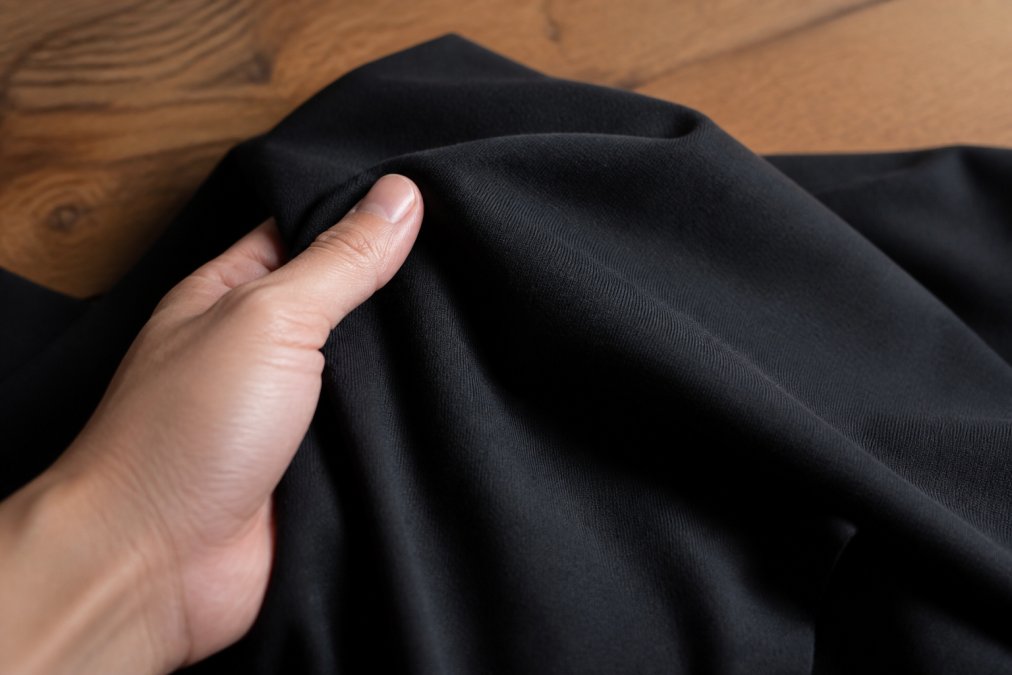
In addition to comfort, the material also offers practical benefits you might not immediately expect:
- Lint-free surface: the yarn's tight twist prevents short fibers from coming loose, allowing the shirt to look new for longer.
- High abrasion resistance: the strong fiber structure makes the material resistant to daily wear and frequent washing.
- Better printability: the smooth surface creates an ideal canvas for prints, which look sharper and are less likely to crack.
- Shape retention: the yarn springs back to its original shape, preventing the collar and cuffs from becoming stretched out.
- Subtle sheen: the dense structure gives the fabric a light, premium sheen that gives casual clothing a polished appearance.
This combination of properties makes combed ring-spun cotton one of the best choices for anyone investing in high-quality textiles. It is not a marketing term, but a measurably better foundation for clothing you wear often.
Cotton weight gsm meaning: why 153 g/m² is ideal
The cotton weight designation in gsm refers to the number of grams per square meter of fabric, or g/m² for short. This number largely determines how a shirt drapes, feels, and how long it lasts. A lower weight of around 120 g/m² feels thin and light, but is often also transparent and less durable. A higher weight above 200 g/m², on the other hand, is heavy and stiff, making it less comfortable for everyday wear.
The spectrum of fabric weights in practice
To properly understand the choice of 153 g/m², it is useful to examine the full spectrum:
| Weight | Characteristic | Suitable for | Drawbacks |
|---|---|---|---|
| 120–130 g/m² | Light, airy, drapes smoothly | Undershirts, summer days | Transparent, less durable, wrinkles easily |
| 140–150 g/m² | Medium-light, good balance | Casual shirts, layering | Less body for a bold look |
| 153 g/m² | The sweet spot: sturdy yet smooth | Streetwear, everyday use | Few to no drawbacks for this purpose |
| 160–180 g/m² | Sturdy, more body | Prints, clothing that needs to last longer | May feel stiffer |
| 200+ g/m² | Heavy, thick, highly durable | Hoodies, sweaters, winter clothing | Too warm and stiff for a T-shirt |
Why 153 g/m² is the optimal choice for streetwear
A fabric weight of 153 g/m² is the sweet spot for streetwear. It is light enough to wear comfortably, yet sturdy enough to retain its shape and resist wearing out too quickly. The HTT Streetlive T-Shirt is made of 100% ring-spun cotton at precisely this weight, allowing the shirt to drape smoothly while still having enough body for a bold streetwear look.
The relationship between weight and fiber structure
What is often overlooked is the interaction between fabric weight and yarn quality. Combed ring-spun yarn has a higher density than carded yarn of the same weight. This means that a 153 g/m² shirt in combed ring-spun cotton feels denser and sturdier than a shirt of the same weight in carded cotton. The long fibers lie closer together, leaving less room for light to shine through.
Practical guideline for different applications
If you are unsure between different weights, the following guideline is useful:
- Undershirt or layering: choose 120–140 g/m² for an invisible layer under a shirt.
- Everyday T-shirt: choose 150–160 g/m² for the best balance between comfort, durability, and shape retention.
- Statement piece with a print: choose 160–180 g/m² for a sturdier fabric that supports the print better.
- Premium look: choose 153 g/m² in combed ring-spun cotton; the dense structure provides a subtle sheen that is absent at lower weights.
The difference in durability between 130 g/m² and 153 g/m² is significant, while comfort is barely affected. This weight offers the best balance between comfort and longevity for a T-shirt you wear weekly.
How to recognize cotton quality before buying
Recognizing cotton quality is easier than you think when you know what to look for. It starts with the label: look for terms such as "combed ring-spun" or "100% ring-spun cotton". If it only says "100% cotton", there is a good chance you are dealing with lower-quality carded cotton.
You can assess the fabric itself in addition to checking the label. A simple test is to hold the fabric up to the light: if a lot of light shines through the fibers, the fabric is thin and probably of lower quality. Also rub the surface with your fingers. A smooth, even feel indicates combed yarn, while a slightly rough or uneven feel points to short fibers sticking out.
Also pay attention to the garment’s finishing. In high-quality textiles, the seams are tightly stitched and the print is firmly applied. A good print on a smooth surface is less likely to crack because the ink adheres evenly to the fibers. This is precisely why the printability of combed ring-spun cotton is so important for garments with graphics.
This check takes no more than a minute in the store, but it can save you from disappointment after the first wash. Once you feel the difference between combed and carded cotton, you will recognize it immediately in every garment that follows.
Sustainable streetwear for everyday use: care and longevity
Sustainable streetwear for everyday use starts with the choice of material, but care ultimately determines how long your clothes last. Even the best combed cotton loses its quality if washed incorrectly. With proper care, a shirt made from combed ring-spun cotton will last considerably longer than a standard cotton shirt.
Care instructions for preserving fiber structure
The most important care rules are simple: wash at a maximum of 30 degrees inside out and avoid the dryer. High temperatures and aggressive drying break down the fibers, causing the fabric to lose its smoothness and develop pilling. Washing the shirt inside out also protects the print from wear and cracking.
It is also advisable not to use too much detergent and to avoid harsh bleaching agents. A mild liquid detergent is sufficient to remove sweat and odors without damaging the fiber structure. Let the shirt air-dry instead of using a dryer; this takes a little more time, but the material stays looking good considerably longer.
Sustainability certifications: an objective quality check
In addition to the proper care instructions, it is important to know which certifications play a role in sustainable, high-quality textiles. These labels provide an objective basis for the quality claim of combed ring-spun cotton.
- OEKO-TEX Standard 100: This certification guarantees that the textile has been tested for harmful substances. For clothing worn directly against the skin, this is a relevant indication that the product is safe.
- GOTS (Global Organic Textile Standard): This is the strictest certification for organic textiles. It covers the entire supply chain, from cotton cultivation to the finished product, and sets requirements for both environmental and social criteria.
A shirt made from combed ring-spun cotton with GOTS or OEKO-TEX certification combines the material’s quality benefits with a demonstrably more sustainable production process. This is an important distinguishing point that is missing from most comparisons.
The lifespan in practice
With this care, a high-quality T-shirt made from combed ring-spun cotton will last for several years without any problems. The investment in better material thus pays for itself, both financially and in wearing comfort. It is a conscious choice that suits a wardrobe built around items you actually wear, rather than fast fashion that can be thrown away after one season.
Conclusion: Is combed ring-spun cotton worth the investment?
The benefits of combed ring-spun cotton far outweigh the higher price compared with standard cotton. You get a softer, stronger, pill-free material that looks new for longer and is more resistant to daily use. Anyone who wears T-shirts regularly will notice the difference within a few washes: no stretched collar, no cracking print, and no fading after a few months.
For those looking for durable streetwear that meets this quality standard, HTT Streetwear offers shirts made entirely from ring-spun cotton. The HTT Essential Unisex T-Shirt combines a classic unisex fit with the recognizable “Het Is Tijd” front print, while the HTT Streetlive T-Shirt features a large statement on the back on a fabric weighing 153 g/m². Both shirts comply with EU standards under the General Product Safety Regulation (GPSR), ensuring you have a safe and reliable product.
Choosing combed ring-spun cotton is therefore not a luxury, but a smart investment in clothing you wear day in, day out.
Frequently Asked Questions
What does combed cotton mean?
Combed cotton is cotton that undergoes additional cleaning during production. Short fibers and impurities are removed, leaving only the longer, stronger fibers. These are then aligned in parallel and spun into a smoother yarn. The result is a fabric that feels softer, pills less, and is more resistant to wear than regular carded cotton.
What is the difference between ring-spun and open-end cotton?
Ring-spun cotton is spun by twisting and stretching the fibers, creating a stronger, smoother yarn. Open-end cotton is a faster and cheaper production process that produces a coarser, weaker yarn. Ring-spun cotton clothing feels softer, lasts longer, and retains its shape better, even after many washes.
How can you recognize high-quality cotton clothing?
Check the label: “combed ring-spun cotton” or “100% ring-spun cotton” is a strong indication. Also check the cotton weight in gsm (grams per m²). Streetwear T-shirts weighing around 153 g/m² offer a good balance between comfort and durability. Also feel the fabric: high-quality cotton feels smooth and dense, without feeling coarse or thin.
The challenge when buying a new T-shirt is assessing its quality before wearing it. HTT Streetwear makes that choice easy by working exclusively with high-quality ring-spun cotton, combined with a timeless fit and eye-catching designs. View the collection and add your favorite shirt to the cart for a material that lasts just as long as it looks good.
This article was written using GrandRanker