

Why invest in heavyweight hoodies?
Table of contents
- What makes a high-quality heavy hoodie?
- Hoodie GSM meaning: what does the weight really tell you?
- Difference between cheap and expensive hoodies
- How do you care for a heavy hoodie so it lasts a long time?
- Durability and cost per wear: why investing pays off
- Why investing in heavyweight hoodies is better than fast fashion
- Frequently Asked Questions
Last updated: September 19, 2026
What makes a high-quality heavy hoodie?
A high-quality heavy hoodie is one whose fabric weight, fiber quality, and finishing work together to create a sturdy feel that lasts for years.
Most people judge a hoodie by its appearance. That is exactly the wrong order. A graphic can look sharp in a photo and still be printed on fabric that loses its shape after ten washes. The quality lies in what you cannot see immediately: the fabric weight, how the fibers are spun, and how the seams are stitched.
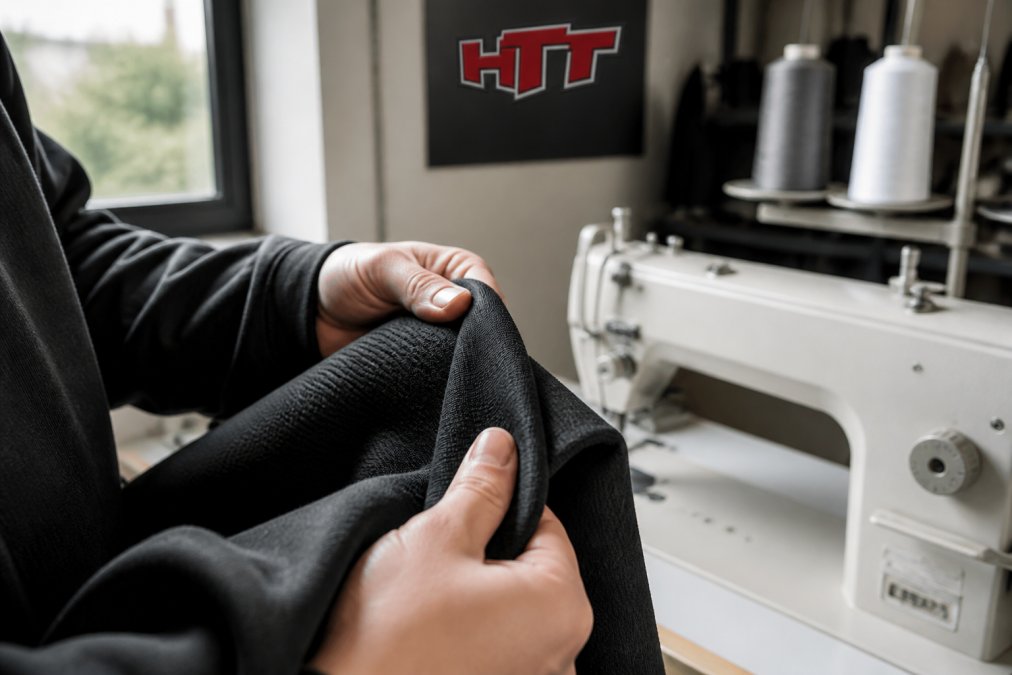
The role of GSM (grams per square meter)
GSM stands for grams per square meter and indicates how much a square meter of fabric weighs. The higher the number, the denser and sturdier the fabric feels.
A hoodie around 270 g/m² falls into the heavy-weight category. For comparison, many basic hoodies weigh between 180 and 220 g/m². You notice that difference immediately. A heavy fabric drapes better, retains its shape, and feels warmer without requiring you to layer underneath. The HTT Work Hard Heavy Blend Hoodie weighs 271 g/m².
Fiber quality and textile structure
Weight alone does not tell you everything. Two 271 g/m² hoodies can feel completely different if the fibers are spun differently.
Air-jet-spun yarn, as used in the HTT collection, makes the fabric softer and reduces pilling, the small fuzz balls that appear on cheaper fabrics over time. The textile structure also determines how the fabric responds to washing. A tightly woven structure retains its shape; a loose structure becomes baggy.
Hoodie GSM meaning: what does the weight really tell you?
The meaning of hoodie GSM is simple: the weight per square meter tells you how densely the fabric is woven and how sturdy the hoodie is. It is one of the few specifications you can objectively compare between brands.
However, it is not a guarantee. A manufacturer can produce a heavy fabric with cheap fibers, causing the hoodie to look worn after just a few months. Therefore, use GSM as a starting point, not the final verdict. Also look at the composition, yarn construction, and seam finishing. Together, these three determine whether a 271 g/m² hoodie is truly premium or simply heavy.
Difference between cheap and expensive hoodies
The difference between cheap and expensive hoodies rarely lies in the design. It lies in the fabric, the seams, and how long the garment retains its shape. A cheap hoodie may look perfectly fine when purchased; the difference becomes visible after a few months of wear and washing.
Fast-fashion clothing is made to sell quickly, not to last. The fabric is thinner, the seams are single-stitched, and the fit loses its shape over time. With a heavyweight hoodie, the opposite is true: its construction is designed to last for years, even with daily use.
| Feature | Cheap hoodie | Heavyweight hoodie |
|---|---|---|
| Fabric weight | 180-220 g/m² | 270 g/m² and higher |
| Yarn | Standard spun | Air-jet spun |
| Stitching | Single-stitched | Double-stitched |
| Shape retention | Sags after months | Retains its shape for years |
| Pilling | Quickly visible | Minimal |
Finishing, stitching, and shape retention
Double-stitched seams at the collar, shoulders, armholes, and hem are one of the clearest signs of quality. Single-stitched seams tear more quickly, especially at the armholes, where the most tension is applied.
Shape retention is related to fiber quality. A preshrunk, shrink-resistant fabric like the one used in HTT hoodies retains its size after washing. With cheaper fabrics, the hoodie often shrinks by a size or starts to sag around the waistband.
How do you care for a heavy hoodie so it lasts a long time?
The best way to care for a heavy hoodie is to wash it inside out at a maximum of 30°C with a mild liquid detergent, then let it air-dry. These two habits, a low temperature and no tumble dryer, largely determine whether a 271 g/m² hoodie still retains its thickness, color, and fit after three years.
Concrete steps, with the reasoning behind them:
- Wash inside out on a delicate cycle at a maximum of 30°C; this protects both the print and the outer fiber layer from friction with other garments in the drum.
- Use a liquid detergent without bleach or optical brighteners; powder can leave residue in the dense fabric, and bleach breaks down the cotton fibers.
- Use a small amount of detergent; too much soap leaves residue that makes the fabric stiff and reduces moisture absorption.
- Never iron directly over the print; the heat from an iron can melt or crack a screen print or transfer. If necessary, iron inside out on a low setting.
- Air-dry the hoodie on a drying rack, lying flat or hung by the shoulders, not by the hood, because the weight of the wet, heavy fabric stretches the edge of the hood.
- Fold it instead of hanging it; a heavy hoodie stretches at the shoulders and loses its shape when hung on a hanger.
What happens if you don't
The dryer is the biggest culprit. The heat causes cotton to shrink and makes the fabric thin out more quickly. A heavyweight hoodie that you consistently air-dry retains its thickness and shape for years; one that goes in the dryer every week feels noticeably lighter after a year and loses its structure around the waistband and cuffs.
Colorfastness and dyeing technique
Colorfastness depends heavily on how the fabric is dyed. With reactive dyeing, the dye bonds chemically to the fiber, so the color penetrates deeply into the fabric and fades less quickly. With pigment dyeing, the dye sits on the fiber rather than inside it, enabling cheaper, brighter colors but also wearing off more quickly with washing and wear.
Durability and cost per wear: why investing pays off
Cost per wear is the price of a garment divided by the number of times you wear it. It is the only calculation that fairly compares a cheap hoodie with a heavyweight hoodie, because the purchase price alone says nothing about what a garment ultimately costs you.
| Cheap hoodie | Heavyweight hoodie | |
|---|---|---|
| Purchase price | € 25 | € 75 |
| Lifespan | approximately 6 months | approximately 3 years |
| Wears per year | 50 | 50 |
| Total wears | 25 | 150 |
| Cost per wear | € 1,00 | € 0,50 |
Why fast fashion costs more than it seems
Fast-fashion clothing is made to sell quickly, not to last. The fabric is thinner, the seams are single-stitched, and the fit loses its shape over time. That is no coincidence: a shorter lifespan means more replacements, and more replacements mean more revenue.
The calculation fast fashion never shows you
The purchase price is not the real cost; the cost per wear is. Durable materials and sturdy construction mean you replace garments less often, benefiting both your wallet and the environment. A heavyweight hoodie is not a disposable product: it retains its fit, color, and structure even after dozens of washes.
Why investing in heavyweight hoodies is better than fast fashion
Investing in high-quality heavyweight hoodies is better than fast fashion because you buy less, wear items longer, and ultimately spend less. The industry produces enormous quantities of clothing every year that are quickly discarded; conscious choices break that cycle.
Frequently Asked Questions
What is the difference between a heavyweight and a lightweight hoodie?
A heavyweight hoodie has a fabric weight of 271 g/m² or higher, such as the HTT Work Hard Heavy Blend Hoodie. Lightweight hoodies are often around 200 g/m². The difference lies in thickness, warmth, and shape retention: heavyweight hoodies feel sturdier, last longer, and lose their shape less quickly. They are also less prone to pilling because of their thicker fiber structure.
Why do heavyweight hoodies last longer?
High-quality heavyweight hoodies use thicker yarns and double-stitched seams, as with the HTT Original Rude Boys Heavy Hoodie. The 271 g/m² fabric wears out less quickly, retains its shape better, and withstands frequent washing. As a result, you need to replace it less often, which saves money in the long term and is more sustainable.
How can you recognize a high-quality hoodie?
Pay attention to the fabric weight (271 g/m² or higher), the fibers used (organic cotton or a cotton-polyester blend), and the construction: double-stitched seams, reinforced cuffs, and a sturdy hood. Brands like HTT clearly list these specifications. A preshrunk finish and air-jet-spun yarn are also signs of quality.
What are the benefits of heavyweight cotton for hoodies?
Heavyweight cotton offers better insulation, breathability, and comfort. It is stronger than lightweight fabric, so the hoodie is less likely to tear or fray. With a 50% cotton and 50% polyester blend, like the one used in HTT hoodies, you get the softness of cotton plus the shape retention and quick-drying properties of polyester. This makes the hoodie ideal for everyday use.
The challenge is not finding a hoodie that looks good today, but one that still looks good three years from now. That requires choosing fabric weight, fiber quality, and construction over the lowest price. HTT Streetwear makes heavyweight hoodies with 271 g/m² fabric, air-jet-spun yarn to prevent pilling, and double-stitched seams for extra durability. Add an HTT hoodie to your cart and wear a garment that keeps its shape.