

Design unique gaming merchandise yourself: 7 steps
Table of contents
- Designing gaming merchandise: where do you start?
- Step 1: Concept development and the importance of a unique logo
- Step 2: Choose the right products for your gaming community
- Step 3: The best software for clothing design and 3D configurators
- Step 4: Gaming merchandise ideas for e-sports teams and streamers
- Step 5: From concept to finished product: materials and printing techniques
- Streetwear design tips for a professional look
- Legal considerations, sustainability, and marketing strategy
- Frequently Asked Questions
Last updated: September 20, 2026
Designing gaming merchandise: where do you start?
Gaming merchandise is clothing and accessories that you wear as a fan to show your favorite game, team, or streamer. Designing unique gaming merchandise yourself does not start with a tool, but with an idea that is uniquely yours. More and more gamers want to launch their own clothing line, and the process is simpler than you think.
Most people open a design program right away. That is exactly the wrong approach. A cool design without a clear identity gets lost among thousands of other shirts.
Below, we explain in seven steps how to design unique gaming merchandise yourself. We cover the concept, product selection, software, materials, printing techniques, and the legal side.
Step 1: Concept development and the importance of a unique logo
Concept development means working out the story behind your merchandise before you draw anything. Without that story, your clothing style becomes random, and you can see that immediately in sales.
Start with three questions:
- What does my team, channel, or community stand for?
- What emotion should the wearer feel?
- What makes this design recognizable from five meters away?
A unique logo is the foundation of your visual identity. Choose a fixed color palette of two to three colors and no more than two fonts. A gamertag or team name often works better as a wordmark than as a graphic because it remains readable on fabric.
Step 2: Choose the right products for your gaming community
The best products for gaming merchandise are T-shirts, hoodies, and caps because they are worn most often. Choose which garment suits your audience's clothing style and budget.
Consider this structure:
- T-shirts for entry-level customers and summer drops.
- Hoodies for premium items with a higher margin.
- Caps and accessories as an accessible entry-level product.
For a gaming community, a recognizable fit works better than ten separate styles. An oversized fit matches the streetwear look that many gamers already wear. For example, our HTT BLANKS Boxy T-Shirt is a plain 280 GSM base made from combed cotton, ideal as a starting point for your own printing.
Step 3: The best software for clothing design and 3D configurators
The best software for clothing design depends on your skill level: beginners choose a 3D configurator, while advanced users choose a vector program. A 3D configurator shows your design directly on a virtual garment, allowing you to assess the placement and proportions before ordering.
Free and affordable options
- Inkscape, a free vector program for Windows, macOS, and Linux. Works with SVG and PDF, ideal for logos and typography.
- Canva, accessible for beginners, but note: it exports as a PNG by default. For print materials, you need a vector or a high-resolution file.
- GIMP, a free raster program for editing photos and complex graphics, but not suitable for sharp logos at large sizes.
- Adobe Illustrator, the professional standard for vectors, with a paid subscription.
What to look for in a 3D configurator
A configurator is useful for seeing how your design will look:
File formats and resolution
For textile printing, submit your design as a vector (SVG, PDF, AI) or as a raster file of at least 300 dpi at actual size. Vectors remain sharp at any size, from a chest print to a back print.
A practical workflow
- Sketch your idea on paper or in a tablet app.
- Develop it in a vector program using your fixed color palette.
- Put it in a 3D configurator to check the placement.
- Export it as a vector or 300 dpi file and send it to your printer.
A free vector program is enough for most designs. The advantage of vectors is that your design remains sharp at any size, from a chest print to a back print.
Step 4: Gaming merchandise ideas for e-sports teams and streamers
Strong gaming merchandise ideas stem from the identity of the team or channel, not from trends. An e-sports jersey uses a fixed color scheme, sponsor names, and a clear back number. A streamer is better served by subtle designs that can also be worn away from the screen.
Consider these directions:
- A minimal chest print featuring only your gamertag.
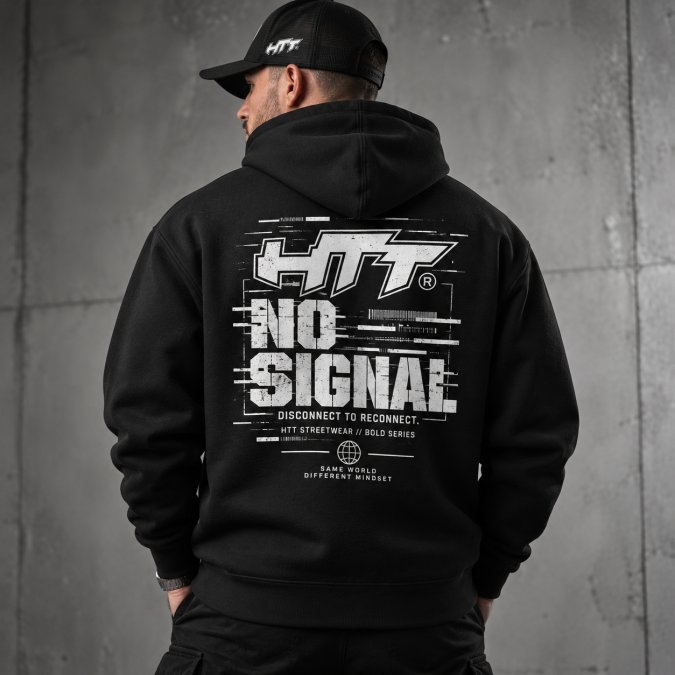
- An extensive back print with the team logo and founding year.
- A limited drop per tournament or season.
For e-sports teams, being recognizable during a match is the most important thing. Fans should be able to see at a glance which team someone belongs to. Streamers have more freedom because their audience also wants to wear the clothing every day.
Step 5: From concept to finished product: materials and printing techniques
The quality of your finished product depends on two choices: the fabric and the printing.
HTT BLANKS Boxy T-Shirt – 280 GSM →
There are three common techniques for textile printing:
| Technique | Best for | Suitable for small runs |
|---|---|---|
| Screen printing | Large runs, solid colors | No |
| DTG printing | Full-color designs | Yes |
| Transfer printing | Small runs, lots of detail | Yes |
Choose your fabric by weight. A 240 to 280 GSM shirt feels sturdier and holds its shape better than a lightweight shirt. Combed cotton is softer and wrinkles less. Our HTT Open Your Eyes Oversized T-Shirt is an example of a heavier shirt with a striking graphic and a washed finish.
Streetwear design tips for a professional look
You achieve a professional look through restraint, not by adding more elements. The strongest streetwear designs use one clear idea per garment and leave the rest empty.
Apply these streetwear design tips:
- Use no more than two typefaces throughout your entire line.
- Use one focal point per garment, on the chest or back.
- Work with a fixed color palette of two to three colors.
- Test your design from a distance: is it still readable from three meters away?
- Leave whitespace around your logo and typography.
Typography does the heavy lifting in streetwear. A strong, wide typeface works better than a thin decorative font. Combine it with a graphic design you created yourself, so your clothing style cannot be found anywhere else.
Legal considerations, sustainability, and marketing strategy
The legal side is important for the viability of your merchandise line. There are two aspects you need to keep separate: protecting your own designs and avoiding the use of someone else's work.
Protecting your own design
Copyright arises automatically in the Netherlands when you create an original work; you do not need to register anything. Therefore, keep your sketches, vector files, and dated export files so you can demonstrate that you are the creator. If you want to protect a brand name or team name as a trademark, you can register it with the Benelux Office for Intellectual Property (BOIP). This is the authority that registers trademarks for the Netherlands, Belgium, and Luxembourg. A registered trademark gives you stronger rights to take action against someone who uses your name or logo.
Avoid infringing on someone else's work
Never use logos, characters, names, or artwork from game publishers without written permission. Copyright and trademark law protect their property, and a fan-art design that you drew yourself does not automatically mean you may sell it. Many publishers have separate guidelines for fan merchandise; read them before putting anything into production. When in doubt, design something based entirely on your own identity, such as your gamertag, an original mascot, or an abstract graphic. That is legally safer and helps you stand out more.
Sustainability without greenwashing
What you can do:
- Choose durable textiles, such as higher-weight combed cotton.
- Only order what you sell.
Marketing strategy in phases
A merchandising strategy works best when you build it up:
- Start with a small run of one or two items.
- Ask your community for feedback before scaling up.
- Announce each drop through your channel and newsletter.
- Keep inventory low and restock quickly when successful.
For small creators, a cost-benefit analysis is important. Include purchasing, printing, and shipping costs before setting a price. This way, you can be sure that every sale generates a profit.
Frequently Asked Questions
Is there a free program for designing a T-shirt?
Yes, there are free tools you can use to design a T-shirt. Consider free versions of graphic design software or online design tools with basic templates. These are often sufficient for simple designs featuring your gamertag or team logo. If you want more control over typography and your color palette, paid software offers more options. Start with a free tool to test your concept before investing in more advanced programs.
Which software is best for designing gaming merchandise?
The best clothing design software depends on your experience. For beginners, online tools with pre-made templates work well. Advanced designers often choose vector programs for sharp logos and graphics. Check whether the software supports 3D configurators, so you can preview your design on a garment before having it printed. Test several options to see which one best fits your workflow.
How do I turn my gamertag into a unique clothing design?
Your gamertag is a personal brand. Choose typography that matches your play style: aggressive and angular for competitive gamers, or minimalist for a more subtle look. Combine your gamertag with a color palette your community recognizes. Consider a small logo on the chest and a larger graphic on the back. This keeps your design wearable in everyday life, not just while gaming.
What should I look for when choosing fabrics for gaming hoodies?
For gaming hoodies, choose a fabric that offers comfort during long sessions. Cotton with a weight of 280 g/m² or higher feels sturdy and lasts a long time. Look for pre-shrunk quality so your hoodie does not shrink after washing. A combination of cotton and polyester can improve stretch and shape retention. Always check the washing instructions to keep your print and fabric looking good for as long as possible.
Designing your own clothing line takes time, but with a clear concept and the right materials, you can go a long way. At HTT Streetwear, everything revolves around identity and expression - exactly what your gaming merchandise needs. Check out our oversized T-shirts and premium hoodies as the basis for your own design. Add your favorite to your shopping cart and wear your identity.