

How to recognize quality in hoodies: from fabric to stitching
Last updated: November 18, 2026
Quick Summary
To recognize quality in hoodies, turn the garment inside out and check the fiber content on the label, the fabric’s density, and the seam finishing. This makes it easy to see how to recognize quality in hoodies: cotton-rich fabric with tight stitching and a reinforced neckline holds its shape after several washes.
- Choose cotton or a cotton-rich blend with a clear fiber content on the label.
- For everyday wear, 300 to 400 GSM is usually a good range.
- Check that the shoulder seams and neckline are reinforced with tape.
- A hoodie that pills after the first wash usually won’t get any better.
- Wash inside out at a maximum of 30°C with a mild detergent.
Table of contents
- Why hoodie quality starts with the fabric
- The best fabric for a hoodie: what to look for
- Cotton or polyester hoodie: which suits the way you wear it
- Hoodie fabric weight and GSM: what the number really means
- Hoodie seams and finishing: details you can check right away
- The hoodie checklist: spot quality in five minutes
- Fit, size, and comfort: looking beyond the size label
- Quality that lasts through multiple washes
- Frequently Asked Questions
Why hoodie quality starts with the fabric
The graphic stands out, but the fabric determines whether you’ll wear a hoodie for years or put it away after three washes. That’s why we explain below how to recognize quality in hoodies, from fiber to stitching. So if you want to know how to recognize quality in hoodies, look at the fabric first and the print second. A hoodie is a simple garment: a body, a hood, two sleeves, and a few seams.
That’s what makes it difficult: you can’t feel a hoodie online. Still, you can make a reliable assessment with a few simple checks. Below, we explain what to look for, from fiber to stitching.
The key lesson upfront: a heavy hoodie isn’t automatically a good hoodie. Weight tells you something about the fabric, not the construction. Only when the fiber, density, seams, and fit are all right do you have a garment that lasts.
The best fabric for a hoodie: what to look for
The best fabric for a hoodie is cotton or a cotton-rich blend with a clear fiber content on the label. Look at three things: which fibers it contains, how the fabric feels, and how tightly it’s woven. 100% cotton is breathable, feels dry, and holds its shape better after washing than fabric made mostly of synthetic fibers.
Our BLANKS hoodies are made from 100% cotton, in weights from 380 to 440 g/m².
For a deeper look at the fiber itself, read our guide to the benefits of combed ring-spun cotton.
Cotton, fleece, and fiber blends compared
Every fiber has its own character. Here’s how they differ in practice:
- Cotton (single jersey or French terry): breathable, feels dry, holds its shape, but can feel stiff at a heavier weight when first worn.
- Brushed fleece: cotton with a brushed interior, softer against the skin, a little warmer, ideal for colder days.
- Polyester or fiber blend: dries faster and costs less, but is less breathable and more prone to pilling over time.
What most buyers miss: the outside tells only half the story. Turn the hoodie inside out and look at the loop structure or the brushed layer.
Cotton or polyester hoodie: which suits the way you wear it
The choice between a cotton or polyester hoodie depends on how you wear it, not which fabric is “better.” If you wear the hoodie every day as a layer under a jacket, cotton wins for comfort and breathability.
For streetwear and everyday wear, cotton is usually the stronger choice: it holds onto odors less and still feels comfortable after a long day. Polyester dries faster, but pills more quickly and can develop a sheen in areas subject to abrasion.
What really happens in a fiber blend
A fiber blend isn’t a bad choice, but ask yourself why the blend is there. A high percentage of synthetic fiber without a clear reason is more likely a cost-saving decision by the manufacturer than a quality choice.
The proportions on the label tell you a lot about how the hoodie is likely to perform. These are the most common combinations and what they mean in practice:
- 100% cotton: breathable, holds its shape, shrinks slightly in the first wash unless pre-shrunk, and feels dry. Ideal for everyday wear and streetwear.
- Cotton with 5-10% elastane: more stretch and shape recovery, comfortable with a closer fit, but the fabric can feel slightly thinner over time in areas under tension.
- Cotton with 20-30% polyester: cheaper to produce and dries faster, but is less breathable and more prone to pilling over time.
Pilling: why one hoodie pills and another doesn’t
Pilling occurs when short fibers come loose from the fabric and clump together into small balls, especially where there is friction under the arms, on the sleeves, and on the back.
Three factors determine how prone a hoodie is to pilling:
- Fiber length: longer fibers (such as combed ring-spun cotton) come loose less easily than short fibers.
- Weave density: a denser weave holds fibers in place better.
- Fiber blend: in a blend with cotton, synthetic fibers can push the cotton fibers outward, making pilling more noticeable sooner.
Note: a hoodie that already shows pilling on the sleeves after the first wash is a sign that the fibers are short or weak. This usually gets worse, not better, after multiple washes.
A quick decision guide for your next purchase
Can't decide between two hoodies? Consider these three questions:
- Where do you wear it most? For everyday wear or as a light layer: cotton. For sports where moisture needs to wick away quickly, a polyester blend may be more practical.
- How often do you wash it? Weekly washing calls for a dense, cotton-rich fabric.
- What does the label say? A sensible blend is a good sign; a high synthetic content without an explanation is a reason to look further.
At HTT Streetwear, we deliberately choose 100% cotton as our base because we want our hoodies to respond predictably to washing and wearing. Our premium hoodies show what that looks like in practice, from the 380 GSM BLANKS with brushed fleece to the 440 GSM heavyweight styles.
Hoodie fabric weight and GSM: what the number really means
GSM stands for grams per square meter and tells you how much fabric is used per unit of area. A higher GSM means a heavier, denser fabric.
For a hoodie you wear all year round, 300 to 400 GSM is usually a good range.
At HTT Streetwear, we work with two distinct weights: 380 GSM and 440 GSM. Read our article on why choose 440 GSM heavyweight cotton to find out why we chose 440 GSM for our heaviest hoodies.
From lightweight to 440 GSM in practice
Here’s how the difference feels in everyday use:
| Fabric weight | Feel | Best for |
|---|---|---|
| 240-280 GSM | Lightweight, flexible, drapes loosely | Spring, layering, sports |
| 300-350 GSM | Durable but flexible | Everyday wear, mild weather |
| 380 GSM | Noticeably heavier, full drape | Fall and winter, casual looks |
| 440 GSM | Structured, luxurious weight, warm | Cold weather, statement pieces |
A 440 GSM hoodie feels a little stiffer when you first wear it than a lightweight hoodie. After a few washes, the fabric softens while keeping its shape.
Hoodie seams and finishing: details you can check right away
Seams and finishing tell you more about quality than the print on the front. Turn the hoodie inside out and check the shoulder seams, side seams, and neck finishing. Neat, even stitching with a short stitch length usually means care went into the construction.
Also look for reinforcement: a good hoodie has reinforced neck and shoulder seams with tape so the fabric doesn't stretch there.
Zippers, drawstrings, hems, and cuffs
The details determine how long a hoodie stays looking good:
- Zipper: test it a few times by opening and closing it. A good zipper runs smoothly without snagging and has a sturdy pull.
- Drawstrings: pull them gently. They should stay firmly in the channel and not fray.
- Ribbing and cuffs: Look at the rib pattern. Tight ribbing with an elastic yarn blend springs back and keeps the sleeve in place.
One detail many people overlook: the inside of the neck. A taped or reinforced neck finish prevents the neckline from stretching out after months of wear.
The hoodie checklist: spot quality in five minutes
Use this checklist to assess a hoodie quickly and systematically. You don't need any tools, just your hands and eyes.
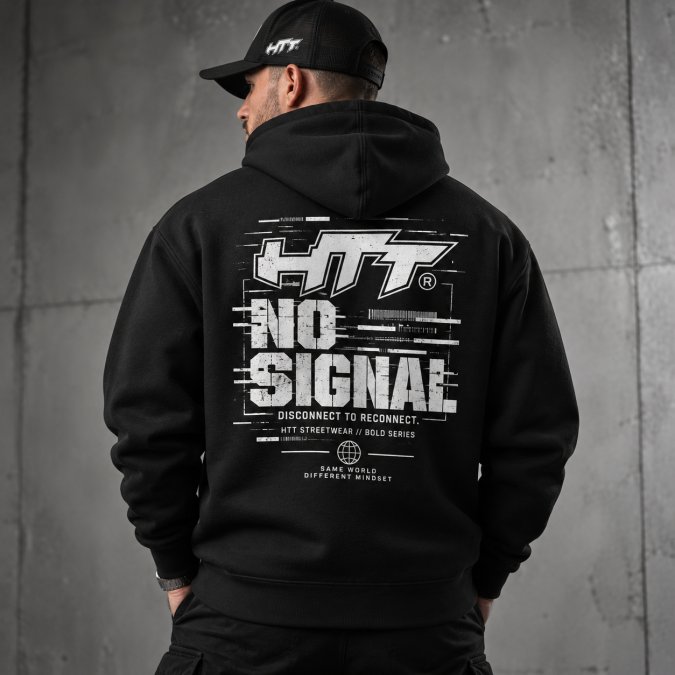
- Check the label: Does it clearly state the fiber content and fabric weight?
- Feel: Does the fabric feel sturdy without being stiff or plasticky?
- Stretch: Gently pull the fabric and let go. Does it return to shape?
For a more comprehensive version of this inspection, we've put together a full quality checklist for your purchase. It takes you through every step, from the label to the hem.
Fit, size, and comfort: looking beyond the size label
The size on the label matters less than the measurements in the size chart.
Comfort is about more than size. Pay attention to where the shoulder seam falls, how the hood sits against your neck, and whether the cuffs are too tight or too loose.
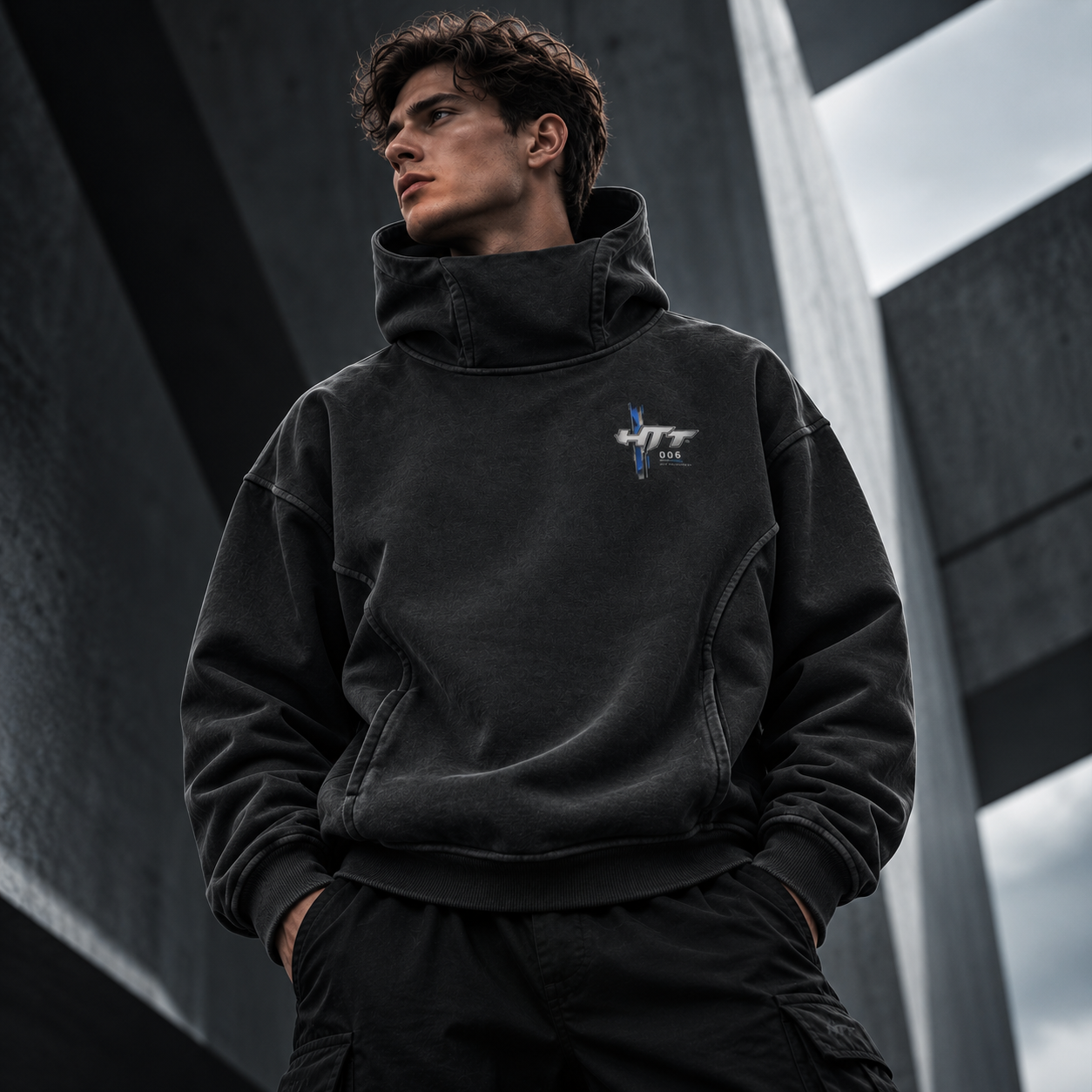
For a concrete example of a hoodie with a deliberately roomy fit and dropped shoulders, check out the HTT 006 Choose Your Direction Turtleneck Hoodie.
Quality that lasts through multiple washes
The real test begins after the third or fourth wash. A hoodie that shrinks, pills, or loses its color after just one wash was never a good hoodie. You can tell quality by what's left: does the fabric hold its shape, does the color stay even, and is the print still intact?
Four signs to check after several washes
These four signs tell you within a minute whether the fabric, color, and construction are still holding up:
- Shrinkage: Measure the chest width and sleeve length again and compare them with the flat measurements in the size chart. More than 3-5% shrinkage after the first wash indicates the fabric wasn't pre-shrunk.
- Color fading: Slight fading on the shoulders and sleeves indicates dye wear. Reactive-dyed colors stay more even for longer than pigment dyes.
- Pilling: Small balls under the arms, on the sleeves, or on the back mean short fibers are coming loose.
Why one hoodie still looks like new after ten washes
Three factors determine whether a hoodie retains its quality:
- Pre-shrunk fabric: Cotton treated to prevent shrinkage responds more predictably to washing.
- Reactive dyeing: the color penetrates the fiber instead of sitting on top, so it stays more even.
- Dense, long-staple fabric: holds its structure better, with less pilling.
Preventive washing tips that really make a difference
These habits extend the life of any hoodie, regardless of its price or brand:
- Wash inside out with a mild detergent.
- Keep the temperature low, at a maximum of 30°C.
- Avoid bleach and prolonged soaking.
A hoodie that visibly shrinks or pills after the first wash usually won't improve after multiple washes.
Quality over time: a simple check
Choose a consistent time to check, such as after the fifth wash, and then check the signs above alongside the flat measurements in the size chart. This lets you objectively see whether the hoodie retains its shape, color, and structure.
If you want to understand why high-quality streetwear costs more than a cheap hoodie, read our article on quality and pricing in high-quality streetwear.
Frequently Asked Questions
How can you recognize a good-quality hoodie?
First, check the fabric weight and composition, then feel the fabric and stretch it gently. A good-quality hoodie has sturdy fabric that quickly springs back, tightly woven seams without loose threads, and ribbed cuffs and hem that hold their shape. Also check the inside: neat, taped neck finishing and reinforced shoulder seams indicate careful construction.
What does a hoodie's fabric weight say about its quality?
A higher hoodie fabric weight in GSM means a heavier, denser fabric, but not automatically a better hoodie. 380 to 440 GSM feels sturdy and drapes well, while lighter fabrics fit more loosely. Quality also depends on the fibers, seam finishing, and shape recovery. So always compare GSM with the material composition and construction before deciding.
How can you tell if a hoodie will still look good after washing?
Before buying, check the product specifications for pre-shrunk fabric and color treatment. Wash the hoodie inside out at a maximum of 30°C with a mild detergent, and avoid tumble-drying it at high temperatures. This helps preserve the color, shape recovery, and softness for longer, while preventing pilling and print wear.
What should you look for in a hoodie's seams?
Turn the hoodie inside out and inspect the seams at the neck, shoulders, and sides. Good hoodie seams and finishing are tightly stitched, with reinforcement tape at the neck and shoulders and double-stitched ribbed cuffs and hem. Loose threads, uneven stitching, or thin seams that give way when stretched lightly are signs of less sturdy construction.
