

Where can I buy good heavyweight hoodies?
Table of contents
- Why a heavyweight hoodie makes a difference
- Hoodie fabric weight and GSM: how to read the label
- How do you recognize a good heavyweight hoodie?
- Choosing a hoodie size: oversized versus regular fit
- Buying an oversized hoodie: what should you look for?
- How to wash and care for a hoodie: keep it looking great for years
- Our heavyweight hoodies: from 380 to 440 GSM
- Conclusion: how to find your ideal heavyweight hoodie
- Frequently Asked Questions
Last updated: October 8, 2026
Why a heavyweight hoodie makes a difference
A heavyweight hoodie is a hoodie made from heavy fabric, usually between 350 and 440 GSM, that holds its shape instead of draping around you.

Most hoodies you see on the street weigh between 240 and 280 GSM.
Below, we explain how to read fabric weight, what to look for in stitching and fit, and which options we offer ourselves.
Hoodie fabric weight and GSM: how to read the label
GSM stands for grams per square meter and indicates how heavy a fabric is. The higher the number, the thicker and sturdier the hoodie.
Most online stores list the weight somewhere in the product description or specifications. Isn't it listed? Then it usually isn't heavyweight.
According to the European Commission's textile information requirements, clothing in the EU must clearly state the fibers it is made from so buyers can check them in advance.
Loopback versus brushed fleece: why the same GSM feels different
Two 400 GSM hoodies can feel completely different, and that comes down to the weaving technique. The two types you encounter most often are loopback fleece and brushed fleece.
- Loopback fleece has small yarn loops on the inside that have not been brushed out. The fabric breathes better, feels drier, and retains its structure longer. This is the technique you often see in premium heavyweight hoodies because the silhouette stays sharp.
- Brushed fleece has an inside that is brushed after weaving, creating a soft, fluffy layer. It feels warmer and softer right away, but that fluffy layer can flatten or pill over time.
For a heavyweight hoodie that needs to stay looking good for years, loopback is usually the stronger choice. For pure softness when you put it on, brushed fleece wins. Neither is wrong; it depends on whether you prioritize structure or immediate comfort.
From 271 to 440 GSM: what do you really feel?
Our range runs from 271 to 440 GSM, and each segment has its own character:
- 271 GSM: sturdy everyday hoodie, soft thanks to the cotton-polyester blend, ideal for daily use
- 380 GSM: noticeably heavier, structure in the hood, hangs beautifully straight
- 400 GSM: premium feel, retains its shape even after extensive wear
Below 300 GSM, a hoodie feels light and supple. Above 400 GSM, it becomes almost like a jacket: it holds its shape instead of draping. The ideal weight depends on how you wear it; a 440 GSM hoodie is great as a statement piece, but can feel heavy if you wear it indoors all day.
Why a higher GSM is not automatically better
A common mistake is thinking that 440 GSM is always superior to 380 GSM. That is not true. For an oversized silhouette, a heavier weight often works well because the fabric hangs nicely and straight.
The key is matching the weight to the fit and the season. Those who understand the distinction shop more purposefully than those who only look for the highest number.
How do you recognize a good heavyweight hoodie?
You can recognize a good heavyweight hoodie by three things: the fabric weight on the label, the quality of the seams, and whether the fabric has been pre-shrunk. Check all three points and you will rarely make a bad purchase again.
HTT BLANKS Heavyweight Turtleneck Hoodie – 380 GSM →
Many people buy based on how it feels in a fitting room, only to discover at home that the hoodie is one size smaller after a single wash. Pre-shrunk fabric prevents this.
Check the stitching, ribbing, and finishing
Turn the hoodie inside out before buying anything. What to look for:
- Double stitching at the collar, shoulders, armholes, cuffs, and hem
- Reinforced neck and shoulder seams, so the hood does not sag
- Ribbed cuffs with elastane, which spring back instead of stretching out
A hoodie with single stitching along the hem may develop waves over time.
Choosing a hoodie size: oversized versus regular fit
The difference between an oversized and regular fit lies in the shoulder seam and the width of the body. With an oversized fit, that seam drops down, sometimes by a few centimeters, creating the relaxed silhouette that characterizes streetwear.
For a true oversized look, choose your regular size. If you want it tighter, go one size smaller. That may sound contradictory, but it is exactly why so many people order the wrong oversized hoodie: they choose a larger size even though the pattern is already designed to be roomy.
| Fit | Shoulder seam | Best choice | What to look for |
|---|---|---|---|
| Regular fit | At the shoulder edge | Classic look | Your regular size |
| Relaxed fit | Just over the edge | Everyday use | Comparing the size chart |
| Oversized fit | Clearly dropped | Streetwear silhouette | Your regular size, not larger |
| Boxy fit | Dropped and wide | Statement look | Measuring shoulder width |
Buying an oversized hoodie: what should you look for?
When buying an oversized hoodie, pay attention to three things the size chart does not tell you: the drop shoulder, the armhole depth, and the ratio between the chest and hem.
The size chart on the product page is your most important tool. Measure a hoodie you already own that fits well, place those measurements next to the chart, and compare the shoulder width and chest circumference.
Drop shoulder, armhole, and hem: the three measurements that determine the silhouette
An oversized hoodie becomes oversized through how it is constructed, not just through the size on the label. These are the three measurements you want to compare on a product page:
- Drop shoulder: the distance the shoulder seam extends beyond your natural shoulder edge. A drop of 2 to 4 centimeters creates a subtly relaxed silhouette; 6 centimeters or more creates a clearly oversized look. Without this measurement on the page, you do not know what you are getting.
- Armhole depth: a deeper armhole makes the sleeve hang lower and provides more room in the armpit. Too deep and the hoodie feels like a tent; too shallow and it pulls when you move. A well-designed oversized armhole falls between the two.
- Hem ratio: the width of the hem relative to the chest circumference. A hem that is narrower than the chest creates a tailored effect; a hem that is equally wide or wider creates the straight, boxy drape characteristic of streetwear.
High-low split hem and other details that make the difference
Also pay attention to the hem. A straight hem falls differently from a high-low split hem, where the back is longer than the front. The latter provides more movement and a stronger silhouette, especially with an oversized fit. With a high-low split hem, the front falls neatly while the back covers your hips, which is useful when you wear the hoodie over a longer T-shirt.
Other details that make the difference between a cheap and a well-made oversized hoodie:
- Hood construction: a hood with its own lining or a double layer of fabric collapses less quickly than a single layer.
- Kangaroo pocket: check whether the pocket is secured at the sides. A loose pocket will bulge over time.
- Cuffs and hem ribbing: ribbed trims with a small percentage of elastane spring back and do not stretch out.
How to read a product page like an expert
Most online stores show a model photo and a size chart. If you want to make an informed purchase, look further:
- Find the shoulder width in centimeters, not just the size. Compare it with a hoodie you already own.
- Check the composition: 100% cotton behaves differently from a blend, especially after multiple washes.
- Check whether the fabric is pre-shrunk. If it doesn’t say so, there’s a good chance the hoodie will shrink after the first wash.
- Read the washing instructions. A hoodie that may only be washed at 30°C tells you something about the fabric’s vulnerability.
- Check the hem and cuffs in the detail photos. Double stitching and sturdy ribbed cuffs are visible in the finishing.
An oversized hoodie that fits well isn’t a matter of luck. It’s a matter of comparing the right measurements and knowing which construction details determine the silhouette.
How to wash and care for a hoodie: keep it looking great for years
Always wash a heavyweight hoodie inside out at a maximum of 30°C with a mild detergent. Heavy fabric can withstand a lot, but not everything.
HTT BLANKS Heavyweight Turtleneck Hoodie – 380 GSM →
What to avoid:
- Bleach, which damages the fibres
- Soaking for extended periods, which can cause the colour to fade
- Tumble-drying at high temperatures
The washing instructions and textile labels required under European regulations also indicate that the instructions on the label take precedence. Follow them. Preferably air-dry it out of direct sunlight, and only iron at a low temperature.
Our heavyweight hoodies: from 380 to 440 GSM
Our range runs from 380 to 440 GSM, with a few distinct personalities. At 380 GSM and made from 100% cotton, the HTT BLANKS Heavyweight Turtleneck Hoodie is the most understated in the range: a high hood, dropped shoulders, and a high-low split hem. The HTT BLANKS 440GSM Sun Faded Heavyweight Hoodie takes it a step further with a heavy, luxurious feel and a subtle washed finish.

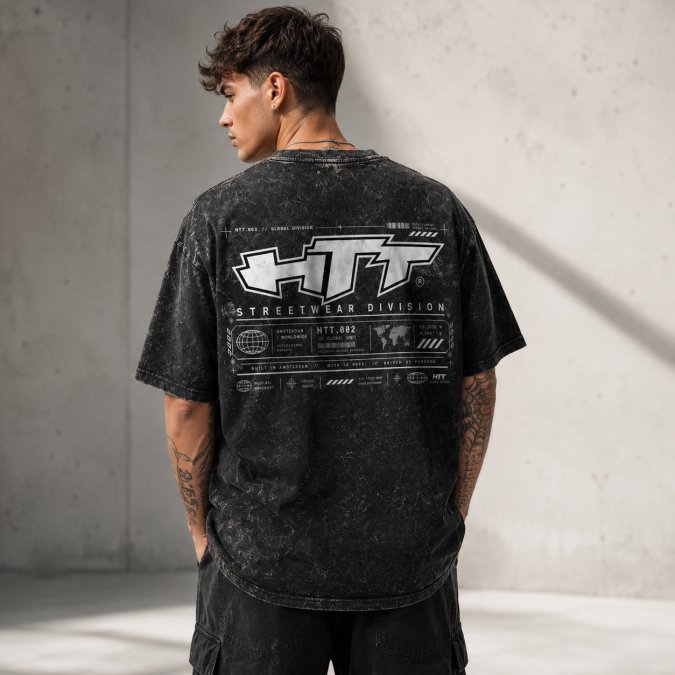
For those who want a zip, there’s the HTT BLANKS 400GSM Heavyweight Zip Hoodie with a full-length zip and balloon sleeves. And for those looking for a graphic, there’s the HTT 008 Out of Frame Heavyweight Oversized Hoodie in 420 GSM with a boxy oversized fit and large artwork on the back.

All our hoodies are pre-shrunk and double-stitched at the cuffs and hem. View the full range in our hoodie collection.
Conclusion: how to find your ideal heavyweight hoodie
The search for a good heavyweight hoodie comes down to three questions: which GSM suits the way you wear it, whether the fabric has been pre-shrunk, and whether the fit matches what you are looking for.
At HTT Streetwear, we build our hoodies around exactly those points: heavyweight cotton, reinforced seams, and a fit you can control yourself using the size chart.
Wear Your Identity. Discover the collection and choose the hoodie that suits you.
Frequently Asked Questions
What is the average weight of a heavyweight hoodie?
A hoodie is considered heavyweight from approximately 300 GSM onward. Standard hoodies are often between 240 and 280 GSM, while premium heavyweight hoodies such as the HTT BLANKS 440GSM Sun Faded Heavyweight Hoodie weigh between 380 and 440 GSM. The higher the GSM, the sturdier the fabric feels and the better the hoodie retains its shape after washing.
What fabric weight is suitable for a heavyweight hoodie?
For a true heavyweight hoodie, choose at least 300 GSM, but most premium options range from 380 to 440 GSM. At 380 GSM, you get a sturdy hoodie that is still reasonably breathable, ideal for everyday wear. If you want extra warmth and a luxurious drape, go for 420 or 440 GSM. Our HTT BLANKS 440GSM Sun Faded Heavyweight Hoodie is a good example of a hoodie with a high fabric weight.
How do you wash a heavyweight hoodie without it losing its shape?
Wash your heavyweight hoodie inside out at a maximum of 30°C with a mild detergent and similar colors. Do not use bleach and do not soak the hoodie. Preferably air-dry it out of direct sunlight, and avoid using a dryer at high heat. You can iron or steam it at a low temperature. This routine keeps the fabric sturdy and helps your hoodie retain its shape.
How do you choose the right size for a heavyweight hoodie?
Always check the brand's size chart, because heavyweight hoodies often fit differently from standard hoodies. For an oversized look, choose your usual size; if you want a closer fit, consider sizing down. Also pay attention to details such as dropped shoulders and torso length. If you are between two sizes, it is best to choose the smaller one if you want a less oversized fit.
Is a heavyweight hoodie suitable for layering?
Yes, a heavyweight hoodie is ideal for layering. Its sturdy fabric drapes nicely over a T-shirt or under a jacket. Choose a hoodie with a relaxed fit so there is room for a layer underneath without feeling too tight. Full-zip models like the HTT BLANKS 400GSM Heavyweight Zip Hoodie are especially convenient because you can wear them open or closed, depending on the weather.