

Brushed Fleece vs. Cotton Sweatshirts: The Difference Explained
Last updated: November 18, 2026
Quick Summary
The difference between brushed fleece and a cotton sweatshirt is on the inside: brushed fleece is a cotton fabric whose inside has been mechanically raised into soft loops, while a regular cotton sweatshirt has a smooth, unbrushed interior. That detail determines how warm, soft, and breathable the sweatshirt feels.
- Cotton is the fiber; brushed fleece is a finish applied to that fiber.
- French terry keeps the loops intact and feels fresher and lighter.
- A weight of 340-380 GSM is the ideal middle ground for everyday use.
- Wash brushed fleece inside out at a maximum of 30 °C and avoid wringing it out.
- Brushed fleece wins for warmth and softness in fall and winter.
Table of Contents
- Brushed Fleece vs. Cotton Sweatshirt: The Key Difference
- What Exactly Is Brushed Fleece?
- What Is French Terry and How Does It Differ from Brushed Fleece?
- Fabric Weight (GSM) Explained
- Warmth, Breathability, and Comfort Compared
- How to Care for a Hoodie or Sweatshirt Made from Any Fabric
- Choose Your Sweatshirt: A Comparison for Every Season
- Find Your Perfect Fit in Our Collection
- Frequently Asked Questions
Brushed Fleece vs. Cotton Sweatshirt: The Key Difference
The difference between brushed fleece and a cotton sweatshirt is mainly on the inside of the garment. Brushed fleece is a cotton fabric whose inside has been mechanically raised into soft loops, while a regular cotton sweatshirt has a smooth, unbrushed interior. That one detail determines how warm, soft, and breathable a sweatshirt feels.
That question comes up regularly. Two sweatshirts can look the same yet feel completely different to wear. Below, we explain why, so you can focus on the right features from now on instead of the name on the label.
The fabric construction is key. Cotton is the fiber; brushed fleece is a finish applied to that fiber. So a 100% cotton sweatshirt can certainly have a brushed fleece interior. That’s not a contradiction, and it’s exactly where many buying guides get it wrong.
What Exactly Is Brushed Fleece?
Brushed fleece is a knitted cotton fabric whose inside is mechanically raised with fine brushes after knitting, causing loose fibers to form loops that trap air. These loops give the fabric a soft, almost woolly texture against the skin and improve heat retention.
The HTT Streetwear BLANKS line combines a brushed interior with 100% combed cotton.
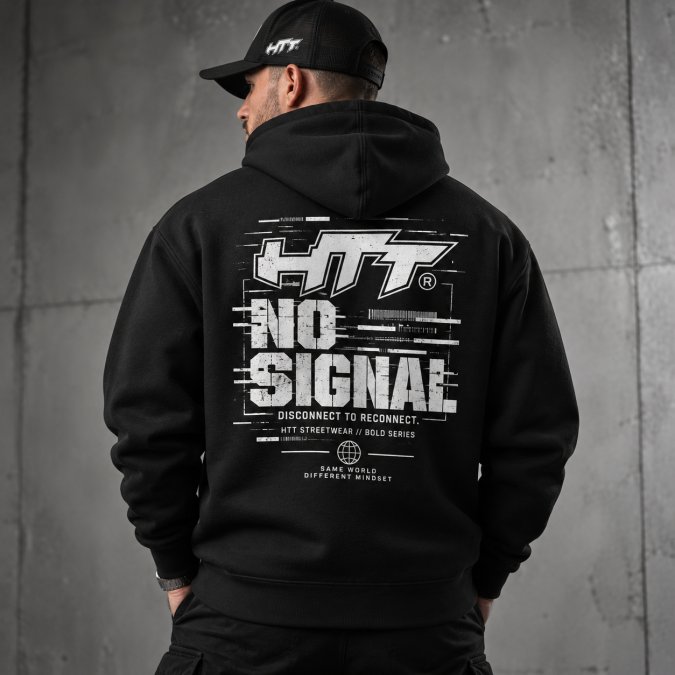
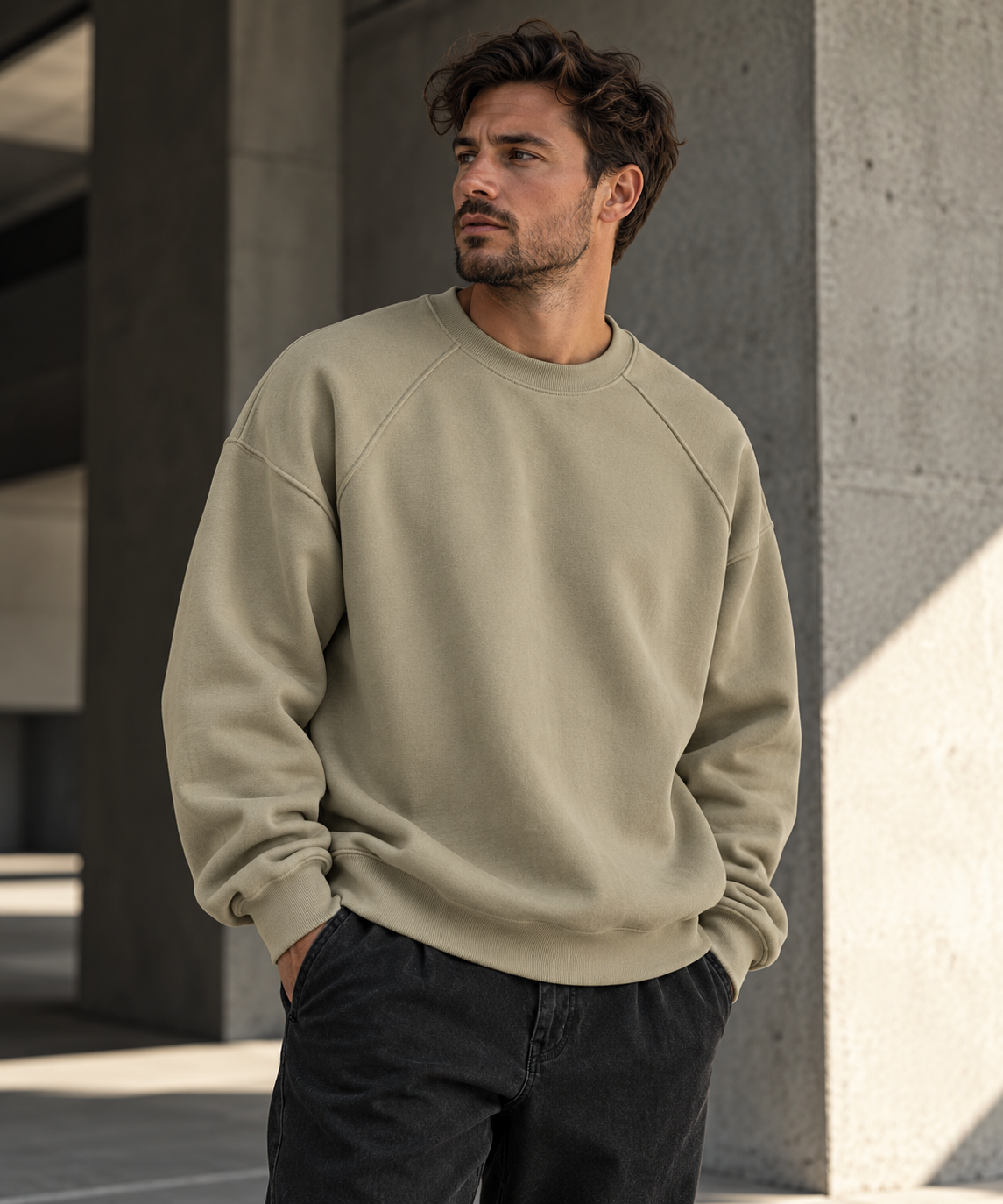
Curious how it feels in practice? Check out the 380 GSM heavyweight brushed fleece crewneck from our BLANKS collection.
What Is French Terry and How Does It Differ from Brushed Fleece?
French terry is a knitted cotton fabric with small, unbrushed loops on the inside, while brushed fleece is brushed to create a soft, closed surface texture. French terry generally feels fresher and lighter, while brushed fleece feels warmer and softer.
The difference lies in the finish, not the fiber. Both fabrics are often made from cotton, and both are knitted. French terry leaves the loops intact, allowing more airflow and wicking moisture away faster. Brushed fleece brushes those loops into a dense layer, trapping more warmth but offering less breathability.
When should you choose each? French terry is suited to a sweatshirt you want to wear all year round, even on a mild day. Brushed fleece is the better choice when you’re looking for a garment for fall and winter, or simply want a sweatshirt that feels like a blanket.
Fabric Weight (GSM) Explained
GSM stands for grams per square meter and indicates how heavy a fabric is. A higher GSM means a thicker, sturdier garment, but not necessarily better quality or a softer feel. The numbers only tell you something when you connect them to what you see in the mirror and feel against your skin.
That nuance is often overlooked. A 440 GSM sweatshirt feels substantial and holds its shape well, while a 280 GSM sweatshirt feels more breathable. For streetwear with an oversized silhouette, a heavier weight usually works better, as the fabric drapes nicely instead of bunching up. With a slim fit, however, fabric that’s too heavy can stand stiffly and restrict movement.
What the numbers mean in practice:
- 280-320 GSM: a lightweight sweatshirt, suitable for mild days and layered outfits. The fabric drapes fluidly and follows the body, making it comfortable under a jacket or overshirt.
- 340-380 GSM: a sturdy foundation, the ideal middle ground for everyday wear. Heavy enough to hold its structure, yet light enough not to feel too warm indoors.
- 400-450 GSM: heavyweight, structured, and warm for colder months. The fabric has a pronounced drape and retains its shape even after frequent wear.
BLANKS sweatshirts are available in 380 GSM and in a 440 GSM version for those who want more weight.
A common mistake is confusing GSM with quality. So consider the combination of weight, composition, and finish, not just the number. For a loose, oversized fit, a weight between 340 and 380 GSM works well; for a straight silhouette, a higher weight may be suitable.
Want to know how to spot quality differences in streetwear before you order? Read how to tell the difference between luxury and budget streetwear.
Warmth, Breathability, and Comfort Compared
Brushed fleece generally retains more heat than a smooth cotton sweatshirt, and the brushed interior can limit breathability. These two properties are always at odds: the brushed loops trap air and warmth, which feels wonderful in the cold and less pleasant during a busy day indoors.
Still, that doesn’t mean brushed fleece makes you sweat quickly. Cotton naturally wicks away moisture, even when brushed. You’ll notice the difference most during prolonged exertion or in a heated space. French terry feels fresher in those situations, while brushed fleece stays comfortable as long as you’re not too active.
Texture plays an often underestimated role in comfort. A brushed interior feels pleasant to the touch right away, while a smooth cotton interior feels more neutral. For some people, that difference is exactly why they choose brushed fleece.
Want to know how to spot quality differences in streetwear before you order? Read how to tell the difference between luxury and budget streetwear.
How to Care for a Hoodie or Sweatshirt Made from Any Fabric
Your washing routine determines how long your sweatshirt stays soft. For brushed fleece, wash it inside out on a cold, delicate cycle, with a mild detergent and similar colors. Avoid bleach, soaking, and wringing, as these flatten the loops. That’s the foundation, but the real difference lies in the mechanisms behind it.
Brushed fleece pills because the raised fibers rub against each other during wear and washing. The more loosely the fibers are brushed, the faster they form pills. A gentle wash at a low temperature slows this process, but doesn’t prevent it completely. What you can do is reduce friction: don’t wash fleece with zippers, Velcro, or heavy denim, and put the garment in a laundry bag if you’re unsure.
With smooth cotton, it’s a little simpler, but the same basic rules apply. Turn the garment inside out, keep the temperature low, and preferably hang it to dry out of direct sunlight. Iron, steam, or tumble dry only at a low temperature, maximum 30 °C.
Washing a hoodie at too high a temperature to get it “fresh” is a common mistake. So follow the garment’s care instructions: wash inside out at a maximum of 30 °C, and tumble dry on low heat or hang to dry.
If you want to keep a cotton sweatshirt comfortable, we’ve gathered practical tips in how to wear a cotton sweatshirt comfortably.
Choose Your Sweatshirt: A Comparison for Every Season
The right choice depends on when you wear the garment. In transitional weather and winter, brushed fleece wins for warmth and softness. On mild days or for active use, a lighter, smooth cotton fabric is more comfortable.
| Fabric | Warmth | Breathability | Texture | Best season |
|---|---|---|---|---|
| Brushed fleece 380 GSM | High | Medium | Soft, brushed | Autumn and winter |
| Brushed fleece 440 GSM | Very high | Lower | Thick, warm | Winter |
| French terry | Medium | High | Fresh, lightweight loops | Spring and summer |
| Smooth cotton sweatshirt | Low | High | Neutral, smooth | All year round |
Shrinkage also matters: the BLANKS sweatshirts are pre-shrunk.
Looking for a heavyweight hoodie for the colder months? Read our guide on choosing a heavyweight hoodie for winter streetwear.
Find Your Perfect Fit in Our Collection
The best fabric is the one that suits how you’ll use it, and the best size is the one that works with your silhouette. At HTT Streetwear, we take a product-by-product approach: we list the fabric composition, weight, and finish so you can compare them with clothes you already own.
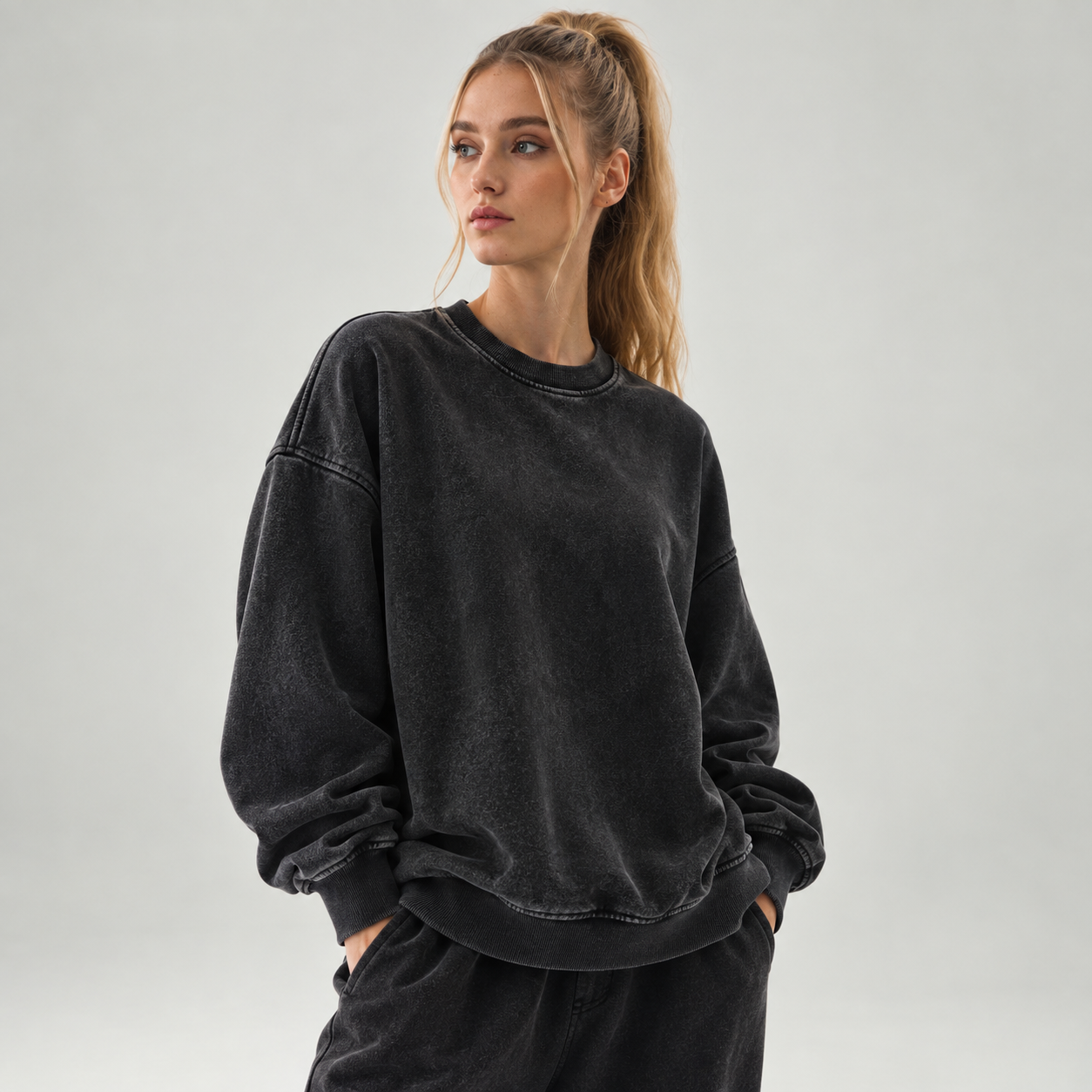
Our BLANKS line revolves around exactly that idea. The 380 GSM heavyweight brushed fleece crewneck offers a relaxed fit with raglan sleeves and a soft brushed interior. The BLANKS Hoodie 380 GSM follows the same principle with a boxy cut and dropped shoulders. For those who want more weight, there’s the 440 GSM heavyweight crewneck in washed black.
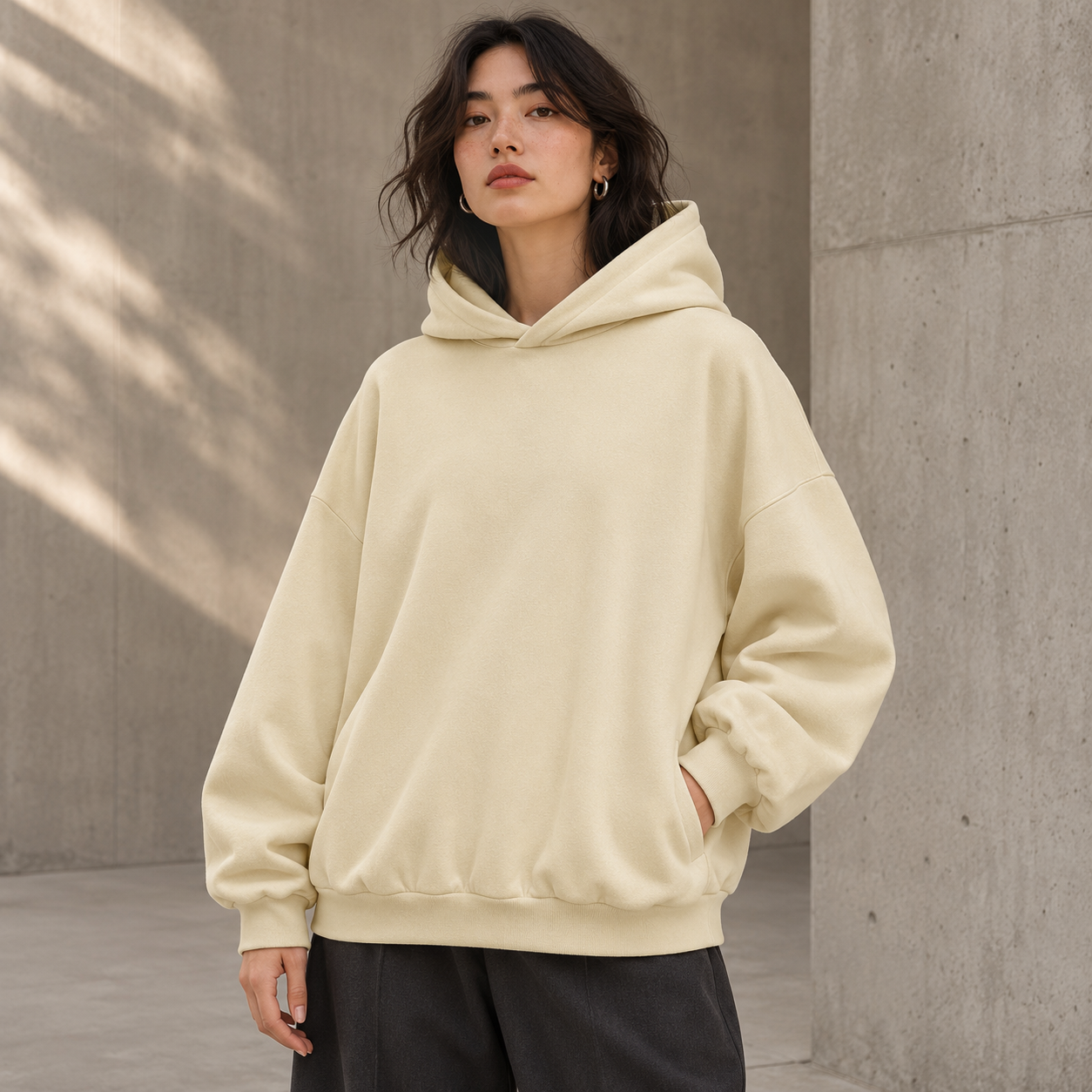
Measure a hoodie you currently find comfortable, compare its measurements with the size chart in the product photos, and choose accordingly. Check out the HTT Unisex Heavy Blend Hoodie to find the perfect fit in our collection.

The challenge isn’t finding the heaviest or most expensive sweatshirt, but choosing the fabric that suits how you wear your clothes. At HTT Streetwear, product information includes the weight in GSM, composition, fit, and finish. This lets you compare your options and order with confidence. Explore the full BLANKS collection and choose the fit that matches your identity.
Frequently Asked Questions
What is the main difference between brushed fleece and cotton?
The difference lies in the finish and texture. A cotton sweatshirt is a plain-knit fabric. Brushed fleece is also made of cotton, but the inside is mechanically brushed, creating soft loops. This makes brushed fleece warmer and softer on the inside, while a regular cotton sweatshirt often feels smoother and cooler.
Is a brushed fleece hoodie warmer than a cotton sweatshirt?
Yes, a brushed fleece hoodie is usually warmer. The brushed loops on the inside trap a layer of warm air, providing better insulation. A cotton sweatshirt without brushing has a flatter surface and often breathes slightly better, but retains less heat. For cold days, brushed fleece is the warmer choice.
What does “brushed” mean in fleece fabrics?
Brushed means that the inside of the fabric has been raised mechanically with fine brushes. This creates small loops that make the fabric softer and warmer. This process gives brushed fleece its signature comfortable feel. Note: wearing and washing can cause these loops to develop pilling over time.
Does a cotton sweatshirt breathe better than fleece?
A cotton sweatshirt generally breathes better than brushed fleece. The brushed interior of fleece retains more heat and can hold onto moisture for longer. Cotton is naturally moisture-wicking and breathable, making it more comfortable for active days or in between seasons. For intensive use, cotton is often the better choice.
