

7 ways to compare heavy cotton hoodies
Last updated: October 24, 2026
Quick Summary
Compare heavyweight cotton hoodies on seven points: fabric weight in GSM, cotton versus polyester, construction and finish, fit, breathability by season, and specific styles. A heavyweight hoodie usually has a fabric weight of around 380 g/m² or more, but weight alone says little about quality. Look beyond the GSM rating and the price.
- Most heavyweight hoodies fall between 380 and 440 GSM.
- 100% cotton is more breathable; a blend dries faster but may pill more quickly.
- When comparing, check the inside, seams, ribbed cuffs and hem, and hood.
- Compare flat measurements from armpit to armpit instead of relying only on the size label.
- Wash inside out at a maximum of 30°C and air-dry.
Table of contents
- Why it pays to compare heavyweight cotton hoodies
- Hoodie weight in GSM: what does it really tell you?
- Cotton versus polyester hoodies: which is right for you?
- Assessing cotton hoodie quality by construction and finish
- Oversized hoodie fit: how to compare sizes between styles
- Compare breathability and warmth by season
- Five heavyweight cotton hoodies side by side
- Compare for yourself and choose your heavyweight hoodie
- Frequently Asked Questions
Why it pays to compare heavyweight cotton hoodies
A heavyweight hoodie feels immediately different from a thin one, but weight alone says little about quality.
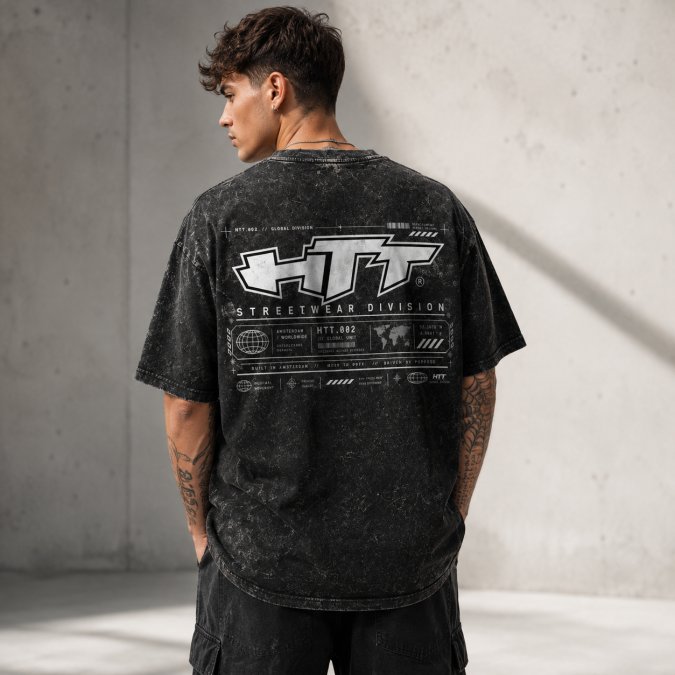
The key to a good comparison is simple: a heavyweight hoodie is a cotton hoodie with a high fabric weight, usually around 380 g/m² or more, where the fabric thickness, finish and cut together determine how comfortable it is to wear.
Below, we compare heavyweight cotton hoodies on seven points: fabric weight in GSM, cotton versus polyester, construction and finish, fit, breathability by season, and five specific styles. This helps you make an informed choice rather than relying on feel alone.
Hoodie weight in GSM: what does it really tell you?
GSM stands for grams per square meter and indicates how heavy a fabric is. A 380 GSM hoodie feels sturdier and drapes more fully than a lightweight style of around 280 GSM.
Two hoodies with the same GSM rating can still feel completely different: a washed finish, brushed interior or loose weave can significantly change how they feel to wear. Use GSM as a starting point, not the final word. Want to know more about fabric weight and a heavyweight fit? Read our article about heavyweight streetwear, GSM and oversized fit.
From 380 to 440 GSM: what to expect from each weight
The range that most heavyweight hoodies fall into is around 380 to 440 GSM. Within that range, there are clear differences:
- 380 GSM: sturdy and substantial, but still flexible enough to wear year-round. Often the most economical choice by weight.
- 400 GSM: slightly more substance, noticeable when putting it on and in how the fabric drapes.
- 440 GSM: the heaviest category, with a distinctly luxurious feel and plenty of warmth. Less suitable for mild days.
Higher isn't automatically better: a 440 GSM hoodie is wonderfully warm in cold weather, but can quickly feel too warm indoors. Choose based on when you'll wear it, not the highest number.
Cotton versus polyester hoodies: which is right for you?
The question of cotton versus polyester hoodies comes down to two things: how the fabric feels and how it performs. A 100% cotton hoodie feels natural, is breathable, and gets softer over the years. A cotton-polyester blend is often cheaper, dries faster, and holds its shape more easily, but feels less natural and can pill sooner.
For everyday comfort, we usually choose 100% cotton. It's more breathable, so you're less likely to feel clammy when moving around. Polyester has one real advantage: it wicks away moisture faster and dries more quickly.
What a blend really does to a heavyweight hoodie
A blend isn't a miracle solution. Many cheap blends feel thinner after a few washes and lose their structure because cotton and polyester react differently to washing and drying. Light distortion can occur, especially with non-pre-shrunk fabric.
This matters even more with heavyweight hoodies: a 400 GSM blend may feel thinner than a 400 GSM hoodie made of 100% cotton.
Value for money: why a blend isn't automatically better value
A blend is often cheaper to buy, but that says little about the cost per wear. A high-quality heavyweight cotton hoodie holds its shape and color longer; a cheap blend that becomes thin and fuzzy after a season will cost you more in the long run.
When comparing hoodies for value, don't just look at the price tag. Consider:
- Expected lifespan: the sturdier the construction and the better the fabric is pre-treated, the longer the hoodie will last.
- Wash durability: a hoodie that still holds its shape after ten washes costs less per wear.
- Return costs and warranty: check the return policy and the warranty on seams and zippers before ordering.
When a blend makes sense
A cotton-polyester blend is practical if you mainly wear the hoodie while working out or often in changing temperatures and want it to dry quickly. In that case, the practical benefits outweigh the natural feel of 100% cotton.
Our advice: choose 100% cotton if comfort and durability are your priorities, and accept a blend only if faster drying is truly necessary.
Assessing cotton hoodie quality by construction and finish
The quality of a cotton hoodie is most apparent on the inside and at the seams: reinforced neck and shoulders, double-stitched ribbing, and a hem that doesn’t stretch out. If you really want to compare heavyweight cotton hoodies, look beyond “looks sturdy.” These are the details that make the difference.
Inside: fleece, terry, or French terry
The inside of a hoodie is one of the most overlooked points of comparison. Three finishes are most common:
- Brushed fleece: The inside is brushed to create a soft, warm layer. It’s comfortable and warm, but the brushed fibers can get flattened or start to pill over time. Suitable for colder months.
- French terry (looped texture): The inside has small loops instead of a brushed layer. It’s more breathable, feels drier against the skin, and holds its structure longer. A good middle ground for year-round wear.
- Loopback terry: Similar to French terry, but with longer loops. It feels sturdier and is often found in heavier weights.
If you’re comparing two hoodies with the same GSM rating, check the inside: a 400 GSM hoodie with French terry feels different from one with brushed fleece, even though the label shows the same weight.
Yarn and stitching: why “double-stitched” isn’t enough
A sturdy construction starts with the yarn. Cheap hoodies use short fibers and loose stitching, so the seams tear or stretch out more quickly. When comparing, look for:
- Stitch density: More stitches per centimeter means a stronger seam. Heavyweight hoodies often have denser stitching than lightweight styles.
- Double stitching at stress points: The shoulders, armholes, and neckline are under the most strain. Double or reinforced stitching in these areas prevents the hoodie from stretching out.
- Ribbed cuffs and hem: Ribbing with elastane holds its shape better than 100% cotton ribbing, which can stretch over time.
Hood, zipper, and details
A good hood has a double layer of fabric, a sturdy channel for the drawstring, and an edge that doesn't curl up right away. On a zip-up style, check the zipper: a sturdy zipper that moves smoothly will last longer than a thin, cheap one that catches.
Drawstrings, eyelets, and any split hem also say a lot about the finish.
How to assess construction in-store or upon delivery
A practical checklist you can use for any hoodie:
HTT BLANKS 440GSM Sun Faded Heavyweight Hoodie →
- Gently tug at the shoulder seam: does the fabric stay sturdy, or does the seam stretch?
- Feel the inside: is the fleece evenly brushed, or can you feel thin spots?
- Look at the ribbed cuffs: are they sturdy and resilient, or limp and thin?
- Check the hood: double-layered, sturdy channel, drawstring that doesn't fray right away?
- Check the hem: does it lie flat or is it already curling up?
For those who want to learn more about the fiber itself: our article on why combed ring-spun cotton is better explains why cotton quality starts with the fiber, not the weight.
Shrinkage, pilling, and color retention after repeated washing
Three features predict how a hoodie will wear over time: pre-shrunk fabric limits shrinkage, reactive-dyed fabrics retain their color longer, and pilling occurs more quickly with short fibers and blends.
Here's how to make a fair comparison:
- Wash inside out at a maximum of 30°C with a mild detergent.
- Avoid bleach, soaking, and heavy wringing.
- Air-dry away from direct sunlight.
This helps a hoodie retain its shape and color considerably better. That's why we choose pre-shrunk, reactive-dyed fabric for our own styles.
Oversized hoodie fit: how to compare sizes between styles
An oversized fit isn't synonymous with "too big," but a deliberate cut with dropped shoulders and extra room.
Note: fit varies between styles. The HTT Civilization Hoodie has a roomy, relaxed cut; the Civilization Hoodie size chart in cm and inches helps you compare its roominess with your current favorite.
A practical rule of thumb: if you want the intended oversized look, choose your usual size. If you want a slightly less roomy fit, consider sizing down. Always compare the garment measurements when laid flat, not just the size label.
Compare breathability and warmth by season
A heavy hoodie feels different in each season.
Breathability depends largely on the fiber: 100% cotton wicks moisture reasonably well and feels natural against the skin, while a polyester blend dries faster but can feel stuffy in warm rooms.
When comparing, focus on how you’ll use it: a slightly lighter heavyweight hoodie is more comfortable at the office or at home, while the extra weight pays off outdoors in the cold.
Five heavyweight cotton hoodies side by side
When comparing heavyweight cotton hoodies, it helps to look at specific styles side by side.
The HTT BLANKS Heavyweight Turtleneck Hoodie offers 380 GSM 100% cotton, with a high neck and thumbholes.
The HTT BLANKS 400GSM Heavyweight Zip Hoodie is the zip-up version: 100% cotton, 400 GSM, with balloon sleeves and a ribbed, tapered hem.
The HTT Civilization Hoodie combines 380 GSM cotton with a plain front and a bold back print.
Finally, the HTT Mountain Peak has 380 GSM cotton with brushed fleece and a mountain print on the back. Soft on the inside, sturdy on the outside.
Comparison table: weight, composition, and price
| Style | Weight | Composition | Features | Price |
|---|---|---|---|---|
| BLANKS 440GSM Sun Faded | 440 GSM | 100% cotton | Sun-faded finish, reinforced neck | €49,95 |
| BLANKS Turtleneck | 380 GSM | 100% cotton | High neck, thumbholes, split hem | €44,95 |
| BLANKS 400GSM Zip | 400 GSM | 100% cotton | Full zip, balloon sleeves | €44,95 |
| Civilization Hoodie | 380 GSM | 100% cotton | Plain front, back print | €49,95 |
| Mountain Peak | 380 GSM | 100% cotton, brushed fleece | Mountain print on the back | €49,95 |
This table makes one thing clear: weight and price don’t increase in lockstep. The heaviest hoodie isn’t automatically the most expensive, and a lower weight doesn’t mean lower quality. So look beyond the GSM figure and price alone.
Compare for yourself and choose your heavyweight hoodie
The best heavyweight hoodie is the one that suits how you wear it. Use the seven tips in this article as a checklist: fabric weight in GSM, cotton versus blend, construction and finish, flat measurements, season, and intended use. That way, you can make a choice you won’t regret after just two washes.
At HTT Streetwear, everything revolves around identity and self-expression. Explore the full range of HTT Streetwear - Premium Hoodies and take your time comparing the styles side by side. If you prefer wearing your hoodie over a looser T-shirt, you’ll find the perfect basics in HTT Streetwear - Oversized T-Shirts to complete the look.
Frequently Asked Questions
How heavy is a heavyweight cotton hoodie in GSM?
A hoodie is considered heavyweight from around 350 g/m² (GSM). At 380 GSM, the fabric feels substantial and drapes fully; at 400 GSM, it feels a little heavier still, and 440 GSM is truly heavyweight: the hoodie holds its shape, drapes nicely and feels premium. For comparison, lightweight hoodies are often around 250 to 300 GSM and feel thinner. For an oversized streetwear look, 380 to 440 GSM works best because the fabric won’t cling to your body.
Is a heavyweight cotton hoodie warmer than a lightweight hoodie?
Yes, usually. A higher fabric weight means more mass to retain heat, so a 380 to 440 GSM hoodie is noticeably warmer than one at 280 GSM. However, the inside also matters: a brushed fleece lining like the one in the HTT Mountain Peak retains extra warmth, while a smooth cotton lining is more breathable. For cool days, choose a heavier, brushed hoodie; for spring, 380 GSM with a smooth lining is often more comfortable.
How can you prevent a cotton hoodie from shrinking?
Choose a pre-shrunk hoodie if possible, since it has already been pre-shrunk during production. Also, wash it inside out at a maximum of 30°C with a mild detergent, don’t bleach it or leave it to soak. Air-dry the hoodie instead of putting it in the dryer, and avoid direct sunlight. Iron or steam only at a low temperature. This helps keep both the fit and color intact for longer, even with dark colors that are prone to fading.
What should you look for when comparing cotton hoodies?
Look for four things: the fabric weight in GSM, the composition (100% cotton or a blend), the construction and the fit. Check for reinforced neck and shoulder seams, double-stitched ribbed cuffs and whether the fabric is pre-shrunk and reactively dyed. Then compare the size chart: for oversized styles, chest width is measured flat from armpit to armpit, so compare it with a hoodie you already like the fit of. This helps you avoid ordering a size that’s too big or too small.
A heavy hoodie that loses its shape after one season isn’t a good investment. We build our hoodies with heavyweight cotton, reinforced seams and a considered fit, so you don’t have to choose a new one every year. Browse the collection, compare sizes and add your favorite to your cart. Wear Your Identity.
